






Japanese FSA panel member flags bond fire-sale risk as JPYC pitches stablecoins as JGB buyers


- An FSA study group member warned that a large stablecoin issuer facing heavy redemptions could be forced to dump the government bonds backing its tokens.
- JPYC’s CEO says that stablecoin issuers could become a reliable new buyer of JGBs.
- The BOJ currently holds about half the bond market and is slowing purchases.
A Financial Services Agency (FSA) study group member warned that a rush of stablecoin redemptions could force issuers to sell large amounts of Japanese government bonds.
Meanwhile, the Bank of Japan (BOJ), which owns close to half of Japan’s bonds, is roughly $7 trillion in debt and is trimming its purchases.
What risks is the FSA panel worried about?
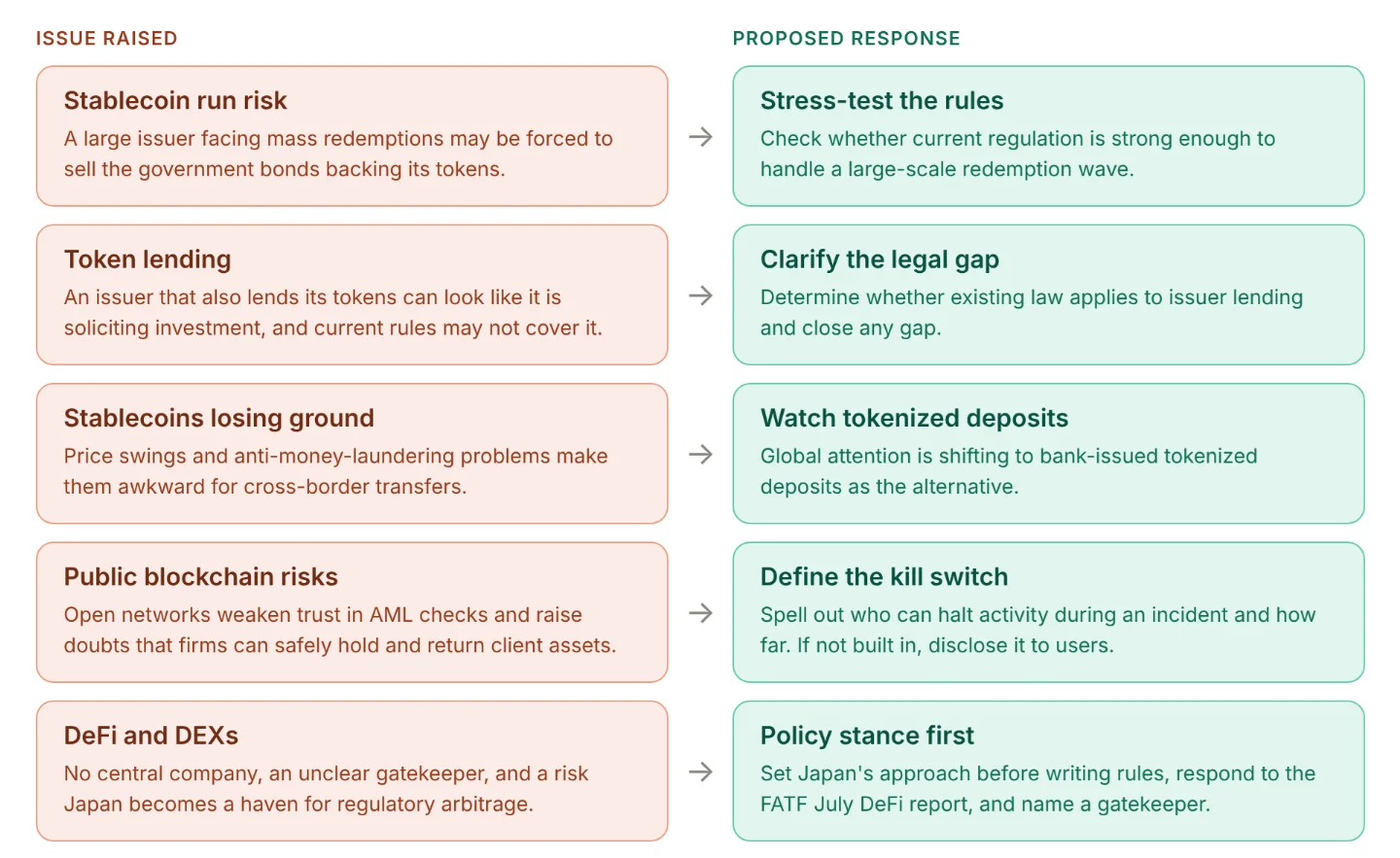
The FSA held the first meeting of its study group on digital and decentralized finance on October 20. According to the minutes, which were published by the FSA, one member said a large issuer of electronic payment instruments, which is Japan’s legal term for stablecoins, could face heavy redemption demands.
That could force the issuer to sell the government bonds that back its tokens. The member asked the group to check whether current rules are strong enough to handle this.
Another unclear area is token lending. One member said that if a company lends out tokens while also issuing them, it can look like it is asking people to put money into an investment. The member also wondered if the current rules even cover this.
Members also noted that global interest in stablecoins seems to be reducing and attention is instead moving toward tokenized deposits. The change is partly due to price swings and anti-money-laundering problems that make stablecoins awkward for cross-border transfers.
The meeting minutes say that using a public blockchain, an open network anyone can join, makes it harder to trust anti-money-laundering checks.
Another worry is whether banks and other financial firms can safely hold assets on a public blockchain and return them to the people who own them.
Members at the meeting said the system should spell out who is allowed to halt activity on a public blockchain during an incident and how much they can halt. If that is not built into the design, it should be clearly disclosed to users.
Decentralized exchanges and DeFi, which are trading and lending platforms that run without a central company, came up as a separate topic.
One member said Japan should first decide how it wants to approach these systems before writing rules. Another member said Japan needs to decide how it will respond to the report the Financial Action Task Force published in July regarding DeFi.
Members said that Japan should be careful not to become a place where people take advantage of weak or missing rules. They also asked who will act as the gatekeeper on these platforms.
Nomura Holdings (NYSE: NMR) and Securitize Japan spoke at the meeting. Nomura asked for DeFi and wallet rules that are as flexible as those in other countries. The group held a second meeting on November 2.
Can stablecoins help Japan sell its government bonds?
JPYC founder and CEO Noritaka Okabe, a stablecoin issuer, stated that money held in reserve to back stablecoins could be used to buy Japanese government bonds. He said this could make up for the Bank of Japan (BOJ) buying fewer bonds than it used to.
Okabe says that stablecoin issuers may become major holders of Japanese government bonds within a few years.
JPYC launched its yen-linked token in October 2025, following changes to Japan’s Payment Services Act. Okabe said 80% of the money the company takes in will go into government bonds, and the other 20% will sit in bank savings.
JPYC intends to begin by buying short-term bonds, and then, depending on the demand, the issuer may add longer-term ones. The company’s goal is to have 10 trillion yen (about $66 billion) of its token in circulation within three years, according to earlier Cryptopolitan reporting.
Cryptopolitan also reported that Japan’s Finance Ministry started a separate study group on October 8 to look at tokenizing government bonds, hoping to attract new investors. The ministry faces a record budget request of 143 trillion yen (about $944 billion) and debt-servicing costs of around 36.64 trillion yen (about $242 billion).
If you're reading this, you’re already ahead. Stay there with our newsletter.
FAQs
What did the FSA study group member warn about stablecoins?
A member said that if a large issuer of electronic payment instruments received heavy redemption requests, the JGBs backing the tokens could be sold off in large volumes, and asked the panel to confirm whether current regulation is sufficient.
What does JPYC plan to do with Japanese government bonds?
JPYC plans to invest 80% of its issuance proceeds in JGBs and keep 20% in bank savings, starting with short-term securities, and aims for 10 trillion yen (about $66 billion) in circulation within three years.
When did the FSA study group meet?
It held its first meeting on October 20, 2026, and a second session on November 2, with the minutes of the first meeting published without naming individual speakers.
Disclaimer. The information provided is not trading advice. Cryptopolitan.com holds no liability for any investments made based on the information provided on this page. We strongly recommend independent research and/or consultation with a qualified professional before making any investment decisions.

Hannah Collymore
Hannah is a writer and editor with nearly a decade of blog writing and event reporting experience in the crypto space. At Cryptopolitan, Hannah contributes to the news page, reporting and analyzing the latest developments in DeFi, RWA, crypto regulation, AI and frontier tech industries. She graduated from Arcadia university with a degree in Business Administration.









