







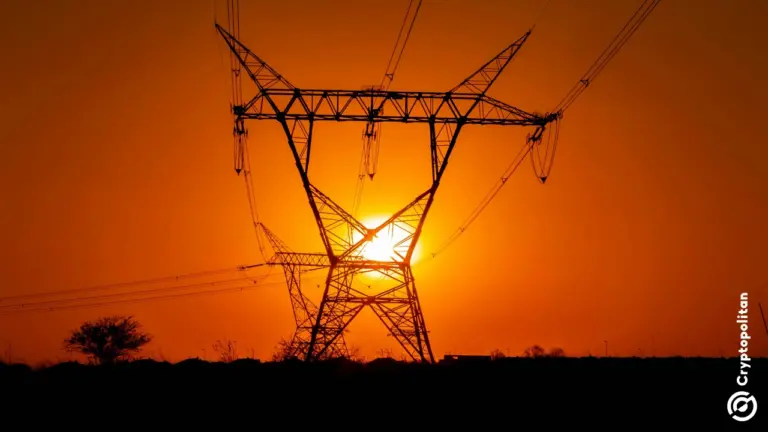
- AI data centers are driving record electricity costs for factories across the PJM grid, with capacity charges up about 1,038% since 2024 and Ohio brickmaker Belden Brick’s monthly bill for that fee jumping from $1,600 to $12,000.
- Rust Belt manufacturers running on thin margins in states like Ohio and Pennsylvania are raising prices, shifting to night shifts, or considering their own gas generation.
- The pressure comes as regulators and the White House fight over whether tech firms or factories should shoulder the cost of the AI power boom.
Manufacturers across the US industrial heartland are taking up record electricity costs as AI data centers crowd onto the same regional grid, with one Ohio brickmaker watching a single monthly charge climb from $1,600 to $12,000, according to a Reuters review of energy data and interviews with about a dozen firms.
This rising cost is concentrated inside the territory run by PJM Interconnection, the largest US grid operator, stretching from New Jersey to northern Illinois and reaching south to Tennessee. Five of the eight states currently seen as emerging data center hubs sit in the Rust Belt, per Synergy Research Group, and a single server warehouse can draw as much power as a mid-sized town.
Capacity charges are the main issue
The hardest hit to these factories is the capacity charge, a fee paid to generators to ensure supply remains available for peak demand. For households, it usually accounts for about 10% of a bill. For an energy-hungry factory, this percentage can rise significantly.
PJM’s capacity charge went from $28.92 per megawatt-day in 2024 to $329.17 today, a 1,038%. increase. Data centers tied to the AI boom have driven most of this increase, making up almost 40% of the record $16.4 billion tab from PJM’s most recent auction.
The supply available cannot keep up with this recent demand driven by AI data centers. “Data centres can be built faster than the generation needed to serve them,” PJM spokesperson Jeff Shields told Reuters. Last week, with a heatwave pushing peak demand to a record high, the operator asked some customers to cut usage to avoid blackouts.
Factories on thin margins feeling the heat
At the Belden Brick Company in Sugarcreek, Ohio, power costs barely moved for years before rising by 90% last year. The 141-year-old firm, whose bricks appear at the Alamo and the University of Notre Dame, traced most of this increase to its capacity charge. The company has increased the prices of its bricks by 4% and still watched profits shrink.
“There are going to be some companies that are on the razor’s edge,” company president Brad Belden told Reuters.
Plaskolite, a plastics maker, said annual capacity charges at its Pennsylvania and Ohio plants rose to $1.2 million from $200,000 and is now weighing a direct natural gas feed to reduce reliance on the power grid. Tosoh SMD, an electronics-materials firm in Grove City, Ohio, is looking at shifting a bulk of its production to overnight hours, when electricity is cheaper.
Regulatory battle over who pays for power
Regulators have put in rules to shield households and smaller customers from increased power costs, but manufacturers and factories often sit around the same power rates class as the massive data centers, so rules aimed at the data centers can affect the factories.
The Federal Energy Regulatory Commission wants companies that run onsite generation to also pay transmission charges on that power, a proposal manufacturers are not taking kindly to. At least 10 states have their own data center rules currently pending.
Data center advocates argue that the AI development is forcing overdue grid investment that was already needed. Aaron Tinjum of the Data Center Coalition points to retiring power plants and transmission limits as additional causes of the price pressure, and this a view agreed on by operators citing years of underinvestment.
However, manufacturing companies and factories want regulators to draw a clear line between a factory and a data center. “Manufacturers are not data centres,” Paul Cicio of the Industrial Energy Consumers of America told Reuters.
The White House said President Donald Trump has hosted tech firms signing a “ratepayer protection pledge” and ordered new PJM power plants to be funded by these tech companies, in moves designed to protect factories and manufacturing plans in the president’s push for increased domestic manufacturing.
Don’t just read crypto news. Understand it. Subscribe to our newsletter. It's free.

Opeyemi Olanrewaju
Opeyemi specializes in creating and refining high-quality content focused on cryptocurrency, global financial markets and the economy. He graduated from the University of Ibadan with an MBBS degree. He has worked as Editor-in-Chief for his College’s editorial publication and previously at CFA. For over six years, he has helped safeguard uniqueness as news editor at Cryptopolitan.









