






BIS report says stablecoins fail four key tests for money, compares them to ETFs

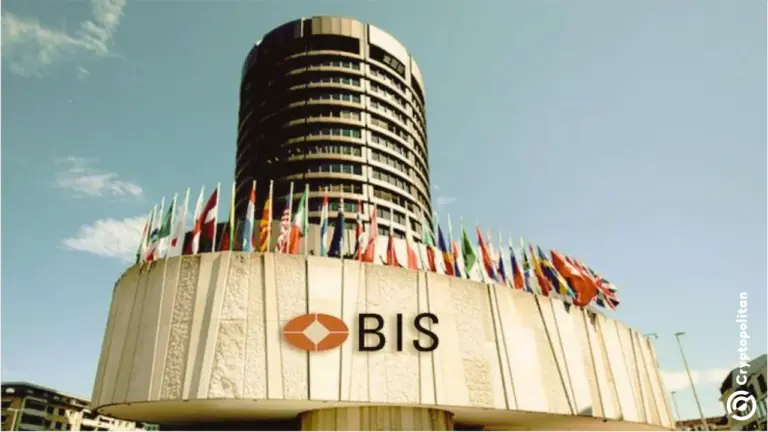
- The Bank for International Settlements said in its 2026 Annual Economic Report that stablecoins fail its four-part test for what constitutes money and function more like ETF shares than payment instruments.
- The report warned that dollar-pegged stablecoins are accelerating dollarization in emerging economies while potentially dragging on economic output even if they scale to $1 trillion to $3 trillion in market cap.
- The BIS proposed a “unified ledger” built on central bank money as an alternative.
The Bank for International Settlements (BIS) has reported its assessment of stablecoins based on specific variables, and has concluded that they do not function as money was originally intended. The institution has warned in its latest 2026 Annual Economic Report that dollar-pegged tokens are driving a new form of dollarization in emerging economies.
The report was based on an assessment using multiple criteria for money, and made a distinct comparison of stablecoins to ETFs.
BIS report on stablecoins
The umbrella institution for central banks evaluated stablecoins on four criteria considered essential for entities described as money. These criteria include singleness, elasticity, interoperability, and integrity. Stablecoins were said to have failed all four, according to the report.
Singleness translates to the concept of one unit always being equal to one unit of the underlying currency regardless of the issuer. Stablecoin prices on secondary markets tend to drift from their $1 peg, sometimes just slightly.
Elasticity requires the supply of any entity seen as money to increase and decrease with economic demand. Stablecoins use a model where issuers mint tokens only after receiving equivalent cash deposits, which prevents this flexible expansion according to demand from happening.
The BIS compared stablecoins to ETFs, stating that stablecoins behave more like shares in an exchange-traded fund instead of cash deposits.
Dollar dominance has increased globally
Over 99% of the roughly $320 billion stablecoin market, as of the end of May 2026, is denominated in US dollars. Tether’s USDT and Circle’s USDC account for most of that figure. A separate BIS research paper from May 5 estimated dollar dominance in stablecoin value at approximately 98%.
The report states that this concentration is a structural problem for emerging markets and developing economies. The BIS calls this “stablecoin dollarization” and warns it mirrors the historical pattern of deposit dollarization, where savings are shifted into foreign bank accounts during crises, happening at a faster pace since crypto operates outside traditional banking infrastructure.
Countries including Turkey, Argentina, and Nigeria have already had a lot of stablecoin adoption as citizens seek dollar exposure outside formal channels.
Several emerging economies have imposed restrictions on cross-border stablecoin use. The BIS has expressed skepticism on how well these restrictions can hold, since controls that function against traditional bank deposits do not translate well to self-custodial crypto tokens.
Potential negative economic effects of stablecoins
The BIS created a model exploring possible happenings if the stablecoin market cap grew to between $1 trillion and $3 trillion, and concluded that the net effect on economic output would still be “modestly negative.”
As deposits migrate from traditional banks to stablecoin issuers (who park reserves in US Treasuries and money market instruments), banks continue to lose a cheap funding source. To compete, they would need to raise deposit rates, which would increase lending costs, and slow economic activity.
The BIS has recommended building what it calls a “unified ledger” for central bank monies, aiming to combine tokenized central bank reserves with commercial bank money on a shared infrastructure. The report cited Project Agora, a cross-border payments prototype, as evidence that this “unified” approach is technically feasible, according to Binance News.
Don’t just read crypto news. Understand it. Subscribe to our newsletter. It's free.
Disclaimer. The information provided is not trading advice. Cryptopolitan.com holds no liability for any investments made based on the information provided on this page. We strongly recommend independent research and/or consultation with a qualified professional before making any investment decisions.

Opeyemi Olanrewaju
Opeyemi specializes in creating and refining high-quality content focused on cryptocurrency, global financial markets and the economy. He graduated from the University of Ibadan with an MBBS degree. He has worked as Editor-in-Chief for his College’s editorial publication and previously at CFA. For over six years, he has helped safeguard uniqueness as news editor at Cryptopolitan.









