






CoreWeave chief flags extreme supply chain stress as AI growth hits deeper bottlenecks

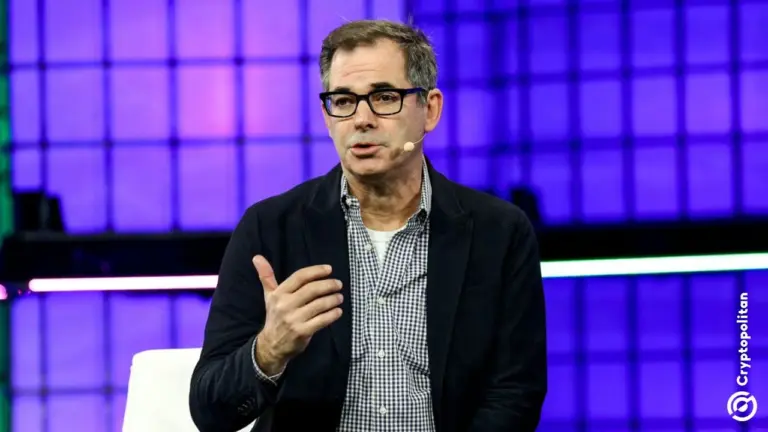
- Michael Intrator said claims of a circular AI economy ignore a real global supply chain crunch discussed at the Fortune Brainstorm AI conference in San Francisco.
- He said shortages now reach beyond chips into raw materials like copper, forcing companies across industries to cooperate to keep infrastructure building moving.
- Michael said demand for AI compute remains relentless despite concerns about debt, used GPUs, and market volatility around CoreWeave’s stock.
CoreWeave CEO Michael Intrator said at the Fortune Brainstorm AI conference in San Francisco Friday that the so called circular AI economy label does not match what is happening inside the industry.
Michael rejected claims that the current AI boom is driven by money looping between the same companies rather than real demand.
Michael said the focus on a circular model ignores what he described as a global supply imbalance tied to hardware, energy, and infrastructure. “Circular is the incorrect way of looking at it,” Michael said during the conversation. “It’s a lot of companies working to address an imbalance that is distorting the globe.”
CoreWeave believes physical limits is what is slowing AI hardware delivery
“The primary constraint is a physical bottleneck associated with getting the most performant compute into the hands of the most cutting edge players,” Michael said.
Michael added that this pressure reaches far beyond cloud firms and chip suppliers. Michael shared details from a recent conversation with a mining company executive, who he did not name, where the discussion focused on materials needed to build infrastructure. He said the mining executive explained that the strain goes two levels deeper into the supply chain, reaching raw metals and copper used to support AI systems.
Michael said the mining executive made a direct request for cooperation across industries to increase output. “We need to work together as a group,” the executive told him. Michael said similar comments from leaders inside AI companies are often criticized as proof of a circular economy. “If I say that in the AI space, I get accused of being in a circular economy,” he said. “So that’s all I’ll say on the circular economy is, like, you do that by working together.”
Concerns from critics have also focused on risk tied to debt and customer exposure. Some warn that if CoreWeave fails to refinance obligations or loses a major client, lenders could release large volumes of used GPUs into secondary markets, hurting prices and causing disruption. Michael addressed that scenario by pointing to demand trends instead. He said the growth he sees is fast and aggressive, not fragile.
CoreWeave faces stock swings as demand from big tech stays intense
Michael said CoreWeave sits at the center of rising demand because of its focus on parallel computing, which supports modern AI workloads. He said requests from large technology firms continue without pause.
Since its IPO, CoreWeave’s stock has been wobbly, but Michael only pointed out that shares now trade near $90, compared with an IPO price of $40.
Michael also addressed past reliance on Microsoft, which once accounted for 85% of company revenue, saying that exposure has dropped after active diversification. He claims that no single customer now makes up more than 30% of the backlog, urging investors to ignore short delays that draw heavy reactions, such as a data center opening pushed back by a week, which he said triggered “bedlam” from short term observers.
Michael described the current phase as a macro super cycle driven by a move from sequential to parallel computing that opens access to far greater compute capacity.
Michael said the challenges slowing delivery remain tied to policy limits, physical infrastructure, and energy access. “The reasons that you have challenges in delivering that compute is because of policy, because of physical infrastructure, because of energy,” he said. “You do that by working together.”
Don’t just read crypto news. Understand it. Subscribe to our newsletter. It's free.

Jai Hamid
Jai Hamid has been covering crypto, stock markets, technology, the global economy, and the geopolitical events that affect markets for the past 6 years. She has worked with blockchain-focused publications including AMB Crypto, Coin Edition, and CryptoTale on market analyses, major companies, regulation, and macroeconomic trends. She has attended London School of Journalism and thrice shared crypto market insights on one of Africa’s top TV networks.









