



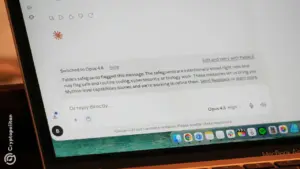




- Meta had contractors place some Muse AI calls in a test switched on for half of its employees last week.
- A Meta vice president said human-placed calls reached success rates of 95% to 98%.
- Meta rolled the employee test back for now after staff raised privacy concerns.
Last week, Meta turned on a test for half of its employees in which call-center contractors quietly made some of the phone calls requested through its Muse AI agent, according to internal company posts seen by Reuters.
The company has rolled back that test for now.
Person-placed dialing reached 95% to 98% success in early trials
Muse, launched on September 8, is built to send e-mails, shop and book travel on its own. Its calling feature dials U.S. businesses to schedule haircuts, check if a store has an item, or get quotes from contractors.
Meta started testing calling with employees in August and slowly rolled it out to Muse users after the app’s launch.
Some businesses hung up on the agent. One employee said that an insurance company kept hanging up the phone once it heard Muse was an AI.
Last week, Meta then enabled “human agent calls” for half of its employees. Employees could join an opt-out group, and Muse could pass a request to a trained agent who made the call and worked it through.
A Meta Superintelligence Labs vice president told employees tests showed that the success rate of calls made by humans could be boosted to 95% to 98%. AI-only calling wasn’t as successful, she said.
A racist remark on a cable bill call preceded the rollback
Employees warned that the sensitive information users provide to Muse could be leaked to call-center contractors. Some pointed to Meta’s launch pitch that each Muse agent runs in its own isolated virtual machine.
One employee who had Muse negotiate a cable bill said the call transcript showed the contractor made a racist remark.
The vice president said it was a miss to start contractor-placed calls without proper disclosures, and Meta had rolled the feature back for now. The contractor in question would not work on Meta projects again, she said.
Meta spokesperson Daniel Roberts said the test is to garner feedback so that Meta can build in protections for safety and privacy before any public release.
“We’re working with merchants to continue improving this potential calling feature and will only roll it out when it’s ready and with the proper disclosures,” Roberts said.
Muse has passed 2.5 million downloads. Since the launch, Meta’s stock has leapt more than 20%, adding more than $200 billion to its market value.
Don’t just read crypto news. Understand it. Subscribe to our newsletter. It's free.
FAQs
Are all of Muse's calls made by AI?
No. In an internal test, trained contractors placed some calls that Muse was asked to make for Meta employees.
When did Meta launch Muse and its calling feature?
Muse launched on September 8, 2026, and Meta rolled calling out to users gradually after that debut.
What did Meta say when asked about the human callers?
Meta said the test gathers feedback to build safety and privacy protections before any public release.
Disclaimer. The information provided is not trading advice. Cryptopolitan.com holds no liability for any investments made based on the information provided on this page. We strongly recommend independent research and/or consultation with a qualified professional before making any investment decisions.

Randa Moses
Randa Moses is an editor and reporter at Cryptopolitan covering tech, AI, robotics, crypto, scams, and hacks. She has worked in the crypto space since 2017. She held roles at Forward Protocol, AmaZix, and Cryptosomniac. Randa holds a degree in Electrical and Electronics Engineering from the University of Bradford.









