







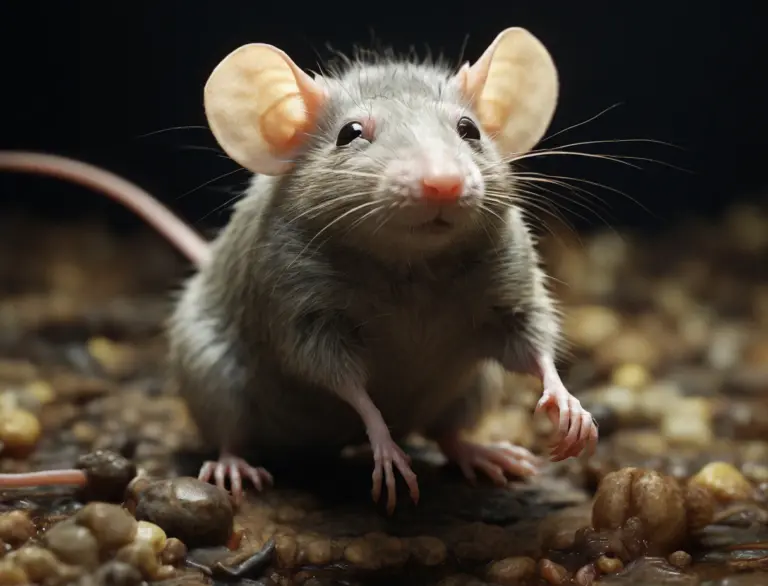
- The AI-generated rat genitals illustration was retracted, sparking debate.
- Scientific journals adopt guidelines amidst AI content concerns.
- Controversy over AI’s impact on scientific publishing grows.
An article featuring a bizarre illustration of a rat with exaggerated genitalia has been retracted from Frontiers in Cell and Developmental Biology
The illustration comes from the cross-section of a rat’s genitals but labels their ridiculous relationship with artificial intelligence (AI). It was mistakenly fundamentally by the peer-review process.
AI-Generated artwork in scientific literature
One of the retracted articles, which dealt with the stem cells found in rats’ genitals, was subject to complete peer review by other experts and editorial review before its publication in February.
An image of a huge male rat wearing an obscene label around its genitals, which misinforms readers, portrays a flaw in the bibliometric approach and difficulties in detecting fabricated information.
Several critiques online immensely increased with some influential organizations like artificial intelligence researchers Gary Marcus expressing his discomfort with AI-generated content swelling the scientific literature.
The issue has brought back controversies about the potential application of generative AI tools in science and academic papers. AI tool proponents, among other things, allege that AI tools assist in fast data processing and calculations.
On the other hand, others see a danger in artificial intelligence tools, such as creating inaccurate data or misleading information. A survey carried out by Nature in 2023 showed that about 30% of scientists had introduced these generative AI tools to write their manuscripts. Thus, it was evident that the scientific community had indeed widely accepted these technologies.
Maneuvering AI integration in scientific publishing
In the wake of these worries, eminent scientific journals issued a code of ethics that outlined the usage of generative AI in research and publication. Generative texts are now deemed to have the suggested biographical aspect; they need to be explicitly referenced and explained in articles released by journals like Nature and Science. Institutional peer-reviewers are forbidden from using AI for article evaluation. Moreover, creating AI images is highly discouraged, as journals may disregard furnished illustrations.
The retracting of an article portraying a case involving an AI-generated illustration demonstrates that maintaining journalistic and scientific integrity in scientific publishing is paramount. Even though this integration process won’t stop, more researchers and publishers will need to remain attentive to protecting the authenticity and accuracy of the scientific literature.
If you're reading this, you’re already ahead. Stay there with our newsletter.
Disclaimer. The information provided is not trading advice. Cryptopolitan.com holds no liability for any investments made based on the information provided on this page. We strongly recommend independent research and/or consultation with a qualified professional before making any investment decisions.

Emman Omwanda
Emmanuel Omwanda’s expertise lies in cryptocurrency markets, spanning both fundamental and technical analysis. He previously worked with various crypto media sites before joining Cryptopolitan, including CoinEdition, The Crypto Basic, CryptoNews Flash, and DroomDroom.He holds a Bachelor of Science (BSc.) in Mathematics and Computer Science from Kenyatta University, Kenya, and is currently in his final year pursuing a Bachelor of Arts in Communication and Media Studies.









