






OCC to enforce GENIUS “as enacted” as stablecoin rewards face case-by-case review

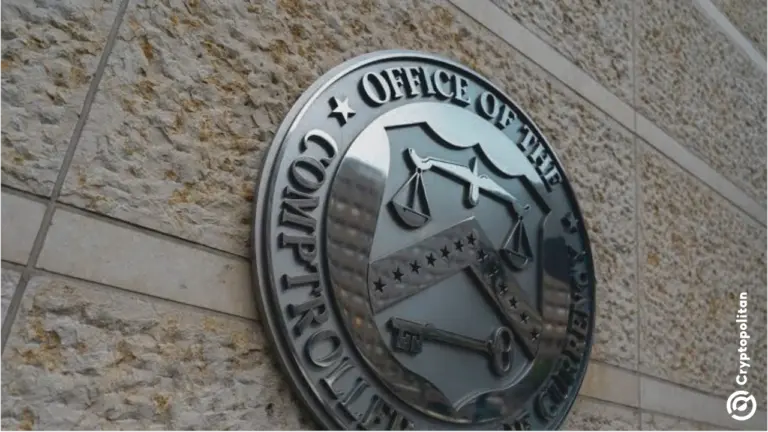
- The OCC finalized its GENIUS Act stablecoin rule on Wednesday, effective January 18, 2027, becoming the first regulator to do so.
- Because Congress stalled on the CLARITY Act, the rule now effectively governs the stablecoin yield fight.
- Banks lost the broad third-party presumption they wanted, while crypto platforms still face case-by-case enforcement against evasions of the ban on issuer-paid yield.
The Office of the Comptroller of the Currency (OCC) published its final GENIUS Act stablecoin rule on Wednesday.
The OCC is officially the first federal regulator to go through with implementing regulations for stablecoins. Congress remains stuck on broader crypto legislation.
Can crypto platforms still pay rewards on stablecoins?
The GENIUS Act, enacted July 18, 2025, bans permitted stablecoin issuers from paying interest or yield on the tokens they issue. However, it was unknown whether exchanges and other third parties could give similar “rewards” to holders.
Lawmakers were meant to settle that through the CLARITY Act, a crypto market structure bill, but it stalled after the full Senate failed to advance it in a procedural vote. The delay led to regulators proposing rules of their own.
The Office of the Comptroller of the Currency (OCC) has published its first stablecoin rule under the GENIUS Act. The rule takes effect on January 18, 2027, the same day the GENIUS Act takes effect.
Banking groups warn that stablecoins that pay rewards could pull deposits away from community banks. They pointed out that a U.S. Treasury Borrowing Advisory Committee estimated that up to $6.6 trillion in deposits could leave banks.
In February, the OCC proposed a rule that would assume certain third-party reward deals were banned yield, unless someone could prove otherwise, but the final rule removes that assumption.
An OCC official told reporters that the first draft was only a guess at how often companies might try to dodge the rules and not how the young stablecoin market really works. Instead of using a blanket assumption, the OCC will look at each case individually.
Crypto platforms did not get a green light either. The ban on issuers paying interest directly still stands, and the OCC can act against any setup it sees as a loophole.
Will banks be happy with the stablecoin rule?
The American Bankers Association and 52 state bankers associations sent the OCC a letter on May 1, asking the agency to widen the rule that assumes third-party rewards are banned yield, so it applies to all reward payments no matter what name is used for them. They also asked it to widen “related third party,” so it covers partners that distribute or promote stablecoins.
Crypto firms like Coinbase urged the OCC to read the ban narrowly, applying only to issuers paying consumers directly. TD Cowen analyst Jaret Seiberg stated months earlier that it does not know how the rules can satisfy both banks and major crypto platforms. He added that some platforms want to keep paying yield to retain retail liquidity.
The rule puts most of the OCC’s GENIUS Act requirements into a new section of its regulations, called 12 CFR 15. It contains the requirements for reserve assets, redemption, risk management, custody, and audits and supervision. It also sets rules for foreign issuers and for state-regulated issuers that move into the federal system.
Anti-money-laundering rules are not part of this rule. Those will come later in a separate rulemaking with the Treasury.
The OCC will announce at a later date when companies can apply to become issuers or ask for waivers.
If you're reading this, you’re already ahead. Stay there with our newsletter.
FAQs
When does the OCC's stablecoin rule take effect?
The final rule and the GENIUS Act both take effect on January 18, 2027, according to OCC Bulletin 2026-50.
What changed between the proposed and final rules on rewards?
The proposal included a presumption that certain third-party arrangements could be unlawful yield; the final rule drops that presumption and instead handles enforcement case by case, a regulatory official told reporters.
Why did the OCC, not Congress, settle the yield question?
The CLARITY Act, which was meant to resolve crypto market structure including stablecoin rewards, stalled after the Senate failed to advance it in a procedural vote, leaving the OCC's rule to govern the issue.
Disclaimer. The information provided is not trading advice. Cryptopolitan.com holds no liability for any investments made based on the information provided on this page. We strongly recommend independent research and/or consultation with a qualified professional before making any investment decisions.

Hannah Collymore
Hannah is a writer and editor with nearly a decade of blog writing and event reporting experience in the crypto space. At Cryptopolitan, Hannah contributes to the news page, reporting and analyzing the latest developments in DeFi, RWA, crypto regulation, AI and frontier tech industries. She graduated from Arcadia university with a degree in Business Administration.









