






- Russian authorities target traders importing Tether from abroad.
- The arbitrage scheme employs crypto exchanges based in CIS countries.
- The stablecoin is sold for Russian cash, which Moscow wants to ban in 2027.
Russia’s banks have started cracking down on cryptocurrency traders obtaining Tether abroad and selling it for cash on the domestic market.
The stablecoin is quite popular in the Russian Federation, where sanctions are limiting access to fiat finances and traditional cross-border payments.
The dollar-pegged token is one of the three leading cryptocurrencies recently approved for use by retail investors in Russia, alongside Bitcoin and Ethereum.
Russian banks target trading scheme involving Tether
Russia’s banking system is now clamping down on an arbitrage scheme to acquire Tether (USDT) in neighboring nations and sell it for rubles in the country.
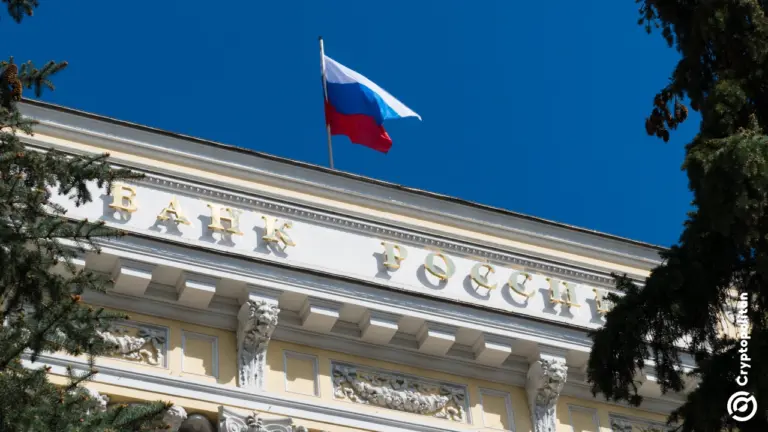
The Central Bank of Russia (CBR) and commercial banks, many of which are majority state-owned, have begun blocking such transactions, local media revealed Monday.
The process involves depositing into an account in another Commonwealth of Independent States (CIS) country, such as Belarus or Kyrgyzstan, and buying the stablecoin there.
The digital currency, purchased in a jurisdiction where this is already legal or yet to be regulated, is then sold at a premium for cash in Russia. The scheme gained popularity in 2026.
It relies on the price differential between digital and cash-based USDT rates to yield at least 2% on a deal, according to Sergey Cherechen, co-founder of the crypto company WhiteBird.
The latter is the Belarus-licensed operator of a coin trading platform and crypto-fiat exchange which often serves as a gateway for Russian citizens, firms and entities to the digital-asset space.
According to experts interviewed by RBC, some users swap stablecoins for “hundreds of millions of rubles a day” using the described method.
Representatives of the industry told the business news outlet, which first reported about the crackdown, that the practice is “technically legal.”
However, the monetary authority in Moscow views it as a high risk for the laundering of funds from unidentified sources due to insufficient proof of their origin.
Russian banks are now preventing wires ultimately reaching Belarusian exchanges, while local crypto platforms have also been unable to legitimize related transactions.
Lifting the restrictions imposed on such bank accounts and their holders is almost impossible, according to industry watchers citing Russia’s anti-money laundering legislation.
Russia takes another step to curb crypto-cash trade
Lagging behind others in the post-Soviet space such as Belarus, which registered its first crypto banks last month, Russia only recently legalized crypto operations like trading.
Under the law “On digital currencies and digital rights” enforced in September, cryptocurrency transactions must be processed by service providers authorized by its central bank.
Major banking institutions, including the state-controlled giants Sber and VTB, were among the first licensed to act as digital-asset exchanges and depositories, as reported by Cryptopolitan.
The legislation also regulates cryptocurrency investment, although capped at less than $4,000 per intermediary for non-professional investors and limited to only the most liquid cryptocurrencies.
Tether’s USDT is among the three digital coins with the largest market capitalization and trading volume initially admitted to the regulated Russian market, together with Bitcoin (BTC) and Ethereum (ETH).
Russians and their companies have been increasingly using cryptocurrencies and stablecoins to circumvent Western fiat restrictions introduced with sanctions imposed over their country’s invasion of Ukraine.
While Moscow is establishing its own crypto infrastructure, they are still mostly relying on platforms registered and operating in allied nations, like those linked to the sanctioned payments platform A7.
While not explicitly prohibited by the current law, the main issue with the USDT arbitrage scheme stems from the sale of digital currency for fiat cash, the crypto news outlet Bits.media noted in a report.
After a transitional period that expires on July 1, 2027, it will no longer be possible to purchase Tether directly from CIS-based platforms via a Russian bank account and then sell it for cash inside the country.
In recent clarifications on the new legal framework, the Bank of Russia indicated that peer-to-peer (P2P) cryptocurrency transactions as well as coin transfers to self-hosted wallets will be banned from that date, too.
If you're reading this, you’re already ahead. Stay there with our newsletter.
Disclaimer. The information provided is not trading advice. Cryptopolitan.com holds no liability for any investments made based on the information provided on this page. We strongly recommend independent research and/or consultation with a qualified professional before making any investment decisions.










