




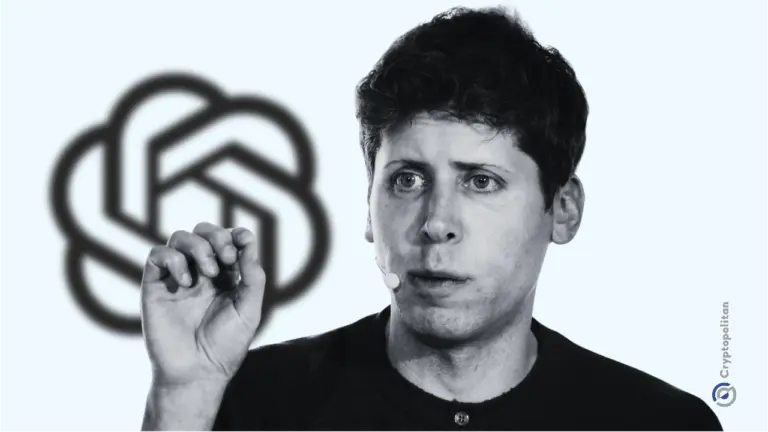
- Sam Altman said that AI has three possible endgames.
- The three scenarios are an international inspector like the IAEA, a merger of leading labs, or a single firm powerful enough to “melt everyone else’s GPUs.”
- OpenAI is simultaneously building a private self-regulator, fighting an antitrust suit over slowdown coordination, and racing to raise $30 billion before Anthropic’s November IPO.
Advanced AI could end in three possible scenarios, according to OpenAI’s Sam Altman: a nuclear watchdog-style international inspector, a merger of the labs in the AI lead, or a single company that can “melt everyone else’s GPUs.”
The Altman comments, reported by The Information, land as OpenAI continues to pursue different edges in potential AI endgame scenarios, including helping to set up a private safety regulator, slowdown talks that have drawn an antitrust lawsuit, and a planned $30 billion raise tied to maintaining its lead over rival Anthropic.
Altman sees advanced AI ending in one of three ways
The Information reported that Sam Altman’s prediction for the future of advanced AI resolves in one of three scenarios.
Two of the three paths end at concentration. In one of them, Altman sees one firm building a lead so large that it can disable rivals’ hardware and knock everyone else offline outright. In the other, Altman predicts leading labs folding into a single unit via merger.
Only one scenario keeps multiple players in the game: the one where an outside inspector maintains oversight over the field.
Altman has pitched the inspector idea before in OpenAI’s 2023 “Governance of superintelligence” essay. The 2023 piece, which also lists Greg Brockman and Ilya Sutskever as co-authors, said that “something like an IAEA” to inspect systems, demand audits, and check safety compliance on the most capable systems.
OpenAI is already helping build a standard regulator
OpenAI is already working with Google, OpenAI and Anthropic to launch the Standards Authority for Frontier AI, a self-regulator with no government oversight, by late 2026 or early 2027. However, the regulator is more in the FINRA mould, the body that polices US brokerages, not the IAEA-style body the 2023 piece pitched.
Altman told the UN Security Council in September that OpenAI would slow down and called for national and international standards. OpenAI has also urged Washington to lead a global standards effort for self-improving systems.
President Donald Trump unveiled a voluntary accord in late September where leading AI labs agreed to “self-police.”
However, those self-regulation pacts have drawn criticism from different quarters, including former Meta executive Nick Clegg and Bill Gates.
Firms are being sued over the AI slowdown pact
Four paying subscribers to ChatGPT, Claude, Grok and Gemini have brought a case for a proposed nationwide class. A federal antitrust lawsuit filed in September in the Northern District of California accuses Anthropic, OpenAI, SpaceXAI and Google of illegally agreeing to decelerate AI development.
The suit centers on a September essay by Anthropic CEO Dario Amodei, whose “pacing the frontier” plan called for embedded third-party evaluators and industry-wide limits on how fast capabilities can advance.
Altman, Elon Musk and Google DeepMind’s Demis Hassabis publicly backed the proposals the same day.
Altman has tried to keep moving regardless. He welcomed a “federal framework that sets consistent safety requirements” but said OpenAI does not need to “wait for an antitrust exemption or legislation to begin the work.”
OpenAI had earlier asked members of Congress whether an industry-wide slowdown would even be legal, WIRED reported.
OpenAI eyes $30 billion raise
For all the talk of speed limits, OpenAI is not slowing its fundraising. The company is pushing to close a roughly $30 billion round that could value it above $1.4 trillion, aiming to beat Anthropic’s expected mid-November IPO, Cryptopolitan reported, citing Reuters.
The urgency is competitive. OpenAI and Anthropic are chasing the same sovereign wealth funds and institutional investors, and OpenAI wants its valuation locked in before Anthropic’s financial disclosures give backers a cleaner comparison.
OpenAI has told investors its annualized revenue hit $50 billion after the GPT-6 Astra launch and could reach $70 billion by year-end.
The smartest crypto minds already read our newsletter. Want in? Join them.
FAQs
What are the three AI endgames Sam Altman described?
Altman laid out an international inspector modeled on the IAEA, a merger of the leading AI labs, and a scenario in which a single firm can "melt everyone else's GPUs."
What is the Standards Authority for Frontier AI?
It is a self-regulatory body that Google, OpenAI and Anthropic plan to launch by late 2026 or early 2027, modeled on FINRA, to set model-testing and incident-reporting standards without government oversight.
Why is OpenAI raising $30 billion right now?
OpenAI wants to close a roughly $30 billion round valuing it above $1.4 trillion before Anthropic's expected mid-November IPO, so investors commit before seeing Anthropic's financial disclosures.

Hannah Collymore
Hannah is a writer and editor with nearly a decade of blog writing and event reporting experience in the crypto space. At Cryptopolitan, Hannah contributes to the news page, reporting and analyzing the latest developments in DeFi, RWA, crypto regulation, AI and frontier tech industries. She graduated from Arcadia university with a degree in Business Administration.









