



Kazakhstan court orders Coinbase off app stores, lists it beside sanctioned HTX

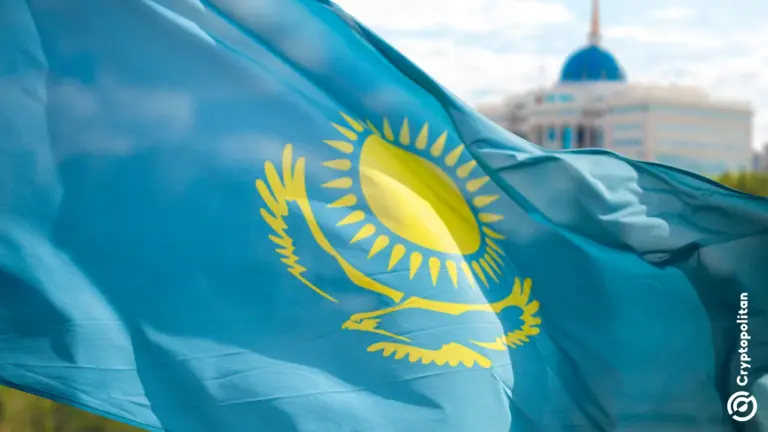
- Kazakhstan’s AIFC Court has ordered Apple and Google to geo-block Coinbase and five other unlicensed exchanges, including sanctioned HTX, from their app stores.
- It follows a 2023 website ban on Coinbase that users bypassed with VPNs.
- Kazakhstan is pushing its $10 billion crypto market onto licensed domestic platforms.
Kazakhstan’s Astana Financial Services Authority (AFSA) has announced that the Astana International Financial Centre (AIFC) Court has named Nasdaq-listed Coinbase alongside UK and EU-sanctioned HTX among the list of products it wants Apple and Google to geo-block from the country’s app stores.
The order, which also names BingX, Bitcoin.com, BitMart, LBank and WEEX, is Kazakhstan’s latest move on Coinbase, adding to a 2023 block on the exchange’s website.
The listed companies were barred from offering or advertising digital-asset services in the special financial and economic hub, AIFC, until they receive the required license.
Which crypto platforms are banned in Kazakhstan?
The AFSA’s October 20, 2026, disclosure confirmed that the AIFC Court granted its claims to stop the operators of the BingX, Bitcoin.com, Huobi Global (HTX), BitMart, Coinbase, LBank and WEEX digital asset platforms from offering or advertising their services in the country until they comply with the AIFC’s licensing regime.
The September 15, 2026 ruling came due to the “extensive and consistent efforts” of the supervision and enforcement teams at AFSA, per CEO Evgeniya Bogdanova.
Nine of the more than 20 platforms that got written warnings in 2025 had the claims against them dropped after they voluntarily restricted their apps in the country.
LBank’s operator had its own claim dropped on September 18 after it blocked access in Kazakhstan.
The remaining six, including Coinbase and HTX, now face enforcement through the court.
While the AIFC is not accusing Coinbase of anything resembling the conduct cited against HTX, both names appearing on the same list is ironic, considering the vast chasm in the regulatory compliance standings of both companies.
Coinbase is cleared to operate in the US, the UK and Canada, where Cryptopolitan reported it launched regulated crypto derivatives for traders in the country.
The other half of the juxtaposition, HTX was sanctioned in the UK and the EU over suspected Russian funds flowing through the exchange.
Why did Kazakhstan try to ban Coinbase?
Back in November 2023, Kazakhstan’s Ministry of Culture and Information cut off access to coinbase.com, saying the exchange breached paragraph 5 of Article 11 of the country’s Law on Digital Assets, per Kursiv, a news outlet based in the country.
The provision bars unlicensed crypto trading anywhere in Kazakhstan outside the Astana International Financial Centre.
However, that block was not effective as users could still open the sites of Coinbase, Kraken and other large exchanges with VPN apps. Notably, Coinbase said at the time that it did not have a physical presence in Kazakhstan.
AFSA’s move now is targeting apps, directly asking Apple and Google to restrict access on a geographic basis. Japan’s Financial Services Agency (FSA) used the same tactic in 2025, when it asked both companies to pull Bybit, MEXC, LBank, KuCoin and Bitget from local stores.
Cryptopolitan reported earlier this month that South Korea’s Financial Intelligence Unit (FIU) announced that it will block access to the websites of 27 unregistered offshore crypto exchange platforms, including KuCoin, MEXC, Phemex, BingX, BitMart, XT.com, Bitrue, CoinW and BTCC in the country.
Kazakhstan is developing its domestic crypto market
Kazakhstan has spent 2026 trying to pull crypto activity onshore. Its regulated market has grown more than 30-fold in three years, topping $10 billion, with a handful of exchanges now licensed through the AIFC and more applying. The country also handed private crypto holders a tax exemption to coax funds off foreign venues.
The court said operating without authorization damages the AIFC framework and creates unfair competition for licensed players carrying AML and customer due diligence costs.
Since May 2026, AFSA has been working with the National Bank of Kazakhstan, which oversees digital-asset providers outside the AIFC.
If you're reading this, you’re already ahead. Stay there with our newsletter.
FAQs
Which crypto platforms did the Kazakhstan court target?
The AIFC Court's injunctions cover the operators of BingX, Bitcoin.com, Huobi Global (HTX), BitMart, Coinbase and WEEX. LBank was on the original September 15 order but was removed on September 18 after it blocked access in Kazakhstan.
Why is Coinbase grouped with HTX in the order?
Both exchanges lack an AIFC license, which is the only basis for the grouping. Coinbase holds licenses in the US, UK and Canada, while HTX has been sanctioned by the UK and EU over suspected help moving Russian money.
Hasn't Kazakhstan blocked Coinbase before?
Yes. In November 2023 the Ministry of Culture and Information blocked coinbase.com for breaching Article 11 of the Law on Digital Assets, but local reports said users still reached the site through VPNs.
Disclaimer. The information provided is not trading advice. Cryptopolitan.com holds no liability for any investments made based on the information provided on this page. We strongly recommend independent research and/or consultation with a qualified professional before making any investment decisions.

Hannah Collymore
Hannah is a writer and editor with nearly a decade of blog writing and event reporting experience in the crypto space. At Cryptopolitan, Hannah contributes to the news page, reporting and analyzing the latest developments in DeFi, RWA, crypto regulation, AI and frontier tech industries. She graduated from Arcadia university with a degree in Business Administration.









