






- The European Council adopted its 21st Russia sanctions package on July 23 and published the list Friday, naming crypto exchange HTX among 18 entities accused of frustrating the bloc’s restrictions on Moscow.
- The action does not amount to a full designation and carries no asset freeze, a narrower measure than the United Kingdom imposed on the same exchange in May.
- The package also creates a new instrument allowing the EU to ban crypto-asset services from an entire third country found to be hosting platforms that help Russia evade sanctions.
The European Council named crypto exchange HTX, formerly Huobi, in its 21st package of restrictive measures against Russia, adopted July 23 and published Friday.

The Council decision places HTX among 18 entities providing crypto-asset or payment services from outside the Union that officials say are significantly frustrating the purpose of the bloc’s prohibitions.
The stated targets are channels that keep money moving to Moscow, whether by connecting to the Russian central bank’s financial-messaging system or by working around existing restrictions.
The wider package runs to 218 listings covering 48 individuals and 170 entities, per TRM Labs, the largest single batch in four years, and freezes assets or bans transactions for 94 banks and major financial institutions.
EU targets HTX without imposing a full asset freeze
The measures taken by the EU against HTX do not constitute a full designation and do not include any freeze on assets. The effect that they have is to prevent transactions between the exchange and EU-based entities from being conducted.
Following the sanctions imposed by the UK in May, the firm issued a statement that compliance is their “absolute top priority” and that they comply with regulations in all jurisdictions where they operate.
Britain moved first against Huobi-linked flows
The EU is following a path London cleared on May 26. The UK sanctioned Panama-registered Huobi Global S.A. as part of a package aimed at what it called the shadow financial systems propping up Russia’s war economy, saying it had reasonable grounds to suspect the exchange had assisted Moscow through sanctioned entities and funds.
That action applied Regulation 17A of the Russia (Sanctions) (EU Exit) Regulations 2019 to a crypto exchange for the first time, and analysts told Reuters it was the first time authorities had sanctioned a venue of HTX’s size.
As reported by Cryptopolitan previously, the United Kingdom alleged that the platform had facilitated money laundering and sanctions evasion with regards to Russian money worth more than $1.5 billion, with almost $4.9 billion being transferred to linked entities between 2021 and 2026.
HTX started out in China in 2013 and currently stands among the biggest crypto exchanges in the world. Justin Sun took a controlling stake in 2022, though the exchange describes the Tron founder as an adviser.
Sun was one of the main financiers of World Liberty Financial, the company formed jointly by President Donald Trump and his sons. The collaboration came to an end after WLFI blocked all HTX addresses in June and HTX delisted its USD1 stablecoin.
New EU tool could hit entire crypto jurisdictions
The package creates a mechanism letting the EU prohibit crypto-asset services from an entire jurisdiction found to be systematically hosting platforms that help Russia circumvent restrictions, per Crypto Times. Until now Brussels has worked entity by entity.
The bloc also extended its transaction ban to 14 crypto-related service platforms based in Georgia, Panama, the United Arab Emirates, the Marshall Islands, Kyrgyzstan, and Belarus, and added four designations tied to the A7 cross-border payments network, including its new links to Africa.
Chainalysis calculates that A7, home to the ruble-pegged A7A5 stablecoin, has processed close to $120 billion and was purpose-built for sanctions evasion. Foreign policy chief Kaja Kallas said the bloc is hitting “over a hundred banks and crypto operators, 40+ vessels in Russia’s shadow fleet,” alongside refineries in Russia and Belarus.
Belarus loses its seat at MiCA-regulated firms
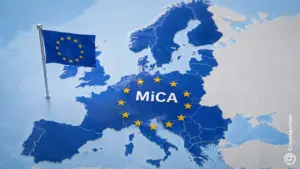
Another measure enacted on the same day, Council Decision (CFSP) 2026/1847, prohibits citizens of and persons residing in Belarus from owning, controlling, or managing crypto-asset service providers registered within the Markets in Crypto-Assets regime. The measure will come into force on August 25 following a 30-day implementation period.
The previous rule covered only wallet, account, and custody providers. The revised regulation is applicable to all categories of services under MiCA, such as operating trading facilities, trading of cryptocurrencies, execution of client orders, token placement, transfer of funds, and giving investment advice or portfolio management.
EU companies in the MiCA framework will have to check their ownership and governance documentation before the deadline arrives. The transition period for MiCA has ended on July 1.
The smartest crypto minds already read our newsletter. Want in? Join them.
Disclaimer. The information provided is not trading advice. Cryptopolitan.com holds no liability for any investments made based on the information provided on this page. We strongly recommend independent research and/or consultation with a qualified professional before making any investment decisions.

Micah Abiodun
Micah Abiodun makes good use of his Environmental Engineering and Management (MSc) at Tallinn University of Technology (TalTech) to polish content and price prediction news at Cryptopolitan. Now on his 7th year in the crypto media space, he covers major cryptos, altcoins, DeFi, stablecoins, macro trends, and emerging tech.









