





Anthropic seeks rehearing, says Pentagon risk label could hit every AI maker

- Anthropic asked the full DC Circuit to rehear its loss over the Pentagon’s “supply chain risk” label.
- The AI lab is arguing the panel misread a 2018 supply-chain law to cover a safety feature common to every AI model.
- A separate California ruling striking down a parallel designation still stands.
Anthropic has escalated its fight against the Pentagon’s “supply chain risk” designation to the level of the federal appeals court.
The AI lab is arguing that if the ruling stands, it will set the legal precedent for the government to slap the national-security threat tag on any contractor for a safety feature that “all AI models” already have.
Anthropic’s petition filing claimed that a law “aimed at hostile foreign actors” is being misread “into one that presumptively reaches every government contractor.”
Anthropic takes supply chain risk designation in DC Circuit
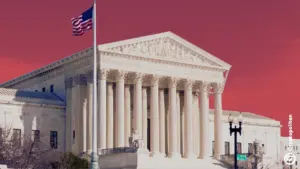
In a Tuesday, October 13 filing, Anthropic asked the US Court of Appeals for the District of Columbia Circuit to rehear the case on the national security threat label from the Pentagon after an unfavorable decision from a three-judge panel in September.
What’s different with this petition is that the en banc review that Anthropic is looking for now will put the matter before the entire bench, not just the original panel.
Anthropic said the panel “incorrectly read” the statute from the 41 U.S.C. § 4713 federal supply-chain security law when it allowed the Defense Secretary to tag the company a national-security risk. It said the “pre-deployment model training” that the decision is based on is already “a feature of all AI models.”
Anthropic told the DC court that the Pentagon’s designation appeared targeted because of the company’s “speech about AI safety” and that it came “without any pre-designation.”
Anthropic claims billions of dollars in lost business due to the government blacklisting.
Why was Anthropic’s supply chain risk designation upheld?
Circuit Judge Gregory Katsas wrote in September that the panel agreed two to one with the Pentagon’s decision to assign Anthropic’s Claude AI model as a supply-chain risk because it refuses certain uses, including lethal autonomous weapons and mass domestic surveillance, per the company’s design.
In the opinion joined by Circuit Judge Neomi Rao, Katsas wrote that the Pentagon could rely on Claude to perform as it needs it to because of the restrictions Anthropic can build into the model.
Anthropic is building on the position held by Circuit Judge Karen LeCraft Henderson, the single holdout on the panel. Henderson argued that the Federal Acquisition Supply Chain Security Act of 2018, which the ruling rests on, was written by Congress to stop hostile or deceptive interference with government technology.
Why Anthropic is warning other AI labs
Anthropic’s petition also warns that other AI labs could receive the same supply-chain risk label when they decline a Pentagon request if the government is allowed to set the standard at designing an AI model to refuse certain use cases.
CEO Dario Amodei and the Trump Administration have historically disagreed over safety rules for frontier AI companies. That disagreement has even resulted in Trump allies circulating a White House memo casting Amodei as the face of AI “doomerism,” as Cryptopolitan reported.
US District Judge Rita Lin in California found that the government had not shown Anthropic would actually sabotage its model when she struck down a similar designation in August. Notably, that designation was issued under a different procurement law.
The smartest crypto minds already read our newsletter. Want in? Join them.
FAQs
What did Anthropic ask the court to do?
Anthropic petitioned the US Court of Appeals for the DC Circuit for an en banc rehearing of the September 2-1 decision that upheld the Pentagon's designation of it as a supply-chain risk.
Why did the Pentagon label Anthropic a supply chain risk?
The Pentagon acted after Anthropic refused to let Claude be used for fully autonomous lethal weapons and mass domestic surveillance, and the majority found those built-in restrictions created uncertainty about whether the model would perform needed functions.
Does the ruling affect other AI companies like OpenAI?
Anthropic argues the reading of 41 U.S.C. § 4713 could reach "every government contractor," and OpenAI secured its own Pentagon deal after the department accepted safety red lines similar to Anthropic's.
Disclaimer. The information provided is not trading advice. Cryptopolitan.com holds no liability for any investments made based on the information provided on this page. We strongly recommend independent research and/or consultation with a qualified professional before making any investment decisions.

Hannah Collymore
Hannah is a writer and editor with nearly a decade of blog writing and event reporting experience in the crypto space. At Cryptopolitan, Hannah contributes to the news page, reporting and analyzing the latest developments in DeFi, RWA, crypto regulation, AI and frontier tech industries. She graduated from Arcadia university with a degree in Business Administration.









