






Vitalik Buterin names a skill AI hasn’t overtaken humans yet: judging new writing

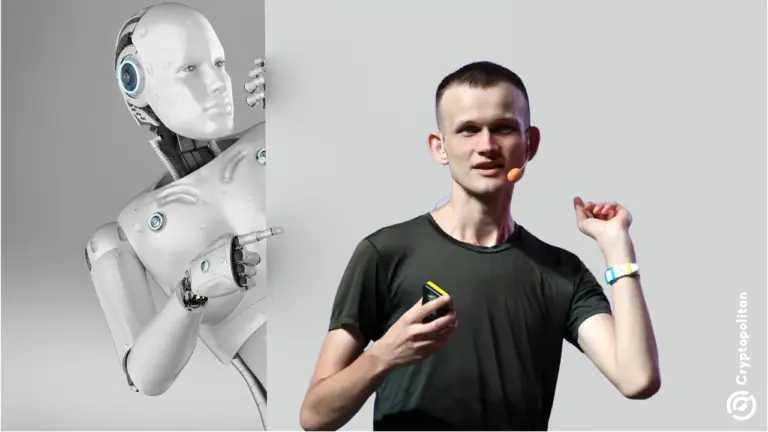
- Vitalik Buterin said that AI is knowledgeable but not wise, making only shallow judgments about what new writing argues.
- Surface reads could miss hidden flaws, with implications for crypto traders and teams that feed whitepapers and audits into AI tools.
- It follows a July experiment in which an AI tool identified Buterin as an anonymous author based solely on his reasoning style.
Ethereum co-founder Vitalik Buterin has found an area where humans still have a leg up over AI, pointing out an apparent weakness in working out the core argument of newly published literature that has not yet been extensively covered in its training.
Vitalik wrote in July that AI was overtaking humans one capability at a time. That assertion came in the same month that an AI tool identified his writing style and named him as the author of an Ethereum document he wrote anonymously.
Commentary has framed Vitalik’s latest post as a word of caution to crypto teams and traders who rely on AI summaries instead of reading entire documents such as whitepapers, audits and governance proposals.
Vitalik Buterin: Knowledge is different from wisdom
Vitalik’s October 29 X post names a capability he thinks humans are still better at than machines, writing that he finds AI “extremely knowledgeable, and so exceptionally able to detect references to almost anything, but not very wise, and so it only makes the most surface-level judgements about what point some writing is making.”
The Ethereum co-founder noted that the contrast is especially noticeable when a model is reading the material for the first time.
AI models can draw on auxiliary literature and years of human commentary when they evaluate famous texts. With brand-new essays, on the other hand, these chatbots can not access the same level of supporting material, so the model has little to build on other than the words themselves.
Vitalik’s remark was prompted by an argument going on X over a Wall Street Journal piece on the demanding Humanities 10 course for Harvard freshmen.
One user, arguing that current AI models are already better than humans as discussion partners on the classics, drew a challenge from another user, who said chatbots produce “slop” when they give feedback on her essays, for now.
Vitalik’s history with AI text analysis
In a June experiment to see whether AI has cracked online anonymity, Vitalik initiated an open challenge to find an Ethereum document he had published anonymously years earlier.
Vitalik confirmed that Franklyn Wang’s team at Co-Invest won the contest on July 6. The tool that picked the winner put the odds of Buterin’s authorship at roughly 20% after sifting through 27 texts.
The document that Vitalik based the contest on went through multiple rounds that would have obscured the author’s trail. The anonymous rewrite of EIP-7503 was drafted in Chinese, ran through the Qwen 2.5 model locally, before he manually cleaned up the translation.
Wang said the model identified the correct document by evaluating reasoning style, such as how Vitalik explains algorithms and technical ideas, rather than vocabulary.
Vitalik argued that machines keep surpassing humans one skill at a time rather than all at once, two weeks later, on July 20.
Why this matters for crypto teams leaning on AI
The practical edge is in crypto security. Vitalik has recently warned that AI could weaken key parts of crypto defenses within two years, and he has backed tools that keep humans in the loop, including a “paranoid mode” for AI chats and an earlier “compute winter button” governance idea.
A surface-level read is exactly the failure mode he flags. Teams handing smart-contract audits, research and token-supply schedules to AI agents may get a fluent summary that misses a subtle flaw, because the model is checking references, not weighing an argument it has never seen before.
Not everyone agrees with his skepticism. Some investors argue AI already beats top human minds in fields like math.
The smartest crypto minds already read our newsletter. Want in? Join them.
FAQs
What did Vitalik Buterin say AI cannot do well?
He said AI is extremely knowledgeable and good at spotting references, but not very wise, so it makes only surface-level judgments about the point a piece of writing is making, especially when reading a text for the first time.
How did AI identify Buterin's anonymous writing in July?
Franklyn Wang's Co-Invest tool analyzed 27 texts and estimated about a 20% chance Buterin wrote an anonymous EIP-7503 rewrite, roughly ten times the next candidate. The tell was his reasoning style, not his word choice, even though he had written it in Chinese and machine-translated it.
Why does this matter for crypto users?
Crypto teams increasingly hand audits, research and governance summaries to AI agents, and a surface-level read could miss a subtle smart-contract flaw or a problem in a token's supply schedule, which is why Buterin favors keeping human checks in the loop.
Disclaimer. The information provided is not trading advice. Cryptopolitan.com holds no liability for any investments made based on the information provided on this page. We strongly recommend independent research and/or consultation with a qualified professional before making any investment decisions.

Hannah Collymore
Hannah is a writer and editor with nearly a decade of blog writing and event reporting experience in the crypto space. At Cryptopolitan, Hannah contributes to the news page, reporting and analyzing the latest developments in DeFi, RWA, crypto regulation, AI and frontier tech industries. She graduated from Arcadia university with a degree in Business Administration.









