







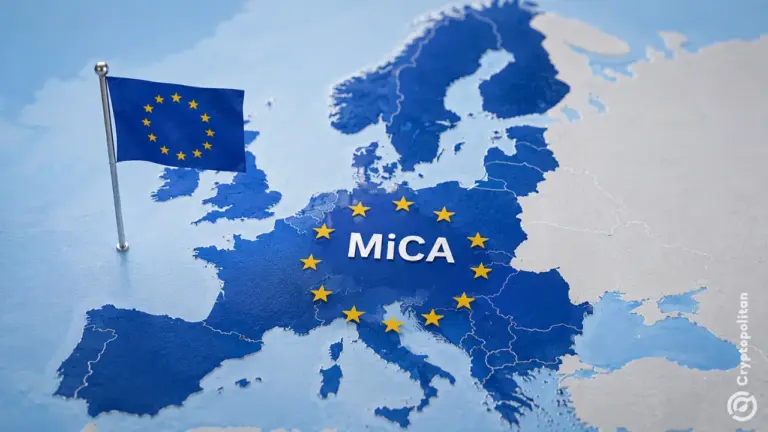
- MiCA’s July 1 deadline has fueled a rise in scams, with fraudsters impersonating regulators and licensed crypto exchanges during user migrations.
- Scammers use fake emails and websites posing as authorities like ESMA and France’s AMF to trick users into transferring crypto.
- MiCA has approved 338 CASPs, while 1,700+ firms are expected to stop serving EU clients, creating a large migration target for attackers.
Europe’s crypto cleanup has opened new doors for fraudsters. According to EU officials, crooks pretending to be regulatory authorities and licensed exchanges have increased their activities after the July 1 deadline for compliance with Markets in Crypto-Assets (MiCA), which required unlicensed businesses to stop operating and drove customers to look for compliant alternatives.
The migration—not crypto prices—is the bigger story. As hundreds of firms stop serving EU investors, many users are being asked to move accounts or assets, creating the uncertainty that impersonation scams thrive on. In the meantime, cryptocurrency markets continue to experience stability with Bitcoin trading around $64,700 and Ether at $1,910 on the morning of August 6.
Scammers exploit MiCA transition
MiCA’s transition phase came to an end on July 1, and crypto firms lacking authorization to operate as crypto-asset service providers (CASPs) could not legally provide services to customers within the EU and EEA anymore.
This shift has prompted many users to take their assets into a licensed exchange or self-custody wallet. Cybersecurity professionals have been warning for years about the risks associated with large migrations owing to the fact that the average investor is expecting to see emails, proof of identity, and instructions on how to transfer the money. The criminals would just copy these messages.
The Financial Times reported that French regulators, Dutch authorities and those at the EU have all said that there has been an increase in these scams. The Dutch Authority for the Financial Markets (AFM) has warned that investors who are looking for licensed providers could be targeted.
How the fake regulators operate
Stéphane Pontoizeau, head of market intermediaries and infrastructure supervision at France’s Autorité des Marchés Financiers (AMF), reportedly stated. The transition has created “an opportunity for scammers more than usual.”
French government has revealed instances of law violators passing off as AMF agents and directing investors to counterfeit websites made to look like government services.
European Securities and Markets Authority (ESMA) issued a similar alert after criminals began using ESMA’s name, logo, and branding in their phishing schemes. The regulatory body has assured that official communications always come from an email address ending with @esma.europa.eu and that the authorities would never ask investors to transfer cryptocurrency for compliance purposes.
🛑 #Fraud alert: scammers are impersonating #ESMA and exploiting the end of the #MiCA transition!
— ESMA – EU Securities Markets Regulator 🇪🇺 (@ESMAComms) July 9, 2026
❌ Don’t engage with suspicious messages
📤 Report scams to your national authorities
🛡️ Verify sources.
Official ESMA emails → @esma.europa.eu
Website → https://t.co/TrxPfYfR1Y pic.twitter.com/MaMIUoyO4c
According to experts specializing in security, these scams make use of psychological techniques rather than technical hacks to deceive their victims. Criminals use official brand logos, regulatory terms, and create pressure on the victims to make them act quickly in order to avoid being in violation of any law. Verifying the instructions by going to the regulator’s website rather than replying to the messages or emails is one of the most efficient means of protection.
EU crypto migration fuels phishing
The extent of the implementation of MiCA clarifies why the swindlers are putting their emphasis on the transition.
As of July 31, MiCA’s registry reported 338 registered CASPs, up from about 194 in May, which means an increase of approximately 74% in three months. Still, this amount only represents a tiny percentage of more than 3,000 crypto companies that were registered under national licenses before. According to VASPnet, it is estimated that more than 1,700 companies will cease operating for EU clients eventually.
The imbalance has resulted in a large proportion of investors flocking to a few licensed platforms. Every campaign promoting the migration from the old to the new platform provides fraudsters with another opportunity to masquerade as the rightful destination for displaced users.
Binance was one of those who suffered from losing the MiCA license ahead of time and terminating services for users in the EU. Clients from unlicensed major platforms are forced to update their accounts, verify their identities and transfer their assets. This is when they are the most vulnerable to phishing.
Various national regulators are revealing the names of violators. Belgium’s Financial Services and Markets Authority (FSMA) has raised awareness among the general public about different unauthorized crypto businesses while reminding investors that their investments in cryptocurrency are usually not eligible for compensation.
A trend that predates the deadline
Impersonation scams were not initiated by MiCA, but it gave a much-needed opportunity to fraudsters.
Chainalysis predicts that scam and fraudulent activities related to cryptocurrencies raked in around $17 billion in illegal revenue in 2025 as AI-powered social engineering techniques are used to enhance the effectiveness of phishing attacks through counterfeit websites, phony customer support agents and emails that look authentic.
This lesson has applications beyond Europe, as important legal changes, whether related to new licensing rules or even upcoming exit from the exchanges (moving from one platform to another), create opportunities for redirecting clients, which lasts for a short period of time that fraudsters are quick to exploit. Although MiCA is supposed to boost investors’ protection over time, its introduction shows that regulatory changes in the industry can result in short-term risks, which means that it is equally important for investors to check who they work with and whether they use licensed platforms.
If you're reading this, you’re already ahead. Stay there with our newsletter.
FAQs
What did EU regulators actually warn about?
French regulator AMF, the Dutch AFM and EU markets authority ESMA warned that fraudsters are impersonating regulators and licensed crypto firms to trick users into moving their assets to fraudulent websites, with cases rising since the July 1 MiCA deadline, according to the Financial Times.
Why does the MiCA deadline make scams more likely?
After July 1, firms without a MiCA license had to wind down or move clients to authorized providers, leaving many crypto users searching for a new platform, which fraudsters exploit by posing as regulators or licensed exchanges offering to help them switch.
How many crypto firms lost access to the EU market?
ESMA's register showed roughly 320 authorized providers in early August, while data provider VASPnet estimated more than 1,700 firms would have to stop serving EU clients; the most notable to exit was Binance, which failed to secure a MiCA license.
Disclaimer. The information provided is not trading advice. Cryptopolitan.com holds no liability for any investments made based on the information provided on this page. We strongly recommend independent research and/or consultation with a qualified professional before making any investment decisions.

Ashish Kumar
Ashish Kumar is a crypto and financial journalist with eight years of newsroom experience. He covers what’s happening with crypto markets, regulation, DeFi, and exchange ecosystems. He has worked with Coingape, Todayq, and Newsroompost. Ashish holds a PGDP in English Journalism from the IIMC. He has also interviewed industry figures including Arthur Hayes, Yat Siu, Austin Federa, and more.









