



Forget Q-day: Ethereum’s Justin Drake says AI math could break crypto’s signatures first

- Justin Drake asked the crypto industry to start a calm, controlled migration of funds to fresh addresses that have never exposed a public key.
- He tied the warning to AI-generated mathematics, including OpenAI’s release of 722 machine-produced manuscripts.
- In the worst case, private keys could be recovered within a week, and roughly 6 million BTC already sit in addresses with exposed public keys.
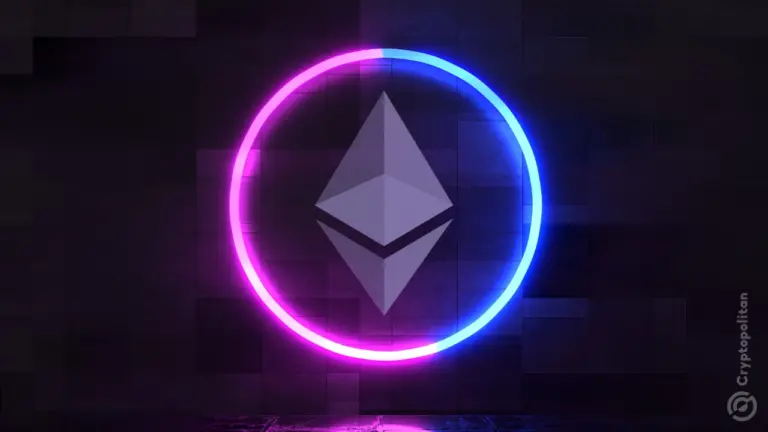
Justin Drake, a researcher at the Ethereum Foundation, has advised those in the crypto space to start thinking of quietly relocating their funds into new wallets, because the signature scheme that secures Bitcoin and Ethereum could be broken before the arrival of a quantum computer.
Drake’s warning and how wants to protect exposed crypto
Drake made the assertion in an X post and asked the crypto industry to “calmly begin planning for ‘bunker mode.’” His main point was to move assets, large holders first, into addresses with public keys hidden behind a hash since they have never signed a transaction.
Drake’s rationale is logical. Bitcoin and Ethereum depend on the Elliptic Curve Digital Signature Algorithm, or ECDSA, to determine whether or not a transaction arrived from the actual key holder. The moment an address signs anything, its public key is more or less visible on-chain, and Drake believes that any funds left in that address after a signature should be transferred again.
Drake did not attempt to say current cryptography had fallen. At the moment, Ethereum says a quantum computer is unable to break the network, and its users do not need to worry. Drake sees a quantum break-in happening in months, not years.
Why an AI breakthrough is the trigger, not a quantum computer
Most have anticipated “q-day,” the day a quantum computer will break public-key cryptography. Drake makes a different argument; he ties his warning to the rise in AI-generated mathematics. An example is OpenAI’s release of 722 mathematical manuscripts produced by a yet-to-be-launched internal model.
The manuscript arranges the results into 372 families in a public GitHub repository. The majority of them have proofs formalized in Lean, making it easy for a computer to check them. OpenAI states that the internal model was given about 4,000 problems.
Drake saw that and believed he had seen it all, writing “mathematical superintelligence is upon us.” His worry stems from the fact that elliptic curves possess more mathematical structure than hash functions, and he believes this exposes them to a fresh discovery.
He alluded to a future where a new algorithm on ordinary computers could break both elliptic-curve cryptography and RSA, without quantum hardware.
The case that AI can already find crypto errors
Drake is not the only one who sees AI as a cryptographic risk rather than just a cryptographic tool. In July, Anthropic said its Claude Mythos Preview model made improvements on the best-known attack on HAWK, and cut its key strength by 50% in 60 hours.
HAWK is a post-quantum signature candidate submitted to NIST. Anthropic says the discovery will not bear any effect on production systems, because HAWK has not been deployed.
The quantum track isn’t slowing down. Based on reports, future quantum computers could break the elliptic-curve cryptography protecting cryptocurrency with fewer qubits than previously thought, and a 2029 migration deadline was reiterated.
Where the exposed coins are located
A report by Europol came out this week, concluding that blockchains cannot be hacked by quantum computing due to the strength of the hash functions binding blocks. Wallets were deemed “the primary point of exposure,” and the only solution would be pre-emptive migration, as Drake urged as well.
Europol made reference to an on-chain count that showed 6.04 million BTC, approximately 30.2% of supply, had exposed public keys as of May, 2026.
Drake alluded to Project Eleven’s Bitcoin Risq List, which tracks over 14 million addresses with exposed keys. About 20,000 exposed addresses were holding under 50 BTC and could be raided by an attacker before going for smaller wallets. He called these wallets “Satoshi’s shield”.
Drake spoke of “post-AI cryptography,” which would be necessary for an exit from “bunker mode”. He prefers a security built on hash functions. Ethereum’s draft roadmap already leans that way, toward hash-based schemes and formal verification.
The smartest crypto minds already read our newsletter. Want in? Join them.
FAQs
What is "bunker mode" and what does Justin Drake want holders to do?
Bunker mode is Drake's term for pre-emptively moving crypto, large holders first, into fresh addresses whose public keys stay hidden behind a hash because they have never signed a transaction. He calls it a personal recommendation and warns against panicking or rushing the move.
Why does Drake think signatures could break before "q-day"?
He points to rapid progress in AI-generated mathematics, including OpenAI's release of 722 model-produced manuscripts, and argues elliptic curves are more exposed to new discoveries than hash functions because they carry more mathematical structure. He suggested a worst case could arrive in "months not years."
How much Bitcoin is actually exposed to this risk?
A Europol report cited by Cryptopolitan found about 6.04 million BTC, or 30.2% of supply, had exposed public keys as of May, with another estimate near 6.9 million, and Drake referenced Project Eleven's list of more than 14 million addresses with exposed keys.
Disclaimer. The information provided is not trading advice. Cryptopolitan.com holds no liability for any investments made based on the information provided on this page. We strongly recommend independent research and/or consultation with a qualified professional before making any investment decisions.

Hannah Collymore
Hannah is a writer and editor with nearly a decade of blog writing and event reporting experience in the crypto space. At Cryptopolitan, Hannah contributes to the news page, reporting and analyzing the latest developments in DeFi, RWA, crypto regulation, AI and frontier tech industries. She graduated from Arcadia university with a degree in Business Administration.









