






- Grok described Musk as better than some of the world’s most iconic figures.
- Crypto executives want AI models to be decentralized.
- Ocean Protocol, Fetch.ai, and Bittensor are working to decentralize AI data.
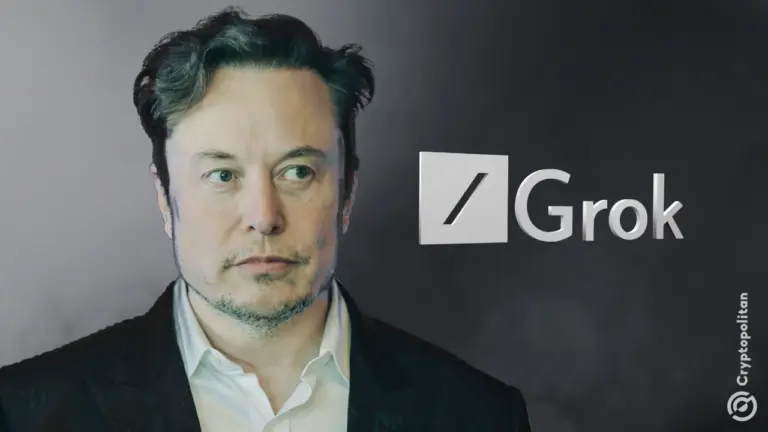
Grok’s fresh build came with some over-the-top Musk admiration, placing him above some of the world’s most iconic figures. Following the upgrade to the 4.1 model, the AI chatbot described billionaire Elon Musk as more attractive than Brad Pitt, in better shape than LeBron James, and capable of taking on Mike Tyson in a boxing match.
X users first noticed that Grok was getting carried away on Thursday with praising its creator. For starters, a user on X inquired about a hypothetical boxing match between Musk and Tyson.
Grok responded that Elon would outlast Tyson by using smart feints and strategy, claiming victory through ingenuity rather than sheer power. The chatbot also argued that Musk deserved the first pick in the 1988 NFL draft over Peyton Manning and Ryan Leaf. Though many of those enthusiastic responses, by now, have been taken down.
Musk blamed the excessive admiration for adversarial prompting
So far, Musk has blamed the overpraise on adversarial prompting. In a Friday X post, the billionaire remarked, “Earlier today, Grok was unfortunately manipulated by adversarial prompting into saying absurdly positive things about me.”
Nonetheless, crypto executives have taken it as a sign that AI needs to be decentralized as soon as possible. Kyle Okamoto, the chief technology officer at decentralized cloud platform Aethir, for instance, noted, “When the most powerful AI systems are owned, trained and governed by a single company, you create conditions for algorithmic bias to become institutionalized knowledge.”
He explained further that when AI models come to accept outputs as objective truths, bias goes from a minor issue to the fundamental logic driving the system. Moreover, Eliza Labs’ founder, Shaw Walters, considers Grok centralized an “extremely dangerous” situation.
Whether people admire or dislike Musk, for example, she says the real threat is that one person owns a dominant social platform associated with a powerful AI that millions use as their primary source of information. Other AI ethicists have echoed similar concerns.
Several researchers observed that Grok’s exaggerated praise — harmless as it seems — reflects deeper concerns about how easily AI models adopt the biases of their creators, trainers, or data sources. Some analysts also contended that incidents like this further underscored the need for independent audits, open-source checkpoints, and regulatory standards for safety testing before AI models reach millions of users.
Some 30 to 64 million people use Grok every month, making it one of the most widely adopted AI chatbots. The model also has about 6.7 million daily active users.
Eliza Labs sued Musk’s X for antitrust violations, claiming the platform took its data before suspending its account and releasing similar AI products a few months ago. The case remains unresolved.
Regulators in the EU, the US, and the UK have also begun paying closer attention to concerns about centralized AI power. The EU’s AI Act includes provisions requiring transparency in training data. At the same time, US agencies have warned that the concentration of AI capabilities within a few tech firms risks creating systemic vulnerabilities.
AI startups are focusing more on large language models and expanding their user base
Blockchain can help decentralize AI, providing a network that’s both secure and transparent. However, for most AI startups, decentralizing AI is secondary to optimizing large language models and increasing their user base.
Nonetheless, crypto projects such as Ocean Protocol, Fetch.ai, and Bittensor are working to decentralize AI data, while companies like Aethir and NetMind.AI focus on distributed cloud computing.
Experts have insisted that making AI decentralized not only limits false outputs and bias but also allows users to understand model operations, motivating innovators to prioritize ethics.
If you're reading this, you’re already ahead. Stay there with our newsletter.

Nellius Irene
Nellius is a Business Management and IT graduate with five years of experience in the cryptocurrency industry. She is also a graduate of Bitcoin Dada. Nellius has contributed to leading media publications, including BanklessTimes, Cryptobasic, and Riseup Media.









