






U.S. and China open AI talks as Trump-Xi Summit puts AI race at center stage

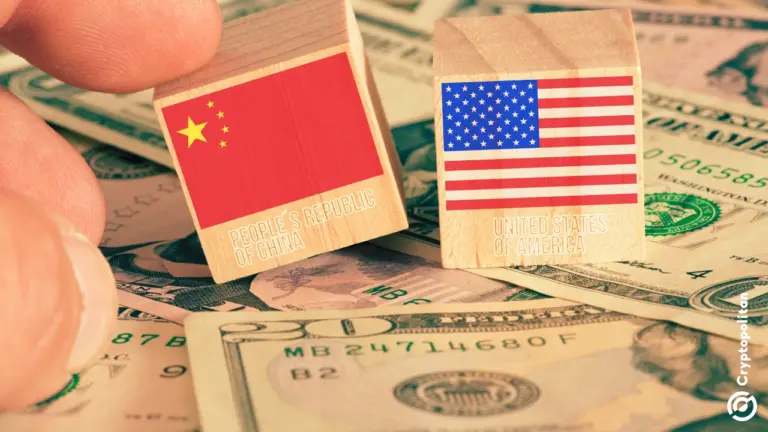
- China and the U.S. are set to hold AI discussions.
- President Trump had previously called warnings on unchecked AI as a hoax.
- Szalwinski noted that it will be challenging to decouple AI safety from overall U.S.-China hostility.
Washington and Beijing have agreed to launch AI discussions ahead of a crucial summit between Presidents Donald Trump and Xi Jinping in Washington on Thursday. Dire warnings about the threat of unchecked AI have injected a fierce sense of urgency into the talks.
Until now, attempts to establish global guidelines for AI safety have faced setbacks due to intense competition and distrust between the world’s two superpowers.
Another source of delay is the widespread doubt about the tech’s existential risks; Trump has openly rejected such warnings, a position that experts say aligns with China’s broader strategic approach.
In one of his more recent X posts, Trump wrote, “The people that say AI is going to destroy the World, and that Data Centers are bad for your neighborhood, are the same people that said, just a short time ago, that the World would be extinguished by ‘Climate Change. That HOAX never worked out for them, and now they’re on to the next one.”
Nonetheless, despite deep-seated friction, the necessity for U.S.-China coordination has taken on new prominence ahead of the leaders’ Sept. 24 summit in the nation’s capital.
The shift follows unprecedented warnings from the American tech industry demanding a slower, more deliberate approach to AI advancement.
Bessent said they proposed a notification system for AI failures or incidents
The U.S. administration has already begun laying the groundwork for the AI discussions. President Trump confirmed that AI is on next week’s packed schedule, and Treasury Secretary Scott Bessent told reporters that the U.S. is willing to discuss the mutual risks with Beijing. Bessent also revealed that the U.S. floated a formal notification protocol for AI failures or incidents.
He noted, “We think that just like any cross-border activity that is moving from opaque to more transparency between the number one and number two AI powers in the world is very important.”
The proposed mechanism would focus on some of the most serious risks associated with advanced AI, like cyberattacks, system failures, and threats to critical infrastructure.
The first aim, rather than a global AI treaty, is to establish a mechanism for the two countries to inform each other when an AI-related incident could threaten both countries’ national security.
That way, Washington and Beijing could share information in the event of an emergency, but they are also competing over more advanced chips, AI models, and computing infrastructure.
Some U.S. AI company executives, including Anthropic’s chief Dario Amodei and OpenAI’s Sam Altman, have called for a slowdown in AI development, given the increased number of risks.
Amodei particularly advocated steps they could take in “pacing the frontier.” He also supported Trump’s vision that the U.S. needs to maintain its competitive edge.
One former Anthropic employee, on the other hand, gave a more concerning outlook. He asserted that he worries about humanity’s existence in the coming years.
Some lawmakers, so far, have also insisted on the need to establish inspections and safety standards with China, while others are still encouraging Trump to take steps to slow China’s AI development, including limiting its access to sophisticated AI technologies.
Szalwinski argues it will be difficult to negotiate AI safety while separating the existing rivalry
On China’s side, some have also cautioned about the possible dangers of the technology. For instance, China’s top intelligence official contended that artificial intelligence directly threatens the Chinese Communist Party’s political authority.
Additionally, Chinese Foreign Ministry spokesperson Guo Jiakun emphasized that international stakeholders should work together to advance an open, inclusive AI framework dedicated to a global public good.
Alison Szalwinski, senior vice president at strategic and capital advisory firm The Asia Group, however, contended that while the U.S. and China now broadly agree on the dangers of AI cyber capabilities, the biggest obstacle is whether AI safety can be decoupled from overall U.S.-China hostility.
“At this point, the immediate goal is less about negotiating a major AI agreement — we’re just not there yet, and more about establishing a durable channel for discussing frontier AI risk,” Szalwinski said.
Kyle Chan from the John L. Thornton China Center at the Brookings Institution also expressed doubts about possible cooperation on AI safety. He stated, “I don’t think that Trump is feeling any pressure about the existential AI risk issue. He calls it a hoax multiple times. It reminds me very much of how he treats climate change.”
He added that President Trump is only focused on promoting AI demand and the stock market increase.
If you're reading this, you’re already ahead. Stay there with our newsletter.
FAQs
What are the U.S. and China discussing about AI?
The U.S. and China are expected to discuss AI safety risks, including cyberattacks, system failures and threats to critical infrastructure. Washington has also proposed a notification system that would allow the two countries to alert each other about serious AI-related incidents.
Why are the U.S. and China discussing AI safety?
The talks come as concerns about advanced AI risks grow, while Washington and Beijing continue competing over AI models, advanced chips and computing infrastructure. The discussions could provide a channel for communication during major AI-related incidents.
Can the U.S. and China reach an AI safety agreement?
The two countries face significant challenges because AI safety discussions are taking place alongside broader tensions over technology and national security. Officials and experts have suggested that establishing a communication channel may be a more immediate goal than negotiating a comprehensive AI treaty.

Nellius Irene
Nellius is a Business Management and IT graduate with five years of experience in the cryptocurrency industry. She is also a graduate of Bitcoin Dada. Nellius has contributed to leading media publications, including BanklessTimes, Cryptobasic, and Riseup Media.









