




Trump’s $2,000 tariff dividend would require congressional approval, Treasury says
 Collins J. Okoth
3 mins read
Collins J. Okoth
3 mins read
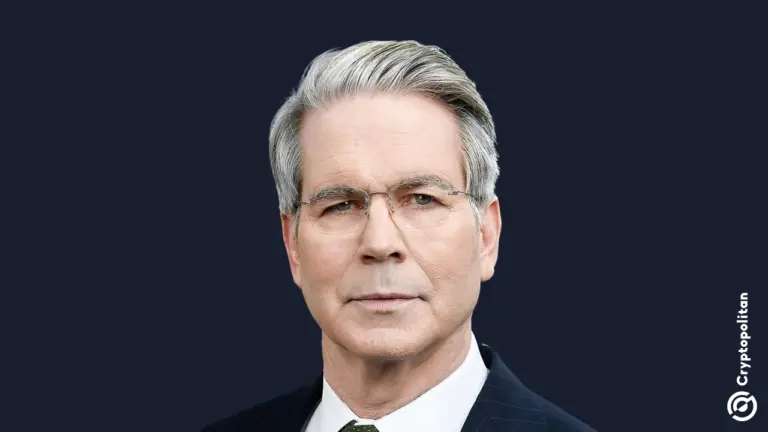
- Treasury Secretary Scott Bessent said President Donald Trump’s proposed $2,000 tariff dividend checks would require congressional approval.
- The payments are intended for working families, but preliminary estimates suggest the program could cost up to $600 billion.
- Nobel laureate Paul Krugman described the latest initiative by President Trump to offer $2,000 paychecks as deeply irresponsible.
U.S. Treasury Secretary Scott Bessent revealed today that the proposed $2,000 tariff checks on Americans would need congressional approval. President Donald Trump proposed the tariff checks, intended for working families, but estimates suggest that the program could cost the country up to $600 billion.
Bessent spoke on Fox News Sunday Morning Futures, emphasizing that the Trump administration has no unilateral authority to authorize large-scale direct payouts. He stressed that the administration would require approval from Congress.
According to Bessent, the payments are intended for working families and would include income limits as part of the administration’s broader economic solutions.
Bessent says Americans earning over $100K won’t receive a dime
The tariff dividend payments idea was first brought to light in August by the current President Donald Trump. He noted that billions of dollars in tariff revenue would fund the redistribution of funds directly to Americans.
Based on his Truth Social post, Trump said that the dividend of at least $2,000 per person, excluding high-income families, would be paid to most Americans. He added that the leftovers would be used to reduce the national debt.
Trump described the payments as a way to return tariff proceeds to the public while fulfilling the goals of reducing the national debt.
Scott Bessent suggested that the payments may not come as checks, but could take the form of tariff-funded tax relief. This could come as no taxes on tips, overtime, or Social Security. He emphasized that no formal plan had yet been finalized. Bessent further noted that any payments would be targeted to working families with income limits to exclude higher earners.
For instance, the COVID-19 era stimulus targeted individuals making up to $75,000 and married couples not exceeding $150,000 a year. The Treasury Secretary reiterated that everything is on the table in terms of policy options that aim to support working families.
According to a recent Cryptopolitan report, Bessent also noted that Americans earning over $100,000 a year may not receive a dime from the proposed $2,000 paychecks.
This is not the first time Trump has advocated for such an initiative. During the COVID-19 era, the President proposed $2,000 pandemic relief payments in late 2020. The initiative was enacted in part by President Joe Biden under the American Rescue Plan.
Based on U.S. Treasury data, approximately 476 million payments were made as stimulus over three rounds totaling $814 billion towards U.S. households.
Paul Kruger says Trump’s initiative is deeply irresponsible
Nobel laureate Paul Krugman described the latest initiative by President Trump to offer $2,000 paychecks as deeply irresponsible. He warns that repeating large-scale cash injections could trigger inflation. He also criticized the plan, citing the federal deficit, which is approaching $2 trillion.
The Committee for a Responsible Federal Budget, which is a non-partisan watchdog group, estimated that the $2,000 tariff checks may cost the U.S. roughly $600 billion if modeled like the COVID-19 stimulus packages.
The cost goes up nearly twice the projected tariff revenue for 2025, which economists estimate at $300 billion. As of September, only $195 billion had been collected. The Committee argued that tariff revenue alone would not cover the cost of the proposed payouts.

In addition to the short revenue collection, some tariffs under the revenue estimates were placed under the International Emergency Economic Powers Act (IEEPA) and have been subject to review by the Supreme Court. According to customs law experts, if the court invalidates the tariffs, the available funds under the projected $300 billion revenue could be reduced and temporarily increase borrowing needs and further complicate fiscal planning.
Despite the backlash from several officials, Trump and his administration framed the plan as a solution to rising costs of living. So far, the proposal has not made any official development; it’s still under the fate of congressional action and legal outcomes regarding tariffs.
The smartest crypto minds already read our newsletter. Want in? Join them.
Disclaimer. The information provided is not trading advice. Cryptopolitan.com holds no liability for any investments made based on the information provided on this page. We strongly recommend independent research and/or consultation with a qualified professional before making any investment decisions.
Collins J. Okoth
Collins Okoth is a journalist and markets analyst with 8 years of experience covering crypto and technology. He is a is a Certified Financial Analyst and holds a degree in Actuarial Mathematics. Collins has previously worked with Geek Computer and CoinRabbit as a writer and editor.









