







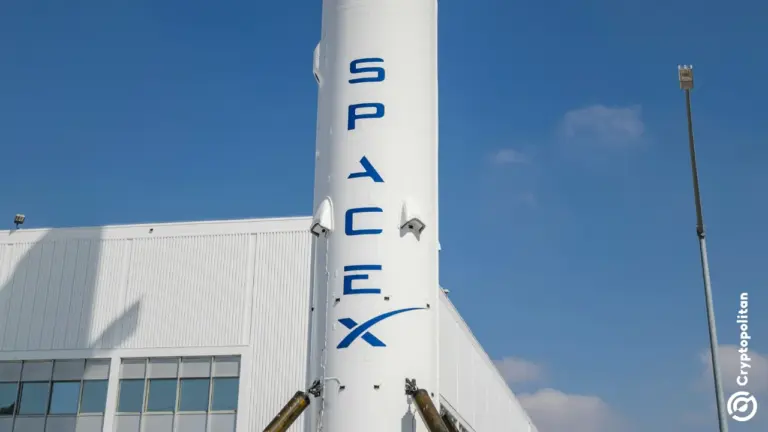
- SpaceX reached orbit with Starship for the first time on Flight 14 and deployed 26 Starlink V3 satellites, but the mission ended early after an engine failure.
- Starship was to hit orbit to deploy its largest satellites at scale which would sharply expanded Starlink inside a $626 billion space economy.
- The catch is that one successful orbital flight does not yet prove the reliable, high-cadence operations SpaceX’s commercial plans depend on.
SpaceX launched Starship into orbit for the very first time on 28 September 2026, releasing 26 operational Starlink V3 satellites. However, due to engine failure, SpaceX had to cut the mission short. This flight demonstrated that the Starship can lift up SpaceX’s biggest satellite, but it didn’t prove that the company can maintain a sufficient launch frequency.
An engine dropped out on the way up
Starship successfully took off from Starbase,Texas at 7:48 a.m. CT. During its ascent, one Super Heavy engine switched off, which was soon followed by an early shutdown of a vacuum Raptor engine on the upper section of the spacecraft. As a result, Starship effectively adapted by utilizing the rest of its engines for a longer period of time before concluding its orbital burn after the flight managers checked the status of the craft.
The spacecraft accomplished its mission of reaching low-Earth orbit at an altitude of about 275 kilometers and releasing its batch of 26 Starlink V3 satellites. SpaceX wanted to accomplish about six orbits during a period of nearly ten hours, but due to the engine problem, the mission was terminated after only about three hours. According to SpaceX:
“The Starlink V3 satellite is designed to support 1 Tbps of downlink and 160 Gbps of uplink capacity.” — SpaceX
This signifies the newly introduced additional 26 Tbps of possible network capacity, which is nearly 10 times higher than the capacity provided by a Falcon 9 launch of the V2 Mini satellites.
Why orbit was the milestone SpaceX needed
According to a report from Cryptopolitan, putting Starship into orbit is the main obstacle that SpaceX must overcome before it can begin deploying V3 and proceed to conduct refueling tests in space.
Starlink is already the leading name in consumer satellite broadband. Research conducted by Ookla indicates Starlink’s share of worldwide satellite Speedtest samples as of Q3 2025 is 97.1%, while Viasat holds only 1.7%. That represents a usage-sample measure, not subscriber market share.
Additionally, as of March 31, 2026, SpaceX has recorded approximately 10.3 million subscribers for its Starlink service. Starship will help to increase this advantage since it is capable of carrying more V3 capacity on each mission than its predecessor Falcon 9.

A $626 billion market leaning on satellites
In 2025, the broader space economy had generated nearly $626 billion in revenue. Around 78% of that came from commercial activity. Nevertheless, the OECD has issued a warning about strategic vulnerabilities resulting from reliance on space infrastructure that may allow for concentration in the markets.
The benefits are sizable. According to Oxford Economics, LEO broadband is set to cater to 78 million to 421 million users and in doing so, add anywhere between $32 billion and $863 billion to global GDP by 2035, depending on various factors including policies, affordability, and competition.
What happened on Flight 14 was more than just a technological achievement but it also provided SpaceX an opportunity to see how Starship can speed up the rollout of Starlink. The next step is finding a way to ensure that more such successful orbital trips can be accomplished by SpaceX in the future.
Don’t just read crypto news. Understand it. Subscribe to our newsletter. It's free.
FAQs
What did SpaceX achieve on Starship Flight 14?
Starship reached orbit for the first time and deployed all 26 Starlink V3 satellites, then made contact with each satellite over laser links, ground stations and user terminals, according to SpaceX's flight summary.
Why was Flight 14 cut short?
A vacuum engine on Starship's upper stage shut down early during ascent, and SpaceX said it limited time in orbit out of caution before deorbiting the vehicle for a splashdown in the northern Pacific.
How big is Starlink compared with its satellite rivals?
Starlink accounted for 97.1% of all global satellite Speedtest samples in the third quarter of 2025, far ahead of Viasat at 1.7%, and had 9.2 million customers from 10,790 satellites launched since 2019, according to Ookla.
Disclaimer. The information provided is not trading advice. Cryptopolitan.com holds no liability for any investments made based on the information provided on this page. We strongly recommend independent research and/or consultation with a qualified professional before making any investment decisions.

Ibiam Wayas
Ibiam Wayas has covered the crypto news beat since 2019. He studied Computer Science at National Open University of Nigeria. His work has appeared on various crypto news platforms, including Coinfomania, Crypto News Australia, and AltcoinBuzz. Drawing on his background in Computer Science, he now focuses on crypto, robotics, and longevity news.









