







-
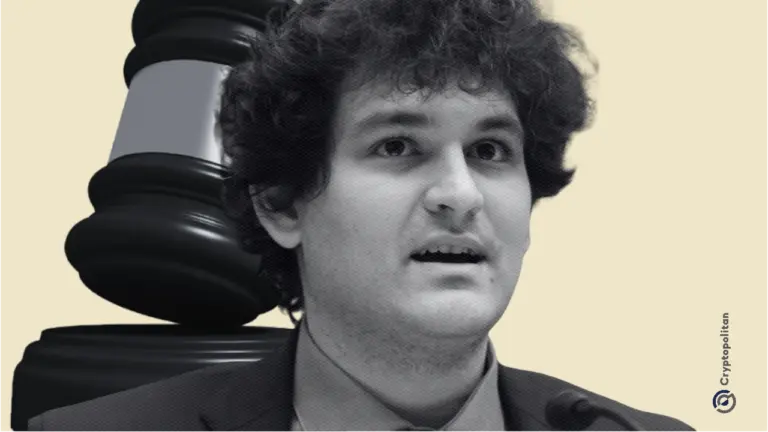
SBF’s Supreme Court appeal challenges his conviction evidence and $11 billion forfeiture.
-
The US government’s response deadline has been extended to November 16.
-
A new trial appears unlikely, but the forfeiture could be reduced.
Sam Bankman-Fried’s (SBF) lawyer in his appeal to the United States Supreme Court, Jeffrey Fisher, told Cointelegraph that Sam’s petition to the Supreme Court raises two key arguments.
First, Bankman-Fried’s criminal trial used irrelevant losses incurred by the customers of FTX to determine whether he should be charged with crimes. Second, his $11 billion forfeiture violates the Eighth Amendment.
Why the November deadline is the next thing to watch
First, the justices have to decide whether or not to accept the case. Fisher, a lawyer at Hecker Fink LLP, stated that Supreme Court regulations required Bankman-Fried to submit his petition for a writ of certiorari within 90 days after the appellate decision. The petition was filed in September 2026.
The government initially had until October 15 to respond. As per Fisher’s statement, the court has extended this deadline to November 16. This delay implies that a decision regarding whether to review the case can come at the end of 2026 or at the beginning of 2027.
In case the justices decide to examine the case, Fisher stated that the decision can be issued in the present term, which expires in June 2027, or in the next one. The positive decision might lead to a new trial.
The two arguments the petition puts in front of the justices
In 2023, Bankman-Fried was found guilty of seven felonies for the misuse of client money at FTX. He was jailed for 25 years and ordered to forfeit $11 billion. The conviction was upheld by a three-judge panel of the Second Circuit in June 2026.
The first reason for appeal deals with what pieces of evidence could be used by the jury. The prosecution built a case on the theory of fraudulent inducement, which means that it doesn’t matter whether the customers got their money back eventually.
The Second Circuit agreed with the prosecutors, deciding in June that the clients of FTX were defrauded right from the moment when Bankman-Fried moved their money to Alameda Research, no matter his intentions.
Michael Smerconish discusses my case and Supreme Court appeal. Judge Kaplan allowed the government to (falsely) claim over $10 billion of depositor losses — and prohibited me from responding. https://t.co/6CVRAU3Qim
— SBF (@SBF_FTX) September 14, 2026
Fisher calls such interpretation “rather unusual.” “Our whole point is the theory the government chose makes it irrelevant whether any customers lost money or, if so, how much.”
The other reason is the forfeiture itself. Bankman-Fried’s appeal calls the $11 billion sum “crushing” and excessive, referring to the Eighth Amendment protection against excessive fines established since Magna Carta.
SBF may have better odds of cutting $11B forfeiture
The filing makes use of conflicting decisions from the Supreme Court and other circuits. It references Kousisis v. United States, decided in 2025, which was interpreted by Bankman-Fried’s lawyers to allow the prosecution to seek lengthy sentences if a person is made to give up their money due to any kind of misrepresentation, regardless of whether there is any actual financial loss suffered.
Mark Bini, formerly a federal prosecutor and now with Reed Smith, said that “the chance of getting a new trial seems low” because basing his case on the Carpenter case instead of the Kousisis case is “an uphill battle.”
What interested him more about the case was the question of forfeiture due to the sheer value.
Bini noted that in case the court accepted the forfeiture claim but rejected the evidence claim, it was likely to reduce the sum rather than order a retrial.
What the money fight means for Bankman-Fried
It may follow Bankman-Fried throughout his life. He is scheduled to be released from jail in 2043, and according to Fisher, the ruling will allow the government to seize almost any future income.
“Has no money to repay it,” Fisher explained, calling it an $11 billion debt that he owes the government for the rest of his life.
There are several problems associated with making payments. In 2025, FTX creditors have started receiving payouts, but they received them at token prices, which existed in 2022 when the exchange went bankrupt, so some people missed three years of income.
Bankman-Fried is also requesting a pardon from President Donald Trump, which is pending in the Office of the Pardon Attorney. The United States Senate adopted a unanimous resolution against granting him clemency.
If you're reading this, you’re already ahead. Stay there with our newsletter.
FAQs
What is Sam Bankman-Fried asking the Supreme Court to do?
He is asking the court to review his fraud conviction and vacate the $11 billion forfeiture order, arguing his trial improperly admitted evidence on customer losses and that the forfeiture violates the Eighth Amendment.
When could the Supreme Court decide whether to hear the case?
The government has until November 16 to respond, which could let the justices decide on review in late 2026 or early 2027, according to Fisher.
How long is Bankman-Fried's prison sentence?
He was sentenced to 25 years after being convicted in 2023 on seven felony fraud counts and is expected to remain in prison until 2043.
Disclaimer. The information provided is not trading advice. Cryptopolitan.com holds no liability for any investments made based on the information provided on this page. We strongly recommend independent research and/or consultation with a qualified professional before making any investment decisions.

Ashish Kumar
Ashish Kumar is a crypto and financial journalist with eight years of newsroom experience. He covers what’s happening with crypto markets, regulation, DeFi, and exchange ecosystems. He has worked with Coingape, Todayq, and Newsroompost. Ashish holds a PGDP in English Journalism from the IIMC. He has also interviewed industry figures including Arthur Hayes, Yat Siu, Austin Federa, and more.









