






OneKey cuts CryptoBilis as fallout from $86M Ledger wallet exploit spreads

- OneKey Founder and CEO Yishi Wang said OneKey has revoked CryptoBilis’s authorization as a dealer for its devices.
- Because CryptoBilis also sold OneKey, Trezor, Tangem, SafePal and imKey, buyers of those brands are now asking whether their devices are safe.
- Ledger confirmed an unauthorized hardware implant in at least one device sold by CryptoBilis, with losses now estimated between $86 million and $93 million.
OneKey Founder and CEO Yishi Wang has announced that the hardware wallet maker’s “dealer network will shrink significantly,” after a full review of previously certified dealers, while those with “unverifiable operating entities or unclear ultimate beneficiaries will have their authorization revoked and be removed from the official website.”
Yishi also said OneKey has revoked CryptoBilis’s authorization as a dealer for its devices.
That warning lands after one of the Ledger wallets sold by Southeast Asian reseller CryptoBilis was reported to have contained an unauthorized hardware implant, as the inquiry continues into a crypto theft with losses now estimated between $86 million and $93 million.
What has Ledger said about the CryptoBilis wallet hack?
An October 10 update shared on Ledger’s support page confirmed that pending the end of its investigation, CryptoBilis will not be selling anything from the hardware wallet maker. That statement came after Ledger said that at least “one of the impacted users’ devices contained an unauthorized hardware implant.”
Ledger stressed that its own systems and direct sales channels were untouched, pointing out that the exposed devices all traced back to CryptoBilis.
Ledger is advising anyone who bought wallets from the Southeast Asian reseller not to initialize any devices they have not set up yet. And for anyone who has already set them up, they are advised to transfer their funds to wallets issued directly by Ledger, not bought from resellers.
So far, security analysts have estimated that about 300 Ledger wallets have been drained of an estimated $86 million to $93 million.
Why OneKey and SafePal buyers are nervous
While Ledger wallets have been the only ones to report thefts so far, the security scare has spread to customers of other wallet makers. CryptoBilis lists itself as an authorized Ledger reseller of Ledger, Trezor, OneKey, Tangem, SafePal, imKey and other wallets in Malaysia, also operating in Indonesia and the Philippines.
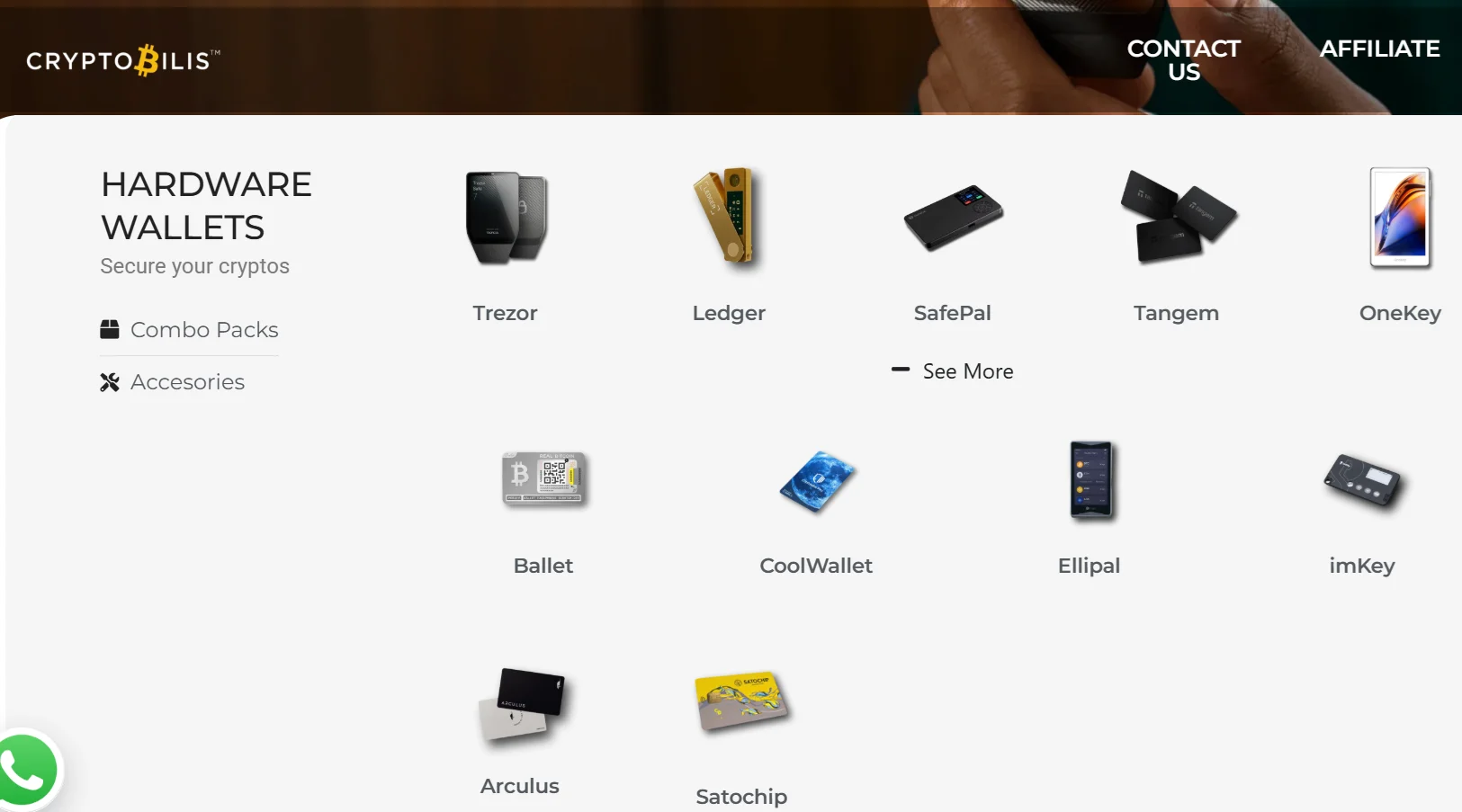
OneKey founder and CEO Yishi Wang moved to calm the panic on X, writing that “We have terminated CryptoBilis’s authorization; it is no longer an authorized OneKey dealer.”
Yishi also detailed OneKey’s three-step response to mitigate exposure now and prevent further escalation.
- Step one: OneKey has stopped adding new dealers, effective as of the October 12 statement.
- Step two: All existing dealers, including previously certified ones, will go through a fresh review process. Dealers with “unverifiable operating entities or unclear ultimate beneficiaries” will lose their authorization. OneKey will publish the full list of authorized dealers on the official website.
- Step three: Users who bought OneKey devices from CryptoBilis between March 1, 2026, and October 12 are eligible for a free replacement. Even users who have activated or used their devices can still get a free replacement.
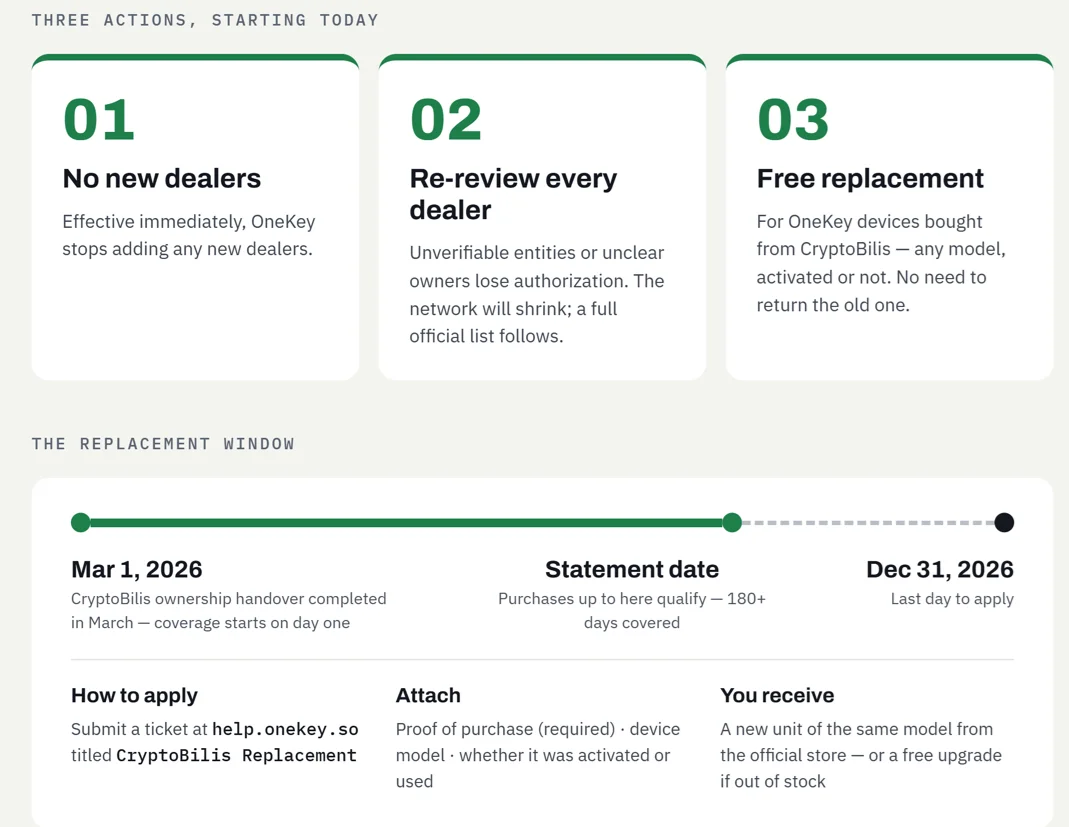
Per Yishi, OneKey went with the March 1 cutoff date because CryptoBilis’s original co-founder publicly stated that the company completed its operational management handover in March after it was acquired earlier this year.
OneKey’s only publicly reported hardware flaw happened way back in 2023, when security firm Unciphered extracted a device’s seed in a lab attack. OneKey patched the gap, paid a bounty and said no users were affected.
Who owns CryptoBilis now?
Fresh corporate records point to a change of control at the Malaysian reseller before the suspected supply-chain attack. CryptoBilis’s former co-founders said on LinkedIn that they handed the company to new owners in March, with reports claiming that ownership passed to an individual identified as Jiaming, a Chinese national.
There are no confirmed reports linking the new ownership with this security incident.
So far in 2026, six hardware wallet brands have disclosed security problems. Galaxy Research put losses above $115 million in the Coldcard case. This early October Ledger disclosure is the second case where funds were lost.
Cryptopolitan reported the BasedApp breach that exposed customer KYC records last week.
If you're reading this, you’re already ahead. Stay there with our newsletter.
FAQs
What did Ledger find in CryptoBilis-sold wallets?
Ledger confirmed that at least one affected device contained an unauthorized hardware implant, and said every confirmed case so far involves wallets distributed through the reseller CryptoBilis.
How much crypto was stolen in the CryptoBilis incident?
On-chain researchers estimate between $86 million and $93 million drained from more than 300 wallets across Bitcoin, Ethereum and Tron, though Ledger has not confirmed an official loss figure.
Is OneKey affected by this incident?
OneKey was one of several brands CryptoBilis sold, but it has reported no issue tied to this case; its only known hardware flaw was a 2023 lab attack by Unciphered that OneKey patched, with no users affected.
Disclaimer. The information provided is not trading advice. Cryptopolitan.com holds no liability for any investments made based on the information provided on this page. We strongly recommend independent research and/or consultation with a qualified professional before making any investment decisions.

Hannah Collymore
Hannah is a writer and editor with nearly a decade of blog writing and event reporting experience in the crypto space. At Cryptopolitan, Hannah contributes to the news page, reporting and analyzing the latest developments in DeFi, RWA, crypto regulation, AI and frontier tech industries. She graduated from Arcadia university with a degree in Business Administration.









