






How a US-China space war would start, and who holds the orbital high ground

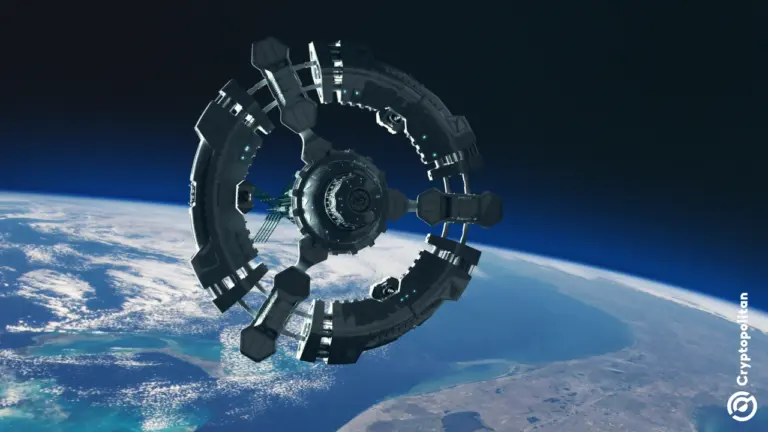
- US defense officials and outside analysts now treat space as the domain where a conflict with China would open.
- Pentagon assessments say Beijing has already built and tested anti-satellite missiles, lasers, and maneuvering “killer” satellites.
- China runs a space force three times America’s size and is targeting 140 launches in 2026.
If the USA and China were to ever battle over the nation of Taiwan, that battle may not begin on Earth. Rather, it may start in space, as US defense officials have stated that they expect a domain war with Beijing to begin there.
Pentagon assessments point to China’s already developed, tested, and rehearsed weaponry in orbit.
Why the fight could begin in space
The Council on Foreign Relations spelled it out clearly in an analysis released on September 24, 2025: in a bid to attack Taiwan, China’s ground-based lasers could cause US imaging satellites keeping watch on the strait to go blind, while Chinese satellites eliminate the spacecraft in charge of targeting and securing communications for American ships and aircraft.
The CFR argues that if this happens, the US and its allied forces run the risk of “fighting blind,” tipping the scales in favor of the People’s Liberation Army before a fight even begins.
The dependence of US forces on orbital systems for imagery, missile guidance, and long-range communications makes it even more vulnerable.
When building its warfighting doctrine in April 2025, the 22-page document released by the US Space Force honed in on one objective: maintaining “space superiority” while preventing any opponent from gaining ground.
The CFR did not mince words when stating the extent of US reliance on orbital systems, framing space to be America’s possible “Achilles’ heel.”
The Pentagon’s own estimation of China’s weaponry
The US Space Force’s Space Threat Fact Sheet makes it clear that the threat is not in any way imaginary, it is real. China conducted 37 orbital launches in the month of June and currently fields over 1,506 payloads in orbit. This includes over 510 satellites with the ability to spot US carriers and expeditionary forces.
China has set a target of 140 launches in 2026, a 52% increase from previous years.
China’s counterspace measures are not a recent phenomenon. In 2007, the PLA used a ground-launched missile to destroy an outdated weather satellite. The US Defense Intelligence Agency now believes that Beijing has every intention to launch anti-satellite weapons that can reach geostationary orbit, a distance of about 36,000 kilometers.
A world-class sprinter, according to a US general
Several US commanders are surprised at the scale of China’s shift in focus. Lieutenant-General Gregory Gagnon, who is in charge of Space Force combat operations, explained to reporters in Canberra this year that China has the largest space force in the world and three times the size of America’s extraterrestrial force.
China’s satellites have grown to 1,400 in number from a meager 70 when Xi Jinping took power in 2013.
“They are not moving out slowly,” Gagnon said. “They are moving out like a world-class sprinter, and they are making gains.”
He stated that the US and Australia cannot play defense forever and must be ready to attack China’s space forces to stop their systems from tracking allied ships and troops.
Washington’s response isn’t surprising. The Department of the Air Force has requested a record $338.8 billion for the coming fiscal year, with $71.1 billion going to the Space Force, an increase of 124%, while space-control programs receive $21.6 billion.
Reusable rockets and the race to reach space
The next bone of contention is simply who can get to space in the cheapest way possible and as often as possible. China recovered the first stage of a Long March-10B using a net-capture system on July 10, and then watched its commercial Zhuque-3 rocket, a 66.1-meter vehicle, complete a controlled landing on August 19.
This only goes to show China’s desire to build a full reusable-launch industry rather than running one-off tests.
This is important as reusability makes it possible for an operator to quickly replace lost satellites and deploy constellations of hundreds or thousands, via the robust architecture that the US has pioneered via SpaceX.
China has already launched hundreds of satellites toward two planned mega-constellations to rival Western networks, per the Space Force fact sheet. Russia is chasing the same edge with its Rassvet low-Earth-orbit constellation, though Military Watch expects Moscow to stay behind both rivals.
The warning US planners keep returning to
The venture firm Andreessen Horowitz, whose partners include a former satellite operator and a 16-year military officer, put the case for treating orbit as a battlefield in a June 2026 report titled “How to Win a Space War.”
It points to Russia jamming GPS receivers across much of Eastern Europe and to China openly weighing strikes on Starlink as evidence that the fighting has already begun.
Europe learned the lesson early: the International Centre for Defence and Security notes that Russia opened its 2022 invasion of Ukraine by knocking out Viasat’s Ka-Sat network with a cyberattack, forcing Kyiv onto Starlink and other commercial providers.
None of this means a shooting war is imminent. It means the domain that would decide one is being contested now, quietly and continuously, and the side that loses its satellites may lose the war on the ground.
If you're reading this, you’re already ahead. Stay there with our newsletter.
FAQs
How would a US-China space war likely start?
According to a September 2025 Council on Foreign Relations analysis, the first blows in a China-Taiwan conflict could come from space, with Chinese ground lasers blinding US imaging satellites and maneuverable Chinese satellites disrupting the systems that handle US targeting and secure communications.
How large is China's space force compared to America's?
Lieutenant-General Gregory Gagnon, who leads US Space Force combat operations, said China operates the world's largest space force, three times the size of America's, growing from about 70 satellites in 2013 to roughly 1,400 today.
How much is the US spending to keep up in space?
The Department of the Air Force requested a record $338.8 billion for the coming fiscal year, with the Space Force receiving $71.1 billion, a 124% increase, and $21.6 billion going to space-control systems alone.

Hannah Collymore
Hannah is a writer and editor with nearly a decade of blog writing and event reporting experience in the crypto space. At Cryptopolitan, Hannah contributes to the news page, reporting and analyzing the latest developments in DeFi, RWA, crypto regulation, AI and frontier tech industries. She graduated from Arcadia university with a degree in Business Administration.









