






Trudeau says Canada nearly turned to China after U.S. and Europe squeezed its economy

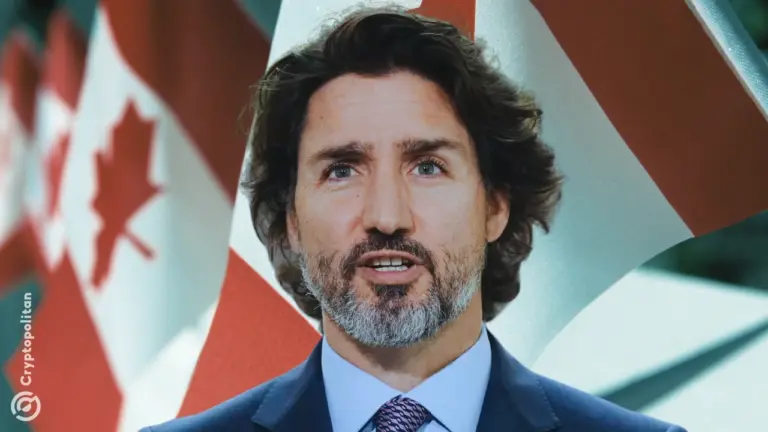
- Trudeau said U.S. and European pressure on Bombardier nearly pushed Canada toward China.
- He said Chinese investors offered major money and partnership deals when Bombardier’s C Series struggled.
- Carney said Canada will not let the U.S. dictate terms in the USMCA review.
Former Prime Minister Justin Trudeau said Canada came close to moving toward China after economic pressure from the U.S. and Europe boxed in Canadian companies.
Speaking Thursday at CNBC’s CONVERGE LIVE in Singapore, Trudeau said Western allies “almost drove” Canada “into China’s arms.” He linked that warning to Bombardier, the Canadian aircraft maker that began building its C Series commercial jet in 2008.
Trudeau said the plane struggled to reach airline buyers because Airbus in Europe and Boeing in the United States were leaning against it.
Trudeau said Chinese investors then showed up with what he called a “dump truck full of money” to buy into the business. He said Boeing and Airbus were trying to crush Bombardier because they did not want a real rival, and that pressure nearly pushed Canada toward Chinese money to protect jobs.
He said Chinese investors offered a partnership in 2015 after talks over a possible Airbus merger collapsed. He said Bombardier looked again to China in 2017 after discussions with Boeing over the C Series failed.
Trudeau tells G7 leaders their pressure pushed Canada toward Chinese cash
Trudeau said he took that complaint straight to leaders at the G7 summit in Sicily in 2017. He said he told Emmanuel Macron, Angela Merkel, and Trump that their actions were forcing Canada into Chinese hands to protect Canadian jobs, adding that Chinese investors were ready to pay whatever it took to get the asset.
Trudeau also said Canada later signed agreements with Europe to supply aluminum after the U.S. imposed a 50% tariff on imports of the metal. He said the constant risk of more tariffs pushed Canada to find better partners and get around what he described as economic coercion.
At the same Singapore event, Trudeau widened the attack beyond trade fights. He said major powers, naming the U.S., China, Russia, and India, had decided they could “opt in or opt out of pieces of the rules-based order.”
That came as Prime Minister Mark Carney took a harder public line on the coming review of the United States-Mexico-Canada Agreement, or USMCA.
Carney said Wednesday that Canada was not a supplicant and would not let the U.S. dictate the terms of the review. The three countries are supposed to finish that work by July 1, but the schedule has been disrupted by tensions following Trump’s imposition of tariffs last year on key imports from Canada.
Carney pushes back as U.S. tariffs slow trade talks with Canada
Carney said those tariff measures showed why Canada must cut its heavy dependence on the U.S. market. Trump has complained that USMCA, which supports a large part of Canada’s economy, is unfair to the United States. Carney pushed back.
“It’s not a case where there is someone making demands, and a supplicant,” he told reporters. “It’s not a case that the United States dictates the terms. We have a negotiation, we can come to a mutually successful outcome – it will take some time.”
In Washington, Trade Representative Jamieson Greer said that unless Canada agreed to talks on broader rules of origin, the rules that let goods enter the United States without tariffs, Washington might need other border controls.
Former Quebec premier Jean Charest, who advises Carney on Canada-U.S. economic ties, told Radio-Canada that Washington wanted “a lot of concessions from Canada” before formal bilateral talks even started.
Mexico has already completed two rounds of talks with the U.S., and those two countries will hold their first formal negotiating round next month. No date has been set for talks with Canada.
Carney said there were contacts at many levels with U.S. officials and that both sides had irritants they wanted fixed.
Canada responded to the U.S. tariffs with countermeasures, several provinces pulled U.S. alcohol from sale, official data showed that Canadian trips to the United States fell 22% in 2025, and U.S. Commerce Secretary Howard Lutnick told a Senate hearing that it was “outrageous” that Canada would not put U.S. spirits on store shelves.
If you're reading this, you’re already ahead. Stay there with our newsletter.
Disclaimer. The information provided is not trading advice. Cryptopolitan.com holds no liability for any investments made based on the information provided on this page. We strongly recommend independent research and/or consultation with a qualified professional before making any investment decisions.

Jai Hamid
Jai Hamid has been covering crypto, stock markets, technology, the global economy, and the geopolitical events that affect markets for the past 6 years. She has worked with blockchain-focused publications including AMB Crypto, Coin Edition, and CryptoTale on market analyses, major companies, regulation, and macroeconomic trends. She has attended London School of Journalism and thrice shared crypto market insights on one of Africa’s top TV networks.









