





San Antonio requires bilingual scam warnings on Bitcoin ATMs after $39 million in local losses

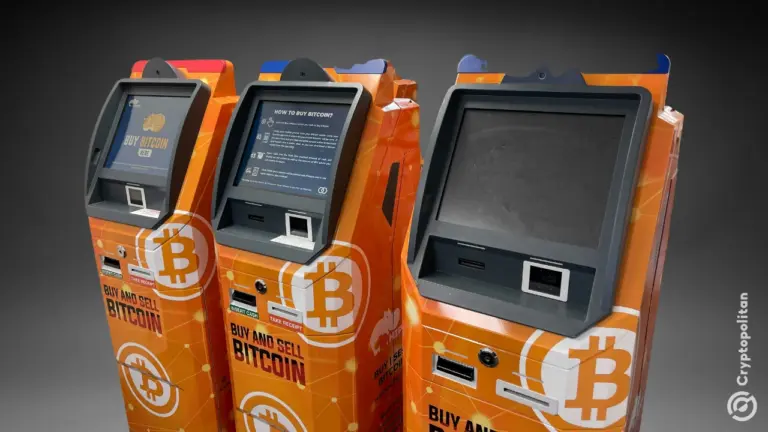
- San Antonio will require bilingual English-Spanish scam warnings at all 193 crypto kiosks starting July 1, after 660 reports and $39 million in losses since January 2024.
- Texas law enforcement, led by Smith County Sheriff Larry Smith, is pushing for a statewide ban; Indiana, Tennessee, and Minnesota already have one.
- The crypto ATM industry is under pressure, with Bitcoin Depot filing Chapter 11 in May after Q1 2026 revenue dropped about 50%.
San Antonio has passed an ordinance requiring fraud warning signs at every crypto kiosk in the city. The move targets 660 scam reports and about $39 million in losses police recorded from January 2024 to April 2026.
The San Antonio Police Department said the scams follow a similar pattern. A caller claims to be a law enforcement officer, court official, government agency or utility company and invents an emergency.
They then tell the victim to deposit cash into a Bitcoin ATM. The caller says the payment will clear up an arrest warrant, unpaid fine or overdue bill, according to KENS 5 reporting.
Police say the callers keep victims on the phone during the entire transaction. This means they can’t ask a relative, ask a store employee for help or call 911 before the money is converted to crypto and moved out.
Bilingual signs hit 193 crypto kiosks on July 1
During the ordinance approval process, SAPD data showed nearly 38% of the victims identified were 66 or older, according to the San Antonio Report. Victims were as young as teenagers and as old as 90 years. About 88% of the cases resulted in losses of less than $50,000. But four individual cases were over $1 million each.
The city identified San Antonio’s 193 crypto kiosk locations. That number beats Dallas, Fort Worth or Austin, according to the San Antonio Report.
Operators are required to post warning signs in English and Spanish at each crypto machine. The signs must be in color-coded 18-point font and must be placed so that users standing at the kiosk can read them directly. The signs will list common crypto scam tactics and tell anyone feeling pressured to send money to call 911 instead.
The SAPD must generate and distribute the signs, and enforce compliance. Failure to post them subjects the company to a fine of $100 to $500 for each violation, each day that a violation continues being a separate offense. The ordinance goes into effect on July 1.
Texas pushes for a statewide ban
San Antonio isn’t the only Texas jurisdiction to go after crypto kiosk fraud. Smith County Sheriff Larry Smith met with state legislators earlier this week to lobby for a statewide ban on the machines. Sheriff Smith first publicly called for a ban in May after an elderly woman lost $13,000 to an inmate running a scam from a Georgia prison.
Among those who attended the meeting were the office of State Sen. Bryan Hughes, State Rep. Cole Hefner, State Rep. Daniel Alders and officials with the Texas Financial Crimes Intelligence Center. The report noted that Indiana, Tennessee and Minnesota already have a ban on crypto ATMs at the state level.
Cryptopolitan has previously reported that Bitcoin Depot, which has more than 9,000 crypto ATMs across North America, filed for Chapter 11 bankruptcy in May after its Q1 2026 revenue fell by ~50% year over year. In February, the Massachusetts Attorney General sued the company for more than half of its ATM revenue in the state being linked to transactions associated with scams.
U.S. Secret Service Investigative Analyst Laura Bravo told KSAT that crypto moves faster than traditional money and gets harder to recover once it reaches a foreign exchange. Crypto ATMs also isolate victims by stripping out the human interaction a bank teller would provide, Bravo noted. This gives the scammers more control, and the victim follows phone instructions at a crypto machine.
SAPD’s advice is blunt. No government agency or utility company will ever ask you to pay via a Bitcoin ATM. That’s the case even if the caller knows personal details, uses the name of a real officer or spoofs a real phone number. When cash is converted to crypto and sent to a scammer’s wallet, the transaction cannot be reversed.
Don’t just read crypto news. Understand it. Subscribe to our newsletter. It's free.
FAQs
What does the new San Antonio Bitcoin ATM ordinance require?
Operators must display bilingual warning signs in English and Spanish at every cryptocurrency kiosk, using 18-point color-coded font visible to users at the machine.
How much money have San Antonio residents lost to Bitcoin ATM scams?
SAPD data shows roughly $39 million in losses across 660 scam reports filed between January 2024 and April 2026.
Which states have banned Bitcoin ATMs entirely?
Indiana, Tennessee, and Minnesota have enacted statewide bans on cryptocurrency kiosks.
Disclaimer. The information provided is not trading advice. Cryptopolitan.com holds no liability for any investments made based on the information provided on this page. We strongly recommend independent research and/or consultation with a qualified professional before making any investment decisions.

Randa Moses
Randa Moses is an editor and reporter at Cryptopolitan covering tech, AI, robotics, crypto, scams, and hacks. She has worked in the crypto space since 2017. She held roles at Forward Protocol, AmaZix, and Cryptosomniac. Randa holds a degree in Electrical and Electronics Engineering from the University of Bradford.









