






NVIDIA is coming for Intel and AMD’s turf

NVIDIA is coming for Intel and AMD’s turf
- NVIDIA started full production of its 88-core Vera CPU, built specifically for AI agent workloads.
- Early adopters include OpenAI, Anthropic, Oracle Cloud, ByteDance, and CoreWeave.
- NVIDIA says Vera delivers up to 1.8x better performance than x86 CPUs for AI-related tasks.
On May 31, NVIDIA announced full production of its Vera CPU, positioning the 88-core chip as the data center industry’s first processor designed specifically for AI agent workloads. Anthropic, OpenAI, SpaceXAI, Oracle Cloud Infrastructure, ByteDance, and CoreWeave are among early adopters planning deployments, according to the company’s press release.
The chip represents NVIDIA’s most aggressive push yet beyond GPUs and into the CPU market that Intel and AMD have dominated for decades. Where Grace, NVIDIA’s prior ARM-based server chip, shipped roughly 2.5 million units to date, Vera introduces a fully custom core architecture called Olympus rather than licensing an off-the-shelf ARM core design, according to Tom’s Hardware.
Why AI Agent workloads are redefining CPU demand in data centers
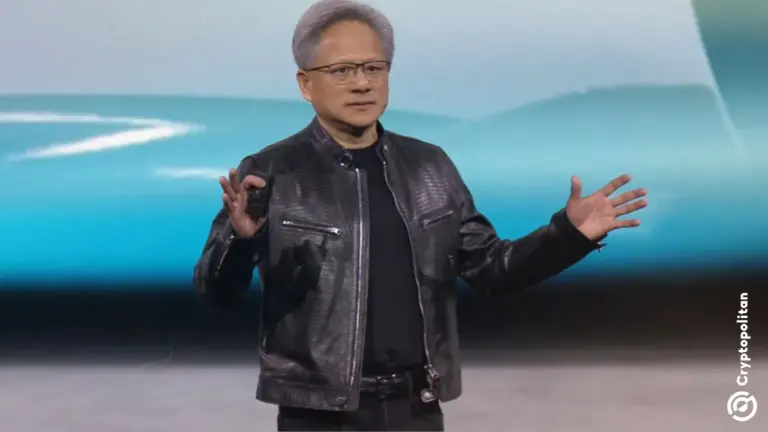
The economics of data centers for artificial intelligence have changed. As models progress from responding to questions to executing code, invoking programs, and coordinating complex tasks, the CPU becomes a key issue. Jensen Huang, CEO of NVIDIA, described the potential directly, “AI agents will be the largest users of computing… Vera is the first CPU designed for that future, built to run agentic AI at hyperscale with extraordinary performance, efficiency, and programmability.”
The specifications of Vera illustrate its potential. It features 88 Olympus cores, along with the company’s Spatial Multithreading technology, complemented by an LPDDR5X memory system, delivering up to 1.2 TB per second of bandwidth while consuming less than 30 watts of memory power. According to the manufacturer, Vera can execute tasks at 1.8 times the speed of x86 processors when working on agentic AI applications such as code compilation, Python execution, Java, and database manipulation.
Independent testing by Phoronix, using NVIDIA-selected benchmarks, showed that Vera compiles a Linux kernel within 20 seconds (in a single socket configuration), giving a performance boost of 10% over AMD’s EPYC 9575F operating at 5.0 GHz, as claimed by the NVIDIA blog. The founder of Phoronix, Michael Larabel, said that Vera “ends up packing a heavy-hitting punch with competitiveness to Intel/AMD x86_64 CPUs that I have never seen out of any other ARM or non-x86_64 processors.”
However, this comes with a rider since the benchmarks used above were selected and performed by NVIDIA itself. No independent testing has been conducted so far.
Early market adoption from AI labs, hyperscalers, and enterprise players
Vera’s client roster includes AI research institutions, hyperscalers, and finance infrastructure. In remarks provided by NYSE President Lynn Martin, the exchange, which handles more than 1.1 trillion messages per day, intends to utilize Vera along with Redpanda and Hewlett Packard Enterprise to increase capacity and reduce latency.
According to James Bradbury, the head of compute at Anthropic, the firm is assessing Vera for CPU-intensive agentic workloads. “Scaling compute is an important accelerant for the growth of models,” Bradbury said. “We’re excited to see Vera emerge as a promising part of the ecosystem when solving for agentic workloads.”
Oracle Cloud Infrastructure plans to become the first hyperscaler to make use of Vera, with OCI executive vice president Mahesh Thiagarajan calling it “the next frontier in hyperscale AI supercomputing”.
On the hardware manufacturing side, Dell Technologies, HPE, Lenovo, and Supermicro will offer Vera in standalone CPU server configurations. NVIDIA described this as “the first standard CPU option beyond x86” from major OEMs. Taiwan-based manufacturers, including ASUS, Foxconn, GIGABYTE, Quanta Cloud Technology, and Wistron, are also building systems.
Broader integration across NVIDIA’s AI infrastructure stack
Vera fits in perfectly within NVIDIA’s full-stack AI factory ecosystem vision. Vera works as the CPU host of the Vera Rubin platform, which pairs with Rubin GPUs using second-gen NVLink-C2C with 1.8TB/s bandwidth. Additionally, Vera forms part of the BlueField-4 STX platform in terms of networking and storage. As per Dealroom, Ian Buck, the NVIDIA executive, delivered the initial Vera units to clients such as Anthropic in San Francisco and SpaceXAI in Palo Alto.
The memory supply chain has reacted immediately. DIGITIMES states that NVIDIA’s move to commercialize Vera as a separate chip creates demand for low-power DRAM, thus placing more stress on the existing tight supply chain of memory chips.
What to watch as Vera enters deployment phase
Vera systems ship to partners and cloud providers in the third quarter of this year. However, some issues that need to be considered are whether the results of independent benchmarks against a range of general applications support NVIDIA’s claim of performance and whether the custom Olympus chip can rival the ability of x86 software for application compatibility. Right now, though, one thing is clear: NVIDIA is no longer content to own only the accelerator. It wants the entire AI data center stack.
Don’t just read crypto news. Understand it. Subscribe to our newsletter. It's free.
FAQs
What is the NVIDIA Vera CPU?
Vera is NVIDIA's first CPU built on fully custom Olympus cores (ARM instruction set, not a licensed ARM core design), featuring 88 cores and LPDDR5X memory delivering up to 1.2TB/s bandwidth, designed specifically for AI agent workloads in data centers.
When will NVIDIA Vera be available?
NVIDIA said Vera is now in full production, with systems available from partners including Dell, HPE, Lenovo, and Supermicro, and from cloud providers including Oracle and CoreWeave, starting in fall 2026.
How does Vera perform compared to AMD and Intel server CPUs?
In NVIDIA-curated Phoronix benchmarks, Vera delivered a 10% geometric mean advantage over AMD's EPYC 9575F and compiled a Linux kernel in 20 seconds (single socket), though independent testing across broader workloads has not yet been published.

Ashish Kumar
Ashish Kumar is a crypto and financial journalist with eight years of newsroom experience. He covers what’s happening with crypto markets, regulation, DeFi, and exchange ecosystems. He has worked with Coingape, Todayq, and Newsroompost. Ashish holds a PGDP in English Journalism from the IIMC. He has also interviewed industry figures including Arthur Hayes, Yat Siu, Austin Federa, and more.









