






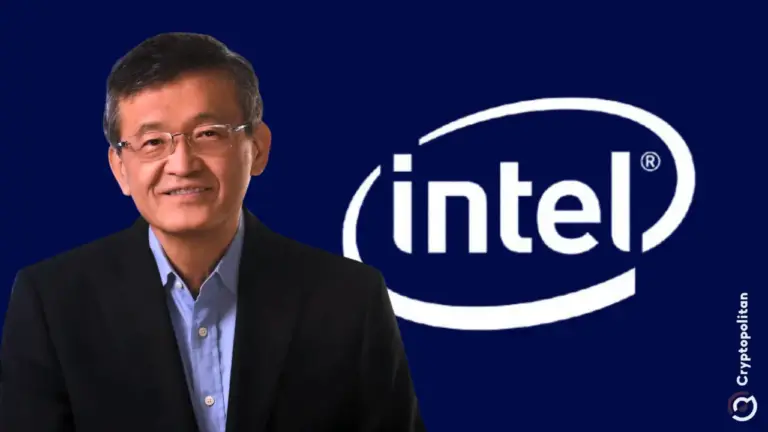
- Intel CEO Lip-Bu Tan backed Chinese open-weight models DeepSeek, Kimi and GLM on Monday, calling them “good enough” and cheap to run.
- The three come from labs US agencies accused of large-scale IP theft weeks earlier.
- The US government now holds about 10% of Intel, making Tan’s endorsement politically loaded.
Intel (NASDAQ: INTC) CEO Lip Bu Tan specifically commended DeepSeek, Kimi and GLM during a speech at a panel hosted by Singapore lender DBS, where the chief executive of the Washington-backed chipmaker praised Chinese frontier AI models as “good enough.”
Tan’s Monday comments echoed earlier sentiments shared by Jensen Huang, the CEO at Nvidia (NASDAQ: NVDA).
The US government, which owns a roughly 10% stake in Intel, already accused the same three Chinese AI labs (DeepSeek, Kimi and GLM) that Tan commended in a September IP theft release.
Intel’s CEO backs “good enough” and cheaper to run Chinese AI models
Lip Bu Tan told the DBS audience that he is “a strong believer of open source.” He also credited them for being more cost-efficient and that the market would decide which models suit which jobs best, with adoption being “very fast” so far.
Developers can download and adapt open-weight models, including those from the Chinese labs that Tan named, at a fraction of the price it takes to run similar-performing closed models from American labs.
Tan also forecast a future where quantum computing could reach the mainstream within three to five years.
Washington is investigating the Chinese labs Tan praised
Tan’s endorsement came about five weeks after Cryptopolitan reported that a September joint advisory from the FBI, National Security Agency and Cybersecurity and Infrastructure Security Agency accused DeepSeek, Moonshot AI (Kimi) and Z.ai (GLM) along with three other Chinese firms of running industrial-scale distillation campaigns from US models since late 2024.
Distillation, the process of training a smaller model on a larger one’s outputs, is a standard research method. However, Washington has often pushed back at the scale and intent of these Chinese campaigns as crossing a line.
Notably, Tan is not the only US-based executive to praise models from Chinese AI labs. Nvidia’s Jensen Huang dismissed fears in July that Chinese AI could run US firms “off the road.” The CEO argued that US companies should “absolutely” be allowed to use Chinese open-source models, which he described as “excellent” at the time.
During the same month, Nvidia joined Microsoft, Meta, Hugging Face and Mistral as signatories of an open letter asking policymakers not to rush to “premature restrictions” on open-weight models.
While the letter never named China, it coincided with reports about ban and sanction threats from the Trump administration and Treasury Secretary Scott Bessent.
The US government has a stake in Intel
Intel entered into a deal with the Trump administration, under which the US government agreed to buy 433.3 million Intel shares at $20.47 each for an $8.9 billion investment, representing a 9.9% stake, according to Intel’s filing. Counting earlier CHIPS Act grants, total government backing reaches $11.1 billion.
Another wrinkle could be added to the ownership structure based on Trump’s comments suggesting that the government “might” take Intel-style stakes in OpenAI and Anthropic, the two labs loudest about Chinese distillation.
That would leave Washington owning both the chipmaker praising Chinese models and the labs accusing those models of theft.
If you're reading this, you’re already ahead. Stay there with our newsletter.
FAQs
Which Chinese AI models did Intel's Lip-Bu Tan praise?
Tan named DeepSeek, Kimi and GLM, saying their token costs are lower and adoption has been "very fast."
Why is Tan's endorsement controversial?
All three labs he praised were named in a September advisory from the FBI, NSA and CISA accusing six Chinese firms of industrial-scale distillation of US models, and the US government holds a roughly 10% stake in Intel.
What did Nvidia's Jensen Huang say about Chinese AI?
In a July interview with Axios, Huang called Chinese open-source models "excellent" and said US companies should "absolutely" be allowed to use them, arguing cheaper models expand demand for chips.

Hannah Collymore
Hannah is a writer and editor with nearly a decade of blog writing and event reporting experience in the crypto space. At Cryptopolitan, Hannah contributes to the news page, reporting and analyzing the latest developments in DeFi, RWA, crypto regulation, AI and frontier tech industries. She graduated from Arcadia university with a degree in Business Administration.









