




China’s CSRC asks brokers to pause RWA tokenization business in Hong Kong

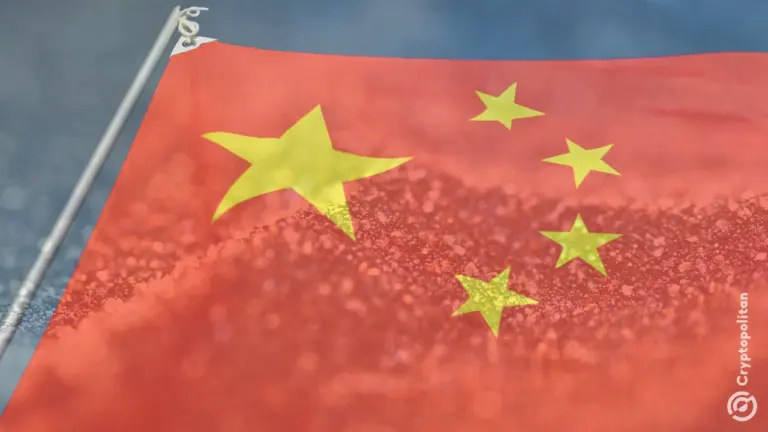
- China’s securities regulator informally asked brokerages to pause real-world asset tokenisation in Hong Kong amid risk concerns.
- Hong Kong continues pushing digital asset growth with new stablecoin laws and a surge in tokenisation projects.
- Despite Beijing’s cautious stance, companies like Seazen, GF Securities, and AnchorX expand tokenisation and stablecoin initiatives.
China’s securities regulator has informally told several local brokerages to suspend their real-world asset (RWA) tokenisation operations in Hong Kong, according to two people familiar with the matter.
Per a Monday Reuters exclusive, the China Securities Regulatory Commission (CSRC) recently advised at least two major brokerages to halt offshore RWA activities, the sources said, requesting anonymity because they were not authorised to speak publicly.
One source explained that the regulator wants firms to improve risk management and double-check if legitimate underlying businesses back every tokenised product. Data provided by RWA.xyz shows the RWA market is worth about $29 billion.
Hong Kong’s review of tokenisation
RWA tokenisation involves converting traditional financial instruments such as stocks, bonds, funds, and property into digital tokens tradable on a blockchain. Several Chinese financial firms had proposed launching these products in China’s special jurisdiction, Hong Kong, where crypto transactions are currently legal under the Securities and Futures Commission (SFC) licensing.
In June, the Financial Services and the Treasury Bureau (FSTB) and the Hong Kong Monetary Authority (HKMA) announced a legal study of tokenisation practices. It is unclear how long Beijing’s latest informal pause will last, but both sources told Reuters the CSRC’s guidance has not been issued as a formal directive.
Some Chinese companies rumored to have received the order are the Seazen group. On August 29, the property developer announced the creation of the Seazen Digital Assets Institute.
The firm said it would look at the feasibility of tokenising intellectual property and income from its real estate holdings, with the intention to establish a digital asset management unit and issue non-fungible token (NFT) products tied to its Wuyue Plaza properties before the year’s end.
The company had raised $300 million through a dollar bond sale in early 2025 to become the first private Chinese developer to tap global credit markets since 2023.
Earlier this year, the Hong Kong unit of GF Securities launched a suite of “GF tokens” linked to the US dollar, Hong Kong dollar, and offshore renminbi prices. Separately, China Merchant Bank International announced in August that it had helped Shenzhen Futian Investment raise 500 million yuan ($70.29 million) through the issuance of a tokenised digital bond.
Hong Kong stablecoin plans likely to continue
Over the past year, Hong Kong has stepped up efforts to promote itself as an Asian centre for virtual assets, issuing new licences for trading platforms and supporting advisory and asset management services. China, in contrast, has kept stricter restrictions for digital asset businesses in place.
The Asian nation was once the world’s largest bitcoin trading and mining country, but it banned crypto trading and mining in 2021, citing risks to financial stability.
As reported by Cryptopolitan last month, Chinese regulators told several domestic brokerages to stop publishing research that endorsed stablecoins.
Meanwhile, AnchorX, a financial technology company, unveiled the AxCNH stablecoin, pegged to the offshore version of the Chinese yuan. The launch was announced at the Belt and Road Summit in Hong Kong. It is designed for foreign exchange markets and allows some experimentation with stablecoins outside mainland China.
Crypto interest grows in Hong Kong
At the Bitcoin Asia summit held in Hong Kong late August, more than 17,000 attendees from several parts of the world were seen in Exhibition booths of crypto mining equipment, bitcoin treasury plans, and trading platforms.
According to payments firm Triple A, China had more than 78 million cryptocurrency holders in 2023, exceeding the United States.
“China is one of the biggest bitcoin mining locations in the world. They have one of the biggest user bases of Bitcoin in the world. Their citizens own a huge percentage of bitcoin. They’re a bitcoin superpower,” bitcoin investor David Bailey told reporters.
Hong Kong introduced new legislation on August 1 that requires issuers to hold a minimum capital of HK$25 million ($3.2 million) and to fully back their tokens with a pool of safe and liquid assets equal to the value of the coins in circulation.
Issuers, like Tether, must also comply with anti-money laundering standards, undergo regular audits, and collect customer information.
Don’t just read crypto news. Understand it. Subscribe to our newsletter. It's free.
Disclaimer. The information provided is not trading advice. Cryptopolitan.com holds no liability for any investments made based on the information provided on this page. We strongly recommend independent research and/or consultation with a qualified professional before making any investment decisions.

Florence Muchai
Florence has been covering for the past 6 years crypto, gaming, tech, and AI news. Her Computer Studies at Meru University of Science and Technology and Disaster Management and International Diplomacy at MMUST amply equip her with language, observation and technical skills. Florence has worked at VAP Group and as an editor for several crypto media houses.









