






Bill Gates urges legally required AI safeguards as global investment tops $1 trillion

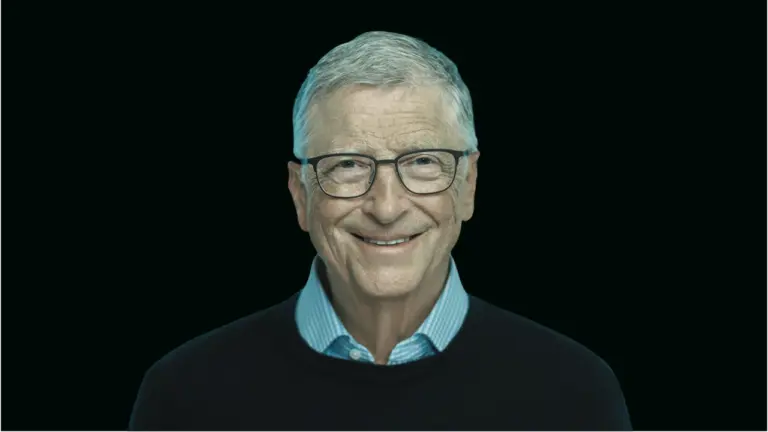
- Bill Gates told NBC that AI self-regulation is not enough and that governments must legislate safety monitoring, without halting development.
- His comments land as Goldman Sachs forecasts global AI investment above $1 trillion in 2026, meaning any new rules will reshape a fast-growing market for developers, investors, and a booming AI-security industry.
- The question for smaller firms and emerging economies is whether mandatory safeguards build trust or entrench the largest players.
Bill Gates warned that AI businesses shouldn’t be allowed to self-regulate and is urging Washington to set safety regulations.
The Microsoft co-founder made his arguments during an NBC News interview released on September 25, two days prior to the airing of the complete interview on “Meet the Press.”
He has given this warning at the time when Goldman Sachs predicts global AI investments to go over 1 trillion dollars in 2026. This means that the new safety regulations may lead to important consequences for the developers, investors, and companies who are working on implementing the new security systems for the enforcement of the rules.
“No one thinks self-regulation is enough”
Gates responded: “Absolutely” when moderator Kristen Welker queried Congress’s need for action.
According to Gates, “No one thinks self-regulation is enough.” He believes that defined laws should be laid down by lawmakers and law enforcement bodies on how AI companies monitor risks and what safeguards they must put in place. He described the responsibilities on developers as “a little bit of overhead,” rather than something that slows progress.
His worry goes well beyond the usual misuse. According to Gates in an interview with NBC, AI is “certainly powerful enough to drive events that, you know, cause a billion deaths,” especially when these advanced systems fall in the hands of those with bad intentions.
Industry leaders have different opinions on how far those safeguards should go. Anthropic CEO Dario Amodei suggested the idea of “full pacing, or even ‘pause’” as the most extreme kind of collective slowdown. OpenAI CEO Sam Altman has expressed a similar concern, arguing that “pacing will be well worth this cost” and that the pressure of keeping ahead of the competition should not be an excuse for acting recklessly.
However, Meta CEO Mark Zuckerberg has said otherwise. In an interview with NBC News he stated, “I don’t think that we need some kind of industrywide coordination.” He prefers that labs slow down only when they feel they are at risk of safety issues.
Gates wants risks managed, not development halted
Gates is not only asking that the technology sector stop developing AI systems. In an essay published in his Gates Notes in August, he stated that artificial intelligence “will either be the greatest equalizer ever invented, or the worst source of injustice.”
He also remarked that he would likely endorse a credible plan for a global slowdown in AI development, though he was not convinced that such a plan could be effective because there are both economic and political reasons for continuing development.
His stance, thus, does not really consist merely of putting an end to new developments; it is, rather, about preparing companies, governments, and individuals while AI technology finds its application in such fields as medicine, law, software, and customer service.
A $1 trillion market waiting on the rules
The debate over safeguards is unfolding at the same time as money is pouring into AI, making the stakes much higher for any new rules. Goldman Sachs expects global AI investment to exceed $1 trillion in 2026, including about $581 billion in the US, while cumulative investment since 2022 could approach $1.8 trillion by year-end.
Despite this growth in AI investment, Microsoft says that not everyone has enjoyed equal access to its advantages and benefits. Microsoft’s AI diffusion data shows a growing divide between the Global North and Global South, while the OECD highlights that AI capacity is still limited to a handful of countries and firms.
This makes regulation an even more difficult balancing act. Better protections could decrease risks, but, for small labs and less wealthy countries, the additional cost of complying with these regulations could prove very hard to bear.

A regulatory patchwork is already forming
The call for stricter regulations is supported by a growing number of evidence. The International AI Safety Report 2026, written under the guidance of Turing Award winner Yoshua Bengio and created by more than 100 experts in the field, describes the existing dangers and the potential future threats posed by the increasing capabilities of AI systems.
Meanwhile, governments are already creating regulations around those risks. According to TRM Labs, a new global “patchwork” of AI regulation is emerging as different countries take different approaches to AI governance, implementation and accountability.
The European Union has pursued the implementation of such aims more aggressively than most other countries. According to the EU AI Act, providers of general-purpose AIs must comply with strict obligations in terms of documentation, copyright, and transparency regarding training data. Models utilizing more than 10^25 FLOP are seen to carry systemic risks, which corresponds to additional criteria for model evaluation, risk management, accident reporting, and cybersecurity.
With the increase in regulations, the amount spent by corporations attempting to comply with them is rising. According to Gartner, by 2027 the amount spent by organizations for securing AI will increase by 68.7% to almost $4.8 billion with projections to approach $7.7 billion in 2028.
Washington seems to be moving towards a more robust regulatory framework as well. As reported by Cryptopolitan, Senate negotiators are looking into a bipartisan initiative to establish ‘duty of care’ for AI developers which might allow the government to prevent the release of unsafe models. If this is approved, it will transfer the mechanism of protection that Gates is urging from the domain of voluntary obligations to legally binding responsibilities.
Don’t just read crypto news. Understand it. Subscribe to our newsletter. It's free.
FAQs
What exactly did Bill Gates call for?
Gates told NBC's "Meet the Press" that "no one thinks self-regulation is enough" and that lawmakers and law enforcement should set mandatory safeguards and monitoring for AI development, which he said would add modest overhead rather than dramatically slow the industry.
How much money is going into AI right now?
Goldman Sachs Research forecasts about $1 trillion in global AI investment in 2026, including roughly $581 billion in the US, with cumulative spending nearing $1.8 trillion by the end of the year.
Is any government already regulating advanced AI models?
Yes. The European Union's AI Act imposes binding obligations on general-purpose AI providers, and models trained above 10^25 FLOP are presumed to carry systemic risk, triggering added duties on risk assessment, incident reporting, and cybersecurity.
Disclaimer. The information provided is not trading advice. Cryptopolitan.com holds no liability for any investments made based on the information provided on this page. We strongly recommend independent research and/or consultation with a qualified professional before making any investment decisions.

Ibiam Wayas
Ibiam Wayas has covered the crypto news beat since 2019. He studied Computer Science at National Open University of Nigeria. His work has appeared on various crypto news platforms, including Coinfomania, Crypto News Australia, and AltcoinBuzz. Drawing on his background in Computer Science, he now focuses on crypto, robotics, and longevity news.









