




- The Federal Reserve named a16z co-founder Marc Andreessen to co-lead a new task force studying how AI reshapes work and productivity.
- It is one of five review panels launched by Fed Chair Kevin Warsh.
- The move places a prominent Bitcoin advocate and major digital-asset investor inside a process that could influence future interest-rate decisions.
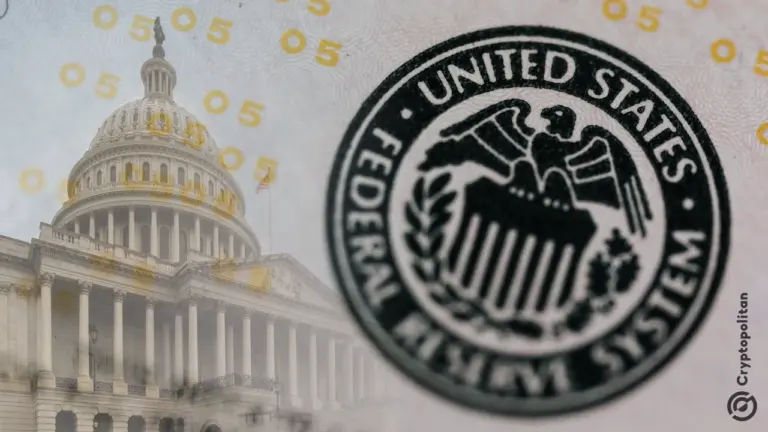
Marc Andreessen, the co-founder of the venture capital firm Andreessen Horowitz (a16z), will help lead a new Federal Reserve task force focused on studying how artificial intelligence changes productivity and employment.
The Federal Reserve has launched four other similar initiatives and announced Andreessen’s appointment on July 9.
How is AI changing the workplace?
The Federal Reserve recently announced that Marc Andreessen, the co-founder of Andreessen Horowitz, will co-lead a panel called Productivity and Jobs alongside Charles I. Jones, a Stanford economics professor currently on leave at the AI company Anthropic, and Asha Sharma, who serves as Microsoft’s executive vice president and Xbox CEO.
The panel is one of five task forces created by Fed Chair Kevin Warsh to challenge how the central bank reaches monetary policy decisions. The other four groups will focus on the Fed’s communications, its balance sheet, the quality of economic data, and how policymakers measure inflation.
A separate task force will be headed by former Walmart CEO Doug McMillon.
The Productivity and Jobs group operates independently and leans on Fed staff for support. It will supply research and feedback to the Federal Open Market Committee (FOMC), which sets U.S. interest rates, but the panel itself sets no rates and holds no rulemaking power.
FOMC members are currently divided over whether AI cools inflation by lifting productivity or stokes it through heavy spending on chips, data centers, and power.
In a May 27 speech, Fed Governor Lisa Cook said she expects AI to support stronger growth but warned that it carries the risk of higher inflation. Former Fed Chair Jerome Powell also said back in March that data center construction was “probably pushing inflation up at the margin.”
How will these reviews affect the cryptocurrency industry?
While Andreessen’s appointment carries no direct crypto mandate, his company Andreessen Horowitz, known as a16z, is among the largest institutional backers of digital assets through its a16z crypto division.
Andreessen himself is one of America’s more vocal Bitcoin (BTC) supporters. Cryptopolitan reported that a16z’s crypto arm raised $2.2 billion for its fifth fund earlier this year, bringing its dedicated crypto capital to roughly $10 billion.
The Fed’s conclusions on productivity, inflation, and jobs could shape decisions about interest rates, which affect Bitcoin and other risk assets. When the Fed raises rates, money often flows toward safer assets like cash and government bonds. When rates are low, investors tend to take more risks, which can benefit Bitcoin and other volatile assets.
Andreessen’s appointment changes no regulation and puts no digital asset on the Fed’s agenda, but it places a known crypto-friendly figure inside a process that could shape how the central bank reads technological change for years.
Warsh has said the groups could start work within weeks and deliver early findings in the fall, but no final deadline has been set. The Fed said it would share more about the work over time.
Don’t just read crypto news. Understand it. Subscribe to our newsletter. It's free.
FAQs
Who is on the Fed's Productivity and Jobs task force with Marc Andreessen?
Andreessen co-leads the group alongside Stanford economist Charles I. Jones, who is on leave at Anthropic, and Asha Sharma, Microsoft's executive vice president and Xbox CEO.
Does Andreessen's Fed role give him power over interest rates or crypto policy?
No. The task force operates independently and provides research to the Federal Open Market Committee, but it does not set interest rates, change any regulation, or put digital assets on the Fed's formal agenda.
Why did the Fed create these task forces?
Fed Chair Kevin Warsh established five task forces to review the central bank's monetary policy framework, covering productivity and jobs, communications, balance sheet policy, data quality, and inflation, calling the subjects "timely, consequential, and worthy of a fresh look."
Disclaimer. The information provided is not trading advice. Cryptopolitan.com holds no liability for any investments made based on the information provided on this page. We strongly recommend independent research and/or consultation with a qualified professional before making any investment decisions.

Hannah Collymore
Hannah is a writer and editor with nearly a decade of blog writing and event reporting experience in the crypto space. At Cryptopolitan, Hannah contributes to the news page, reporting and analyzing the latest developments in DeFi, RWA, crypto regulation, AI and frontier tech industries. She graduated from Arcadia university with a degree in Business Administration.









