




Bundesbank sees Germany’s economy rebounding in Q4 after sluggish decade

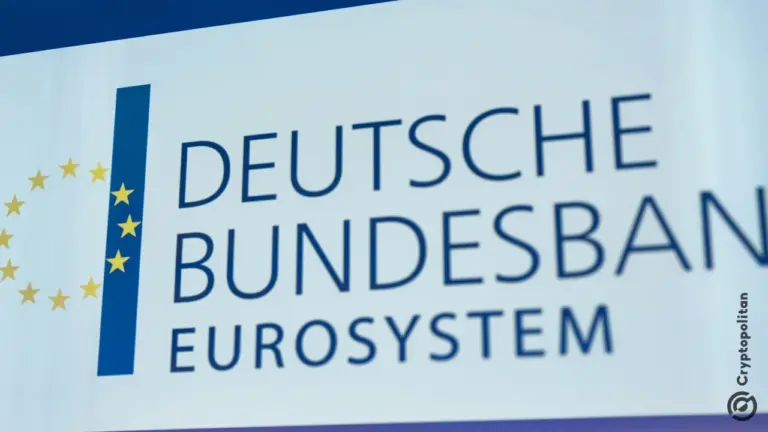
Deutsche Bundesbank (Foto Frank Rumpenhorst) via Flickr.
-
Germany may return to growth in Q4 as U.S. tariff pressures ease, according to the Bundesbank.
-
Exports and industry are stabilizing, while services are helping, though not from consumer sectors.
-
The labor market remains weak; manufacturing cut jobs, but energy and aging-related sectors are hiring.
Germany is heading into the last quarter of the year with a small but clear sign of life, as the Bundesbank said the economy may return to growth once the shock from U.S. tariffs fades.
The central bank released its monthly report on Wednesday and said exports and industry should “stabilize in the fourth quarter” after a wild start to 2025, when an early export jump flipped into a drag.
It added that services will support activity, but “not necessarily from consumer‑related sectors,” and that overall output may end up “increasing slightly.”
Germany hit another flat line in the third quarter. Output didn’t move. It followed two straight years of contraction in 2023 and 2024.
With the U.S. raising tariffs and China pushing even harder into global markets, Chancellor Friedrich Merz is trying to pull the economy back up by throwing hundreds of billions of euros at defense and infrastructure.
The Bundesbank said those projects won’t hit construction or investment activity until next year. It also said the country’s weak competitiveness means Germany is barely catching any benefit from global growth.
Bundesbank tracks Germany’s labor market signals
Private consumption is still slow because the labor market is not giving households much air. Manufacturers cut staff sharply this year.
The Bundesbank’s report said this was softened a bit by hiring in sectors “benefiting from demographic change and the energy transition,” but the overall trend remains weak.
Officials at the European Central Bank are watching these shifts closely to figure out how wage trends will feed into inflation. Fresh data on collective bargaining for the third quarter will come out on Friday.
The Bundesbank said negotiated pay in Germany fell slightly from a year earlier because of a one‑off inflation compensation payment in 2024. Without that special payment, wages still rose 5%, but that was slower than the previous quarter.
The report said “old collective agreements with higher pay increases are gradually expiring” and added that “due to the weaker macroeconomic environment and declining inflation, lower new agreements are likely to continue.”
The smartest crypto minds already read our newsletter. Want in? Join them.
Disclaimer. The information provided is not trading advice. Cryptopolitan.com holds no liability for any investments made based on the information provided on this page. We strongly recommend independent research and/or consultation with a qualified professional before making any investment decisions.

Jai Hamid
Jai Hamid has been covering crypto, stock markets, technology, the global economy, and the geopolitical events that affect markets for the past 6 years. She has worked with blockchain-focused publications including AMB Crypto, Coin Edition, and CryptoTale on market analyses, major companies, regulation, and macroeconomic trends. She has attended London School of Journalism and thrice shared crypto market insights on one of Africa’s top TV networks.









