






- DHS ordered federal civilian agencies to remove third-party products and services developed using DeepSeek implementations.
- Homeland Security Secretary Markwayne Mullin signed the order, which carries a July 24, 2026 release date.
- The 60-day exception window closed September 22, 28 days before the Federal Register notice ran.
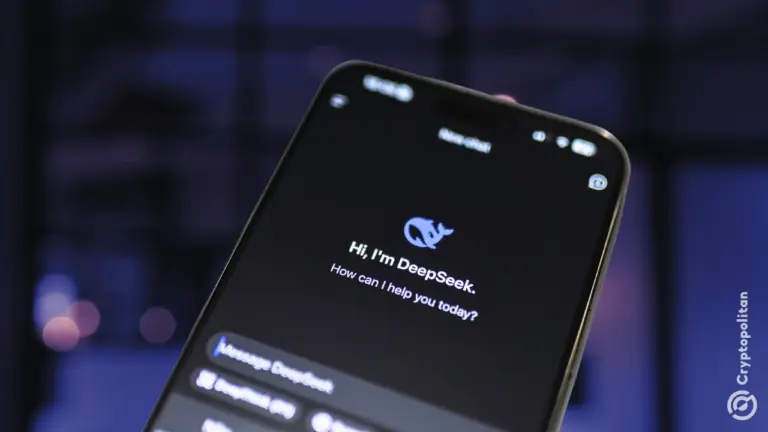
The Department of Homeland Security has forbidden federal civilian agencies from purchasing products from DeepSeek and has directed them to delete any third-party products or services developed using DeepSeek implementations.
It applies to existing systems and new purchases by some 430 departments, bureaus, and independent agencies.
Models distilled or fine-tuned from R1 and V3 fall under the order
Exclusion and Removal Order #2026-01 is dated July 24, 2026. Homeland Security Secretary Markwayne Mullin signed it.
The order’s Federal Register notice went up for public viewing on Monday, October 19th, and was published today under docket DHS-2026-0628. Agencies must immediately drop DeepSeek and its affiliates from approved product lists, online stores, and other ways they buy things.
Agencies must also pull from their IT systems both DeepSeek’s own products and any outside product or service built on DeepSeek technology. The order does not cover national security systems, which the Pentagon and the Director of National Intelligence oversee.

DHS acted under the Federal Acquisition Supply Chain Security Act of 2018 (FASCSA), after reviewing advice from the Federal Acquisition Security Council.
The order warns that anything typed into DeepSeek could send sensitive data to China. Combined with public data, that information “could produce actionable intelligence on U.S. persons and/or government programs.”
It also points to serious security flaws researchers found in DeepSeek’s iPhone app.
DeepSeek made its R1 and V3 models free for anyone to download and change. A company could copy what DeepSeek’s models produce, use them to make training data, or change how the models are built, then sell a product that contains none of DeepSeek’s original model weights.
Today, AI tracking systems only keep track of the models that are running in a product and not the ones that were used to make it. A product with none of DeepSeek’s weights would still have been made with DeepSeek.
A vendor that signs off on compliance it can’t verify could face a False Claims Act lawsuit. CISA, the order’s compliance support body, had not yet given any advice on the “developed using” standard when the notice was filed.
CISA stopped taking exception requests 28 days before the order went public
Agencies had 60 days from issuance to request an exception in writing, such as a delay or a carve-out for particular actions. CISA will review each request and approve or refuse it in writing.
Counting days from July 24, September 22 was the due date. 28 days later, the notice was put in the Federal Register. This meant that any agency that read about the order there was already past the deadline.
The secretary shall review the order within one year and annually thereafter. At that review, agencies can raise compliance issues.
There are few FASCSA orders. The first was issued by the Office of the Director of National Intelligence in September 2025 against software firm Acronis AG.
Anthropic was designated by the Department of War on March 5, 2026, and the D.C. Circuit upheld it Sept. 25. The court said, in a 2-1 decision, that the training methods behind Anthropic’s Claude can be considered a supply-chain risk without any hostile intent.
In January 2025, DeepSeek released its R1 model, sparking a sharp sell-off in Nvidia shares. A law already banned its use in intelligence agencies’ national security systems in December 2025.
DeepSeek’s latest model was trained on Nvidia Blackwell chips that export rules keep out of China, a US official said in February. In September, the US accused DeepSeek, Alibaba, Moonshot AI and three other Chinese firms of large-scale distillation from American artificial intelligence systems.
In September, Cryptopolitan reported that Chinese regulators are also looking into DeepSeek and Moonshot for allegedly passing user questions to Anthropic’s Claude without informing the users.
Beijing opposes “overstretching the concept of national security and politicizing tech and trade issues,” Foreign Ministry spokesperson Mao Ning said Tuesday. China, she added, will safeguard the rights of Chinese companies.
China’s commerce and science ministries published draft export restrictions on 23 AI-related technologies on October 16, including large models, agents and compute clusters.
Don’t just read crypto news. Understand it. Subscribe to our newsletter. It's free.
FAQs
Why did DHS ban DeepSeek from federal agencies?
DHS warned that prompts sent to DeepSeek could move sensitive US government data to China.
Does the ban cover products from other companies?
Yes. It covers third-party products and services built on DeepSeek implementations, not only DeepSeek's own.
When was the order signed and published?
Markwayne Mullin signed it with a July 24, 2026 release date, and the Federal Register notice ran October 20.
Disclaimer. The information provided is not trading advice. Cryptopolitan.com holds no liability for any investments made based on the information provided on this page. We strongly recommend independent research and/or consultation with a qualified professional before making any investment decisions.

Randa Moses
Randa Moses is an editor and reporter at Cryptopolitan covering tech, AI, robotics, crypto, scams, and hacks. She has worked in the crypto space since 2017. She held roles at Forward Protocol, AmaZix, and Cryptosomniac. Randa holds a degree in Electrical and Electronics Engineering from the University of Bradford.









