







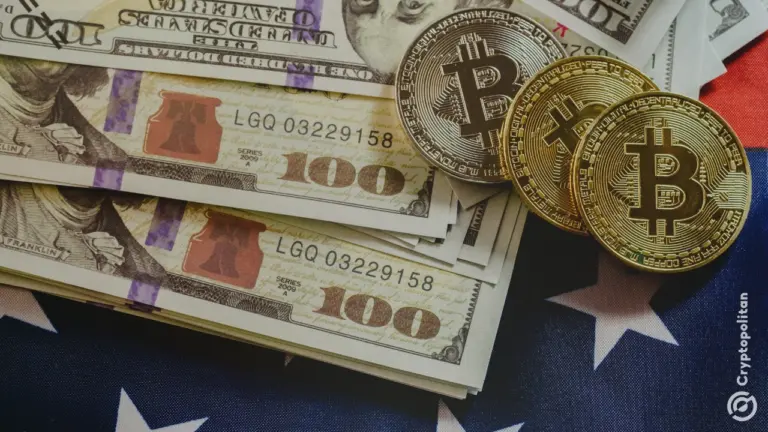
- Michigan advances House Bill 4087, a proposal to establish a state-level strategic cryptocurrency reserve with strict custody rules.
- The Michigan Bitcoin Trade Council opposes the measure, arguing that only Bitcoin should qualify due to risks with other cryptocurrencies.
- Michigan joins US states exploring crypto reserve legislation, with mixed outcomes across the country.
Michigan lawmakers are advancing a proposal that would allow the state to establish a strategic crypto reserve, as the Midwestern state joins other US jurisdictions considering digital assets for public investment.
The proposed legislation, known as House Bill 4087, moved to a second reading on Thursday and was referred to the Committee on Government Operations. It was introduced in February by Republican Representatives Bryan Posthumus and Ron Robinson, who are asking the House to amend the Michigan Management and Budget Act.
“Michigan can and should join Texas in leading on crypto policy by signing into law my bill creating the Michigan Crypto Strategic Reserve,” Posthumus wrote on X at the time of its introduction.
If passed, the state treasurer’s authority will be allowed to allocate up to 10% of funds from Michigan’s countercyclical budget and economic stabilization fund into crypto.
Michigan government could become crypto holders
House Bill 4087 allows the state to maintain its digital assets in three possible ways: through a secure custody solution, through a qualified custodian such as a bank, trust company, or state-regulated firm, or by acquiring exchange-traded products (ETPs) from registered investment companies.

Security procedures for the crypto holdings include exclusive government control over private keys, end-to-end encryption of all data, and the prohibition of access via smartphones.
Michigan-owned digital assets’ information will be stored in secure data centers in different locations within the state. At the same time, transactions would require multiparty authorization, in addition to regular independent security audits.
The bill allows the state to loan out crypto to generate additional revenue, provided that such activity does not increase exposure to financial risk.
House Bill 4086, which was also introduced during the same month by Representatives Alabas Farhat, Ron Robinson, and Bryan Posthumus, would create the office of a Michigan bullion depository within the Department of Treasury.
Opposition from state Bitcoin Trade Council
The Michigan Bitcoin Trade Council, a local advocacy group for Bitcoin adoption, is opposing House Bill 4087 for lacking a “clear market capitalization” threshold to restrict the reserve exclusively to Bitcoin. Representatives who forwarded the proposal did not specify which digital assets will be acquired and kept.
Without such a safeguard, the council argues, the state could invest in smaller, more speculative cryptos that are centralized and prone to collapse, which could expose Michigan’s finances to unnecessary volatility.
“The idea of a strategic Bitcoin reserve is an interesting one, but it must be crafted very carefully,” the group stated. “Other cryptocurrencies will attempt to use the state as a piggy bank to prop up risky projects that are doomed to fail.”
The council insists Bitcoin is the only digital asset with a proven track record of stability and security, and the “sole instrument that would be prudent for a state-level reserve.”
Strategic crypto reserve talks in American states grow
Michigan’s crypto reserve bill comes on the backdrop of legislative conversations around crypto reserves in the United States. According to Bitcoin Laws, Michigan joins Massachusetts and Ohio as states where similar proposals have reached the committee stage.
Some states like New Hampshire, Arizona, and Texas have already enacted laws that authorized their treasurers to invest in Bitcoin and other crypto assets. However, other states have not been as receptive, as Bitcoin reserve bills have been rejected in Montana, North Dakota, South Dakota, Wyoming, and Pennsylvania.
46 states have been part of the discussion so far, but aside from the 3 aforementioned jurisdictions, only 17 are in the “pending” column, according to figures from Bitcoin Reserve Monitor.
Earlier this month, the US Congress moved forward with an appropriations bill that had sections asking the Treasury Department to determine the feasibility and governance of a Strategic Bitcoin Reserve.
Don’t just read crypto news. Understand it. Subscribe to our newsletter. It's free.
Disclaimer. The information provided is not trading advice. Cryptopolitan.com holds no liability for any investments made based on the information provided on this page. We strongly recommend independent research and/or consultation with a qualified professional before making any investment decisions.

Florence Muchai
Florence has been covering for the past 6 years crypto, gaming, tech, and AI news. Her Computer Studies at Meru University of Science and Technology and Disaster Management and International Diplomacy at MMUST amply equip her with language, observation and technical skills. Florence has worked at VAP Group and as an editor for several crypto media houses.









