







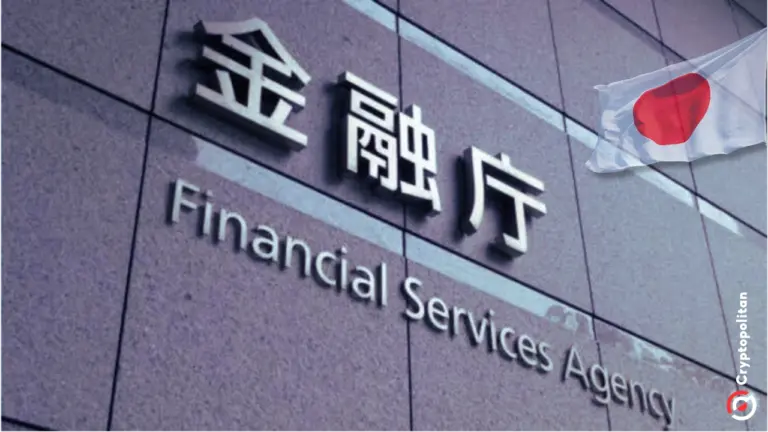
- Japan’s FSA has approved a fourth Payment Innovation Project pilot, this one testing stablecoin settlement for international trade.
- The program is run by TradeWaltz, NTT Data, and four banks that include Mizuho, MUFG, and SMBC.
- The experiment ties TradeWaltz’s trade platform to a bank-issued stablecoin to pay out export financing faster.
Japan’s Financial Services Agency (FSA) has given the green light to its fourth stablecoin pilot to allow cross-border trade to be settled with stablecoins, adding trade finance to the list of areas that the regulators have cleared through the programs.
The latest pilot brings back some participants in earlier projects, including the country’s three megabanks. The FSA notice also names four lenders, trade-platform operator TradeWaltz and NTT Data.
The goal of the pilot, if it reaches full deployment, could see exporters collect their money faster and allow banks to automate payment instructions and receipt confirmation.
Which stablecoin pilot did Japan’s FSA approve?
The FSA’s latest pilot is built around using TradeWaltz, which runs a Software as a Service (SaaS) platform that digitizes international trade paperwork, to connect to a stablecoin system and pay out on export financing.
The system, as it currently runs, still uses letters of credit, bills of lading and other similar physical documents for what TradeWaltz describes as slow, manual reconciliation and mailing between parties.
Under the TradeWaltz-led program, stablecoin payments are triggered after an approval process that starts when an exporter uploads shipping documents through TradeWaltz and ends when the bank signs off on buying the resulting export receivable.
For now, the receivable purchase and settlement between an exporter and its bank is the only leg of the trade chain open to participants in the stablecoin pilot. Expansion to cover importers and their banks could follow.
Japan approves fourth project under the FSA’s payment lab
The September 29 statement is the fourth approval in the Payment Innovation Project (PIP), and the fifteenth overall since the FSA launched the FinTech Proof-of-Concept Hub in 2017.
PIP launched as a payments-focused track inside the hub on November 7, 2025, with blockchain, financial law, and overseas trends specialists running the division.
The first PIP project in November 2025, confirmed by Minister of State for Financial Services Satsuki Katayama, was based on Japan’s three megabanks’ plan to issue a payments stablecoin together.
Nomura and Daiwa joined the three banking groups to test blockchain securities transfers settled in stablecoin in the second pilot announced in February 2026.
In April 2026, the third program was run by DeCurret DCP and GMO Aozora Net Bank for tokenized deposit interbank settlement.
The same megabanks, now on trade rails
Mizuho Bank, MUFG Bank, and Sumitomo Mitsui Banking Corporation are returning participants in the fourth pilot, with Mitsubishi UFJ Trust and Banking joining them. Between them, these banks hold a combined $6.8 trillion in assets.
TradeWaltz confirmed in its release that the participating financial institutions will examine the settlement token together, which points back to the joint stablecoin the three lenders are already building under PIP’s first project.
The trust-backed yen stablecoin is expected to be ready for live commercial transactions during the fiscal year that ends in March 2027.
The FSA plans to publish the compliance and supervisory findings once the experiment wraps, as it does for every PIP case. The agency did not set an end date, saying only that the trial runs from September 2026 for the time being.
The participants sketched a longer roadmap that includes electronic bills of lading and smart-contract escrow services, both aimed at pushing more of the trade workflow on-chain.
On a larger scale, the pilot lines up with Japan’s broader approach toward digital assets. As Cryptopolitan reported at the time, the FSA now has a dedicated Crypto Assets and Stablecoins Division as of August 2026, part of a plan to reclassify crypto as a financial product and cut the top tax rate.
The smartest crypto minds already read our newsletter. Want in? Join them.
FAQs
Who is taking part in the fourth PIP pilot?
The applicants are TradeWaltz, NTT Data, Mizuho Bank, MUFG Bank, Sumitomo Mitsui Banking Corporation, and Mitsubishi UFJ Trust and Banking, according to the FSA notice and the companies' joint release.
What will the experiment actually test?
It will link the TradeWaltz platform to a stablecoin system so that a bank's approval to buy an exporter's receivable triggers a stablecoin payment, while the participants work through the technical and legal questions that raises.
How does this fit into Japan's other stablecoin efforts?
It is the fourth project under the FSA's Payment Innovation Project and the fifteenth under its FinTech Proof-of-Concept Hub, and it reuses the three megabanks that are separately building a jointly issued yen stablecoin they aim to bring live by March 2027.
Disclaimer. The information provided is not trading advice. Cryptopolitan.com holds no liability for any investments made based on the information provided on this page. We strongly recommend independent research and/or consultation with a qualified professional before making any investment decisions.

Hannah Collymore
Hannah is a writer and editor with nearly a decade of blog writing and event reporting experience in the crypto space. At Cryptopolitan, Hannah contributes to the news page, reporting and analyzing the latest developments in DeFi, RWA, crypto regulation, AI and frontier tech industries. She graduated from Arcadia university with a degree in Business Administration.









