







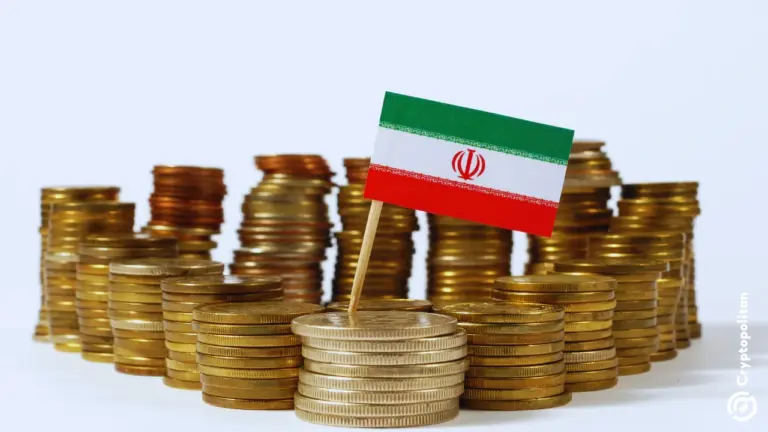
- New estimates place Tehran’s total crypto holdings near $7.7 billion.
- The US Treasury has frozen nearly $500 million in cryptocurrency linked to Iran’s central bank and military apparatus
- Iran is building crypto-denominated financial infrastructure, including a Bitcoin-backed shipping insurance service for the Strait of Hormuz.
The Trump administration has engaged the Iranian regime across different frontiers, but Tehran’s crypto stash, recently estimated at $7.7 billion, is the latest indicator of the scale of the fight ahead as the US moves to shut off every outlet the Iranian regime has found to stay in the fight despite sanctions.
Treasury Secretary Scott Bessent disclosed that the US has already frozen close to $500 million in cryptocurrency tied to Iran’s government, including $344 million seized in April alone, as reported by Cryptopolitan.
How much that affects the regime is another question, as recent reports have indicated that Iran has a steady flow of digital assets coming in, having launched a Bitcoin-denominated insurance product for ships passing through the Strait of Hormuz.
How much cryptocurrency does Iran have?
The $7.7 billion in digital asset holdings making the rounds took off after a Fox Business interview that cited an unnamed threat-detection data firm while discussing the Iranian regime’s total crypto holdings.
That number tracks with earlier Chainalysis data in pegging Iranian crypto holdings at $7.8 billion in 2025, with about 50% of that total attributed to Iran’s Islamic Revolutionary Guard Corps (IRGC).
As Chainalysis put it, the IRGC dominates “Iran’s economy more broadly,” but there are also regular Iranians, who account for a healthy chunk of the other 50%. According to Blockchain intelligence firm TRM Labs, Iranians traded $11.4 billion of crypto in 2024 and $10 billion in 2025.
What is Washington doing about Iran’s crypto reserves?
Treasury Secretary Scott Bessent disclosed that his department has sanctioned multiple wallets connected to the Iranian regime, warning that the US would “follow the money that Tehran is desperately attempting to move outside of the country and target all financial lifelines tied to the regime,” according to Fox Business.
The April freeze targeted two wallet addresses that the Office of Foreign Assets Control attributed to Iran’s central bank, Bank Markazi.
As cryptopolitan reported at the time, Tether helped block two wallets after US agencies flagged alleged unlawful activity.
TRM Labs reported that between March 2021 and late 2023, the sanctioned wallets received about $370 million across nearly 1,000 transactions.
TRM described the behavioral profile as “reserve infrastructure rather than operational wallets,” with less than 7% of inflows ever leaving the wallets, and none of those transfers were sent to identified exchange deposit addresses.
The wallet’s balances were dormant since late 2023 until the US froze the assets.
Why is Iran accumulating crypto?
Tehran has different reasons for turning to crypto. The US has limited control on the parallel financial system that Bitcoin and digital assets operate on, which helps Iran avoid sanctions.
There’s also the other issue that US and Israeli operations have decimated many of its traditional alternatives. For example, the collapse of conventional insurance options in the region has led to the introduction of a service called Hormuz Safe.
Iran’s Supreme National Security Council announced that a new body, the Persian Gulf Strait Authority, will oversee the insurance service, which offers Bitcoin-settled insurance coverage for cargo ships passing through the strait, according to Cryptopolitan.
The Iranian government claims the program could generate more than $10 billion annually. The platform’s website remains listed as “coming soon,” though Iranian state media has reported that policies are already being offered.
No country or shipping company has publicly expressed interest in Hormuz Safe.
Freezing Iran’s assets may not be enough
Industry observers say cryptocurrency’s transparent ledger may ultimately work against Iran. Others like Daniel Tannebaum, a senior fellow at the Atlantic Council, believe that asset freezes, while “meaningful,” are unlikely to shift Tehran’s war posture given how deeply sanctions have already been applied.
“The way to get at Iran at this point, because Iran is truly sanctioned out, is to go with the third country actors enabling them,” he told CNN.
Don’t just read crypto news. Understand it. Subscribe to our newsletter. It's free.
FAQs
How much Iranian cryptocurrency has the US government frozen?
Treasury Secretary Scott Bessent said the US has frozen nearly $500 million in crypto connected to Iran, including $344 million seized in April 2026 through a coordinated freeze by Tether and OFAC targeting two wallets attributed to Iran's central bank.
What is Hormuz Safe?
Hormuz Safe is a Bitcoin-backed insurance service Iran launched for cargo ships transiting the Strait of Hormuz, overseen by a new Persian Gulf Strait Authority. The Iranian government claims the program could generate over $10 billion per year, though no country or shipping company has publicly signed on.
How large are Iran's total cryptocurrency holdings?
Estimates from a threat-detection data firm cited by Fox Business put Iran's crypto holdings at $7.7 billion, while Chainalysis told CNN the figure reached $7.8 billion in 2025, with Iran's Islamic Revolutionary Guard Corps accounting for roughly half of those holdings in late 2025.
Disclaimer. The information provided is not trading advice. Cryptopolitan.com holds no liability for any investments made based on the information provided on this page. We strongly recommend independent research and/or consultation with a qualified professional before making any investment decisions.

Hannah Collymore
Hannah is a writer and editor with nearly a decade of blog writing and event reporting experience in the crypto space. At Cryptopolitan, Hannah contributes to the news page, reporting and analyzing the latest developments in DeFi, RWA, crypto regulation, AI and frontier tech industries. She graduated from Arcadia university with a degree in Business Administration.









