






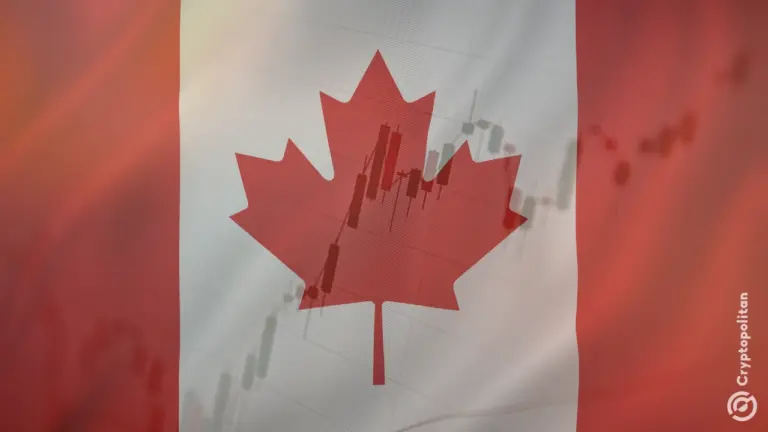
Canada is already feeling more of the pressure from the latest trade fight with the United States from its dollar after Trump started yet another economic spat.
At press time, the loonie was down 0.58% against the U.S. dollar. It also lost ground against the euro, British pound and Japanese yen.
Cryptopolitan reported that Washington imposed a 50% tariff on about $20 billion of Canadian goods on Saturday. But Canada is America’s second-largest trading partner after Mexico, so the dispute reaches far beyond a few narrow industries.
Canada’s Prime Minister Mark Carney has already promised that he will introduce his own tariffs on September 8.
As we reported, Carney said Ottawa would retaliate “dollar for dollar” and release the complete list “in the coming days.” The government has also suggested that fiscal support could be used to help businesses hit by the conflict. Carney has been clear about the cost, though. He said the new duties would “raise costs and reduce choice for Canadians.”
The political reaction inside Canada has been more supportive than the economic numbers might suggest. Recent polling shows a majority of Canadians back taking a tougher position against Washington. At the same time, more people are becoming worried about their jobs. Canadian economist Trevor Tombe estimates that keeping U.S. tariffs at 50% could lead to roughly 90,000 job losses.
Washington says Canada pushed for more after negotiators nearly reached a trade deal
Negotiators from both countries spent the week trying to prevent the tariff increase. By the weekend, the talks had broken down and the language from both governments had become much sharper. Washington and Ottawa each blamed the other side for the failure and accused the other of maintaining unfair trade practices.
U.S. Trade Representative Jamieson Greer said Monday that both sides had been close to an agreement before things changed near the end.
“The Canadians ‘wanted more’ than Washington was willing to offer,” Jamieson said. According to him:
“We offered them the best access to the United States of any country in the world. Obviously, there’s always going to be tariffs, and there’s going to be that protection for American workers and companies.”
Jamieson said the U.S. proposal included major cuts to several duties that matter to Canada.
“But we sought to accommodate the Canadians by … cutting tariffs in half on steel, on aluminum, and extensively reducing them on autos, and even on things like softwood lumber, accommodating some element of that. Things that are sensitive for the Canadians. They simply … wanted more. I don’t know if it was political for them. It certainly doesn’t make economic sense.”
He played down the size of the new measures from the American side, saying markets “understand that this affects a very small amount of trade.” The Canadian products covered by the latest tariffs equal about 0.6% of total U.S. goods imports. The United States currently runs a $48.3 billion goods trade deficit with Canada, according to the U.S. Treasury website.
Trump threatens 50% auto and steel tariffs as Canada prepares its September response
Naturally, Trump took a much harder tone in a post on Truth Social, accusing Canada of taking advantage of the United States and focused heavily on agricultural trade.
“Canada has been ripping off the United States of America for years. Their ridiculously high tariffs on our Farmers and farm products has made life impossible for these great American Patriots, and has long created a 60 Billion Dollar Deficit between our two Countries. Not sustainable, and NOT ANYMORE!”
Trump also announced another possible escalation beginning next year. He said tariffs on Canadian cars, trucks, automotive parts and steel will rise to 50% on January 1, 2027.
“Build in the U.S. and there are ZERO TARIFFS,” Trump wrote.
He then said Canada would no longer receive the kind of treatment Washington had previously extended to it.
“Canada will be treated like a State no longer! On Trade, and in other ways, also, they are among the worst Nations in the World to deal with. They feel entitled, and yet, WE DON’T NEED CANADA, THEY NEED US! They do 95% of their business with the U.S., with us, the exact opposite!”
The smartest crypto minds already read our newsletter. Want in? Join them.
Disclaimer. The information provided is not trading advice. Cryptopolitan.com holds no liability for any investments made based on the information provided on this page. We strongly recommend independent research and/or consultation with a qualified professional before making any investment decisions.

Jai Hamid
Jai Hamid has been covering crypto, stock markets, technology, the global economy, and the geopolitical events that affect markets for the past 6 years. She has worked with blockchain-focused publications including AMB Crypto, Coin Edition, and CryptoTale on market analyses, major companies, regulation, and macroeconomic trends. She has attended London School of Journalism and thrice shared crypto market insights on one of Africa’s top TV networks.









