
🔥 Trade with Pros on Discord → 21 Days Free (No Card)JOIN FREE

LIVE

Federal Reserve prepares to cut interest rates for the 3rd time in 2025

Fed cuts interest rates by 25bps, says it plans only one cut in 2026

  • The Fed has cut rates by 25bps to a target range of 3.5%–3.75% in its its third cut of 2025, with no clear signal on what’s next.

  • Powell said rate hikes are off the table, but future cuts will depend on data that may be distorted due to October’s government shutdown.

  • The Fed will begin buying $40B in T-bills per month starting Dec. 12 to rebuild bank reserves, but stressed this is not QE.

  • Markets now see a 78% chance of no move in January, with traders expecting the policy rate to reach 3.1% by end-2026, per LSEG data.

See also  Bitcoin retakes $91,000 as $140 million in bearish bets vanish in 60 minutes

Live Reporting

21:30Powell dodges legacy talk, brushes off Trump criticism as Fed independence tested

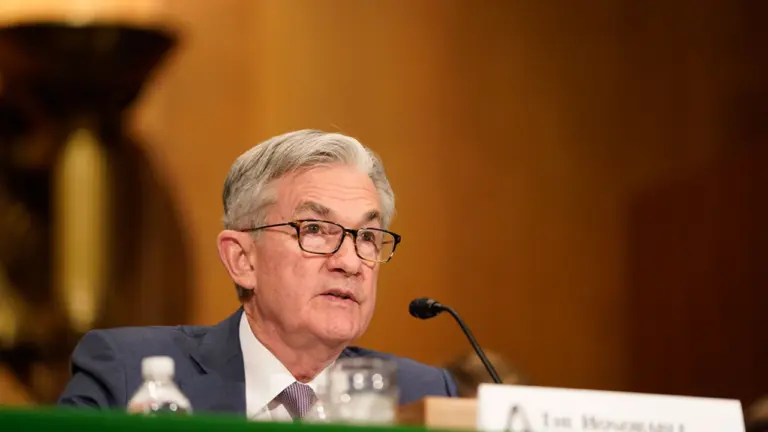
As the press conference wound down, Jerome Powell was asked what he wants his legacy to be. He kept it short.

“I really want to turn this job over to whoever replaces me with the economy in really good shape,” he said. That means inflation at 2%, and a strong labor market, nothing more, nothing less. “That’s what I want.”

Pressed on whether he plans to remain on the Fed’s board after stepping down as chair, Powell gave no opening. “I’m focused on my remaining time as chair,” he said. “I haven’t got anything new on that to tell you.”

But politics is clearly creeping in.

Donald Trump told reporters last week that he’ll name a new Fed chair early next year, and made it clear the top requirement will be someone who supports cutting rates right away.

In a Tuesday interview with Politico, Trump had said that a more aggressive cut than today’s 25bps move would have been “better.”

Powell also refused to touch the Supreme Court case involving Fed Governor Lisa Cook, where Trump is attempting to have her removed, a move with no precedent in U.S. history.

The court will hear arguments on January 21, and the outcome could reshape the boundaries of Fed independence for the first time in decades.

So far, Powell is staying quiet on all of it. But with elections, appointments, and legal fights on the horizon, the final months of his term are already shaping up to be anything but quiet.

THIS LIVE EVENT IS NOW OVER.
21:28Powell says rate cuts won’t fix housing shortage, blames tariffs for inflation overshoot

When asked about the housing market, Jerome Powell didn’t offer much optimism. He said the U.S. is dealing with “some really significant challenges” that can’t be solved by tinkering with interest rates.

“I don’t know that a 25-basis-point cut is going to make much of a difference for people,” he said. The real issue? Supply.

“We haven’t built enough housing in the country for a long time,” Powell explained, noting that the problem spans affordable units, single-family homes, and multi-family rentals.

“Housing is going to be a problem,” he said flat out. “We can raise and lower interest rates, but we don’t really have the tools to address a structural housing shortage.”

On inflation, Powell pointed directly at tariffs, again blaming them for pushing prices above the Fed’s 2% target. He said the overshoot is largely tied to import tax hikes imposed under Donald Trump, calling it a “one-time price increase” that continues to linger in the system.

21:17Stocks rip to new highs as Fed fuels rally, small-caps surge while Bitcoin remains muted

Markets roared into the close Wednesday as investors fully embraced the Fed’s third rate cut, sending major indices toward fresh records.

The Dow Jones Industrial Average surged 587 points, up 1.2%, while the S&P 500 jumped 0.8% to 6,898, officially pushing past its October high. The Nasdaq Composite added 0.5%, continuing its slow but steady climb.

But the day’s biggest fireworks came from small caps.

The Russell 2000 index soared 1.5%, hitting a new all-time high as traders piled into smaller names that typically benefit the most from lower borrowing costs.

If the index finishes above $2,531.16, it will log a record close, capping a breakout stretch that’s seen it rally almost 15% year-to-date. Still, it’s running slightly behind the S&P 500, which is up 17.2% in 2025 so far.

In commodities, Bitcoin stayed flat at $93,000, holding its ground after last week’s gains. Gold inched up 0.2% to $4,215.10/oz, while silver climbed 0.4%. Platinum and palladium both slipped.

Meanwhile, the Dollar Spot Index dropped 0.3%, as traders rotated out of the greenback and into risk.

21:15Powell says tariff-driven inflation may peak soon, but price pain lingers

Jerome Powell was asked whether tariffs are still pushing prices higher, and if that pressure might ease soon. His answer: not right away, but it’s coming.

“It’ll take quite a while for an individual tariff to take its full effect,” he said, before adding that if no new tariffs are introduced, goods inflation could peak in Q1 of next year.

That’s not a firm forecast, though. “We haven’t been able to predict this with any precision. No one is,” Powell admitted. Still, he said any inflation impact from tariffs going forward should be small, “a couple tenths or even less than that.”

On broader inflation worries, Powell acknowledged what’s been hitting Americans hardest. “We have a network of contacts in the U.S. economy,” he said. “We hear loud and clear how people are experiencing really high costs.”

But Powell clarified that much of that pain isn’t coming from recent inflation, it’s the long shadow of 2022 and 2023, when inflation was running hot. “A lot of that is not the current rate of inflation,” he said. “It’s embedded higher costs from the earlier spikes.”

He also addressed the political backdrop, without naming names.

While prices are still up 3% year-over-year through September, Powell said the Fed’s top priority is to bring inflation back to 2%, while making sure jobs and wages stay strong enough that people can feel “economically healthy again.”

21:09Fed to buy $40B in T-bills monthly as reserve levels fall

As part of a shift in its balance sheet strategy, the Federal Reserve announced it will begin buying $40 billion in Treasury bills per month starting December 12, aiming to rebuild reserve balances that have fallen to tighter levels during the Fed’s long stretch of quantitative tightening.

In a fresh statement released alongside today’s rate cut, the Fed said reserves had dropped to what it still considers “ample,” but not by much.

To keep that cushion in place, it will start purchasing short-term Treasuries on an ongoing basis, adjusting the pace as needed.

This is not a return to quantitative easing, the Fed emphasized. Unlike the crisis-era bond-buying programs used to slash long-term rates and flood the system with liquidity, these new purchases are strictly for reserve management, not stimulus.

The idea is to stabilize the plumbing of the banking system as other liabilities ramp up next spring.

The New York Fed’s open market desk expects the current pace of buying to stay elevated for a few months, especially ahead of an anticipated surge in non-reserve liabilities in April. After that, it will likely scale back purchases.

21:03Powell rules out hikes, warns next data could be messy

When asked whether the Fed’s next move is almost certainly a cut, now that policy is sitting near neutral, Chair Powell said rate hikes are off the table. “I don’t think that a rate hike is anybody’s base case at this point,” he said. “And I’m not hearing that.”

What comes next, though, is still wide open.

“Some people feel we should stop here and wait,” Powell explained. “Others think we should cut once or more, either this year or next.”

The takeaway? There’s no preset direction, and the Fed remains deeply divided on how quickly to move, or whether to move again at all.

But Powell also dropped a key warning: don’t trust all the data blindly. Because of the October–November government shutdown, which froze parts of federal statistical collection, Powell said several datasets (especially from household surveys) may be distorted, not just volatile.

“There are very technical reasons,” he said. “We’re going to need to be careful in assessing that data. Some of it may be distorted, not just noisy.”

20:56Powell says Fed split is deep but respectful as inflation and labor risks collide

Jerome Powell addressed the three dissents in today’s rate decision, acknowledging just how rare this kind of division has become. But he said despite the split, there’s agreement on the basics.

“Everyone around the table agrees inflation is still too high, and we want it to come down,” Powell said. “And everyone agrees the labor market has softened, with more risks emerging on that front.”

What’s different now, he explained, is how those risks get prioritized. That’s the dividing line. “Where the difference is, how do you weight those risks?” he said.

Powell called it “very unusual” to have such persistent tension between inflation and employment goals, the core pillars of the Fed’s mandate.

But he pushed back on the idea that things are breaking down inside the committee. “The discussions we have are as good as any we’ve had in my 14 years at the Fed,” he said. “They’re thoughtful, respectful. You just have people who hold strong views.”

Today’s cut passed with 9 out of 12 members backing it, what Powell described as “fairly broad support.” Still, he admitted this wasn’t the typical setup, where consensus leads the way.

“It’s not like the normal situation,” he said. “Not everyone agrees on the direction, or what to do next.”

20:48Powell says Fed is in wait-and-see mode as AI spending lifts 2026 outlook

Taking the first round of questions, Jerome Powell addressed the new phrase in the statement, “considering the extent and timing of additional adjustments,” and confirmed what markets suspected: the Fed’s in no rush now. “That new language points out that we’ll carefully evaluate the incoming data,” he said.

Powell also laid out why the Fed feels it can pause. After cutting 75 basis points since September, and 175 since last year, he said the Fed funds rate is now within the neutral zone, meaning it’s no longer actively holding the economy back. “We are well positioned to wait and see how the economy evolves,” Powell told reporters.

Asked about the surprisingly optimistic tone in the Fed’s growth outlook for 2026, Powell pointed to resilient consumer spending as a key support. September saw a modest uptick, capping three strong months of gains. But he didn’t stop there.

He also flagged something new: AI-driven business investment. “Spending on data centers and related to AI has been holding up business investment,” Powell said, calling it a real factor in current GDP estimates. With AI infrastructure buildouts accelerating, that’s now part of the Fed’s economic baseline.

And don’t forget Washington. “Fiscal policy is going to be supportive,” he added, suggesting the federal government is expected to keep pumping demand into the economy.

Between steady consumers, ongoing AI capex, and loose fiscal conditions, Powell said the Fed expects “solid growth” next year, even if rates stay exactly where they are.

20:44Chair Powell flags rising risks, says policy path is no longer predictable

Jerome Powell continued to underline just how fragile the Fed’s balancing act has become.

Speaking during the Q&A, he said the central bank is now dealing with upside risks to inflation and downside risks to employment at the same time. “A challenging situation,” he called it. And there’s no playbook for that.

“There is no risk-free path for policy,” Powell said flatly. The Fed is stuck between two goals that are starting to pull in opposite directions, trying to protect the labor market without letting inflation slip back out of control.

He also addressed the growing obsession with rate projections and the so-called dot plot, which shows where individual officials think policy is heading.

But Powell made sure to throw cold water on any definitive takeaways: “These forecasts are not a committee plan,” he said. “They’re not decisions. Monetary policy is not on a pre-set course.”

20:34Chair Powell sticks to the script as futures trim hopes for more cuts

Jerome Powell stepped up to the mic Wednesday afternoon with markets already jittery, and he didn’t give them much to work with.

Kicking off his press conference minutes after the Fed’s third rate cut of the year, Powell said the overall outlook hasn’t shifted much since October, pointing to missing federal data and signs of a still-cooling labor market.

Despite the cut, traders aren’t betting on more action just yet. According to LSEG futures data, the odds of a pause in January jumped to 78%, up from 70% before today’s decision.

Markets still expect rates to drift lower, with the policy rate at 3.1% by end-2026, but that path hasn’t changed much in the aftermath of today’s move.

Powell told reporters the labor market is softening, but not sharply. “Layoffs and hiring both remain low,” he said, even though official numbers for October and November are still delayed thanks to the 43-day government shutdown.

He noted that households and employers alike are seeing fewer job openings and less urgency to hire, a sign that the labor market is gradually cooling, not collapsing.

On inflation, Powell didn’t pretend things were fixed. “Inflation has eased significantly from its highs in mid-2022,” he said, “but remains somewhat elevated.”

He also reminded everyone that there’s been very little inflation data released since October, making it even harder to chart a clear path forward.

20:00Fed cuts rates to 3.5%–3.75%, but signals growing uncertainty ahead

The Federal Reserve just cut interest rates by another 25 basis points, pushing its benchmark range down to 3.5%–3.75%, but the message attached wasn’t exactly reassuring.

In its statement released Wednesday, the central bank said economic activity is still growing, but not at full strength, and that job growth has slowed while inflation remains elevated.

Jerome Powell, along with John Williams, Lisa Cook, Michael Barr, and five others, backed the move. But the split was real.

Stephen Miran wanted a deeper half-point cut, while Austan Goolsbee and Jeffrey Schmid didn’t want any change at all. The divide reflects what the Fed called “elevated uncertainty” about where the economy is headed and rising risks to employment.

The Committee emphasized that it’s still committed to bringing inflation back to 2%, but also flagged that it may need to pause and wait for more data before deciding on any more easing.

Powell and the other voters made it clear: any further moves will depend on “the evolving outlook” and how the balance of risks shakes out in coming months.

19:00Dow climbs ahead of Fed cut as Wall Street watches Powell’s tone

The Dow Jones Industrial Average jumped 212 points midday Wednesday, up about 0.5%, as traders placed final bets on the Federal Reserve’s rate cut and what comes after.

The S&P 500 ticked 0.1% higher, still hovering just under its October 28 record, while the Nasdaq Composite slipped 0.2%, weighed down by a more than 2% drop in Microsoft.

Big banks were on the move. JPMorgan Chase led financials higher, with traders betting a rate cut will juice the economy and unlock credit growth.

GE Vernova shares also climbed after the industrial giant doubled its dividend, drawing in fresh investor interest across the industrials sector.

That’s a big shift from Tuesday, when markets basically went nowhere, the S&P 500 and Dow both closed lower, while the Nasdaq ended just barely in the green.

But memories of October still linger. Back then, Powell cut rates, but cautioned against assuming more would follow. That sent markets into a funk for most of November, until a few Fed voices started hinting at one more cut.

That brought stocks back to life. Now, the S&P is sitting just shy of its highs, with Wall Street watching to see if Powell opens the door wider, or slams it shut.

17:20Fed prepares a cut, but warns it may be the last one for a while

The Federal Reserve is expected to cut interest rates for the third time this year when it wraps up its two-day meeting on Wednesday, but the message from Jerome Powell is unlikely to feel celebratory.

The central bank is leaning toward a 25-basis-point cut, bringing the federal funds rate down to a target range of 3.5% to 3.75%, according to market consensus.

But this meeting is anything but straightforward.

Inside the Federal Open Market Committee, there’s a split. Some policymakers want to keep easing, worried that a weakening job market could drag the economy down.

Others are growing anxious that more cuts might let inflation slip out of their grip again. That’s why the term making the rounds on trading desks is a “hawkish cut,” one where the Fed delivers a cut but warns it could be the last one for a while.

David Mericle, an economist at Goldman Sachs, said Powell is likely to highlight just how high the bar has become for any further rate reductions.

Mericle thinks Powell will spend time explaining why some Fed members didn’t agree with Wednesday’s move, just like in October, when two members voted “no.”

That number could go up.

According to Bill English, a former top Fed staffer, this is shaping up to be one of the more complicated meetings of the year.

“It’s a tough meeting,” he said, adding that deep philosophical splits on the committee are likely to show up again, especially in the dot plot, the anonymous chart where each of the 19 participants signals where they think rates are headed.

Economic data hasn’t made things easier. Even though the government shutdown has now been resolved, there’s been a lack of fresh labor market stats.

What’s out there doesn’t look great: hiring dropped by 218,000 in October, while layoffs ticked up by 73,000, according to the Bureau of Labor Statistics.

Meanwhile, the Fed’s preferred inflation measure, core PCE, came in at 2.8% in September. That’s lower than expected, but still way above the Fed’s 2% target.

What to know

The Federal Reserve has cut rates by 25bps to a new target range of 3.5%–3.75%.

Editor's choice

Loading Editor's Choice articles...

- The Crypto newsletter that keeps you ahead -

Markets move fast.

We move faster.

Subscribe to Cryptopolitan Daily and get timely, sharp, and relevant crypto insights straight to your inbox.

Join now and
never miss a move.

Get in. Get the facts.
Get ahead.

Subscribe to CryptoPolitan