






- BTC, global markets moved sharply on Wednesday as signs of progress in US–Iran negotiations.
- Oil prices were dragged lower amid the progress.
- Washington and Tehran are now nearing an agreement on a preliminary 14-point memorandum that would halt hostilities.
Global markets moved sharply on Wednesday as signs of progress in US–Iran negotiations triggered a rapid unwind of war-driven positions, dragging oil prices lower while lifting equities and cryptocurrencies.
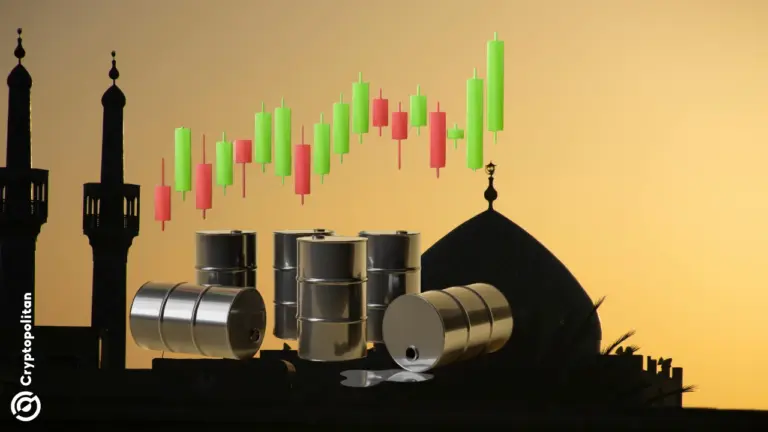
Bitcoin climbed above $81,000, its highest level in three months, while Brent crude fell roughly 11% to around $98 per barrel. The S&P 500 rose 0.85% to a record 7,366.25, according to the Economic Times. Bond yields declined, and gold retreated, reflecting a broad shift in investor sentiment tied to expectations of de-escalation in the Gulf.
The moves followed reports that Washington and Tehran are nearing agreement on a preliminary 14-point memorandum that would halt hostilities and open a 30-day window for detailed negotiations.
Negotiations advance, but gaps remain
Iran said on Wednesday it was reviewing a new US proposal, with a response expected soon via Pakistan, which has acted as the main intermediary between the two sides. The draft framework would first end the conflict before addressing reopening the Strait of Hormuz, easing US sanctions, releasing frozen Iranian assets, and imposing limits on Iran’s nuclear program.
US envoys Steve Witkoff and Jared Kushner are leading negotiations for Washington, according to Reuters and Axios. A Pakistani source close to the talks told Reuters, “We will close this very soon. We are getting close.”
President Donald Trump struck a mixed tone. He said the US had “very good talks” over the prior 24 hours and that Iran “want to make a deal very much.” But he also warned on Truth Social that if Tehran does not agree, “the bombing starts, and it will be, sadly, at a much higher level and intensity than it was before.”
Oil shock drives cross-asset repricing
The speed and scale of the market reaction reflect the strategic importance of the Strait of Hormuz, which carries roughly a fifth of global oil supply. Disruptions during the conflict had pushed crude prices higher and intensified inflation concerns across global markets.
Wednesday’s drop in oil effectively removed a key inflation pressure point in a single session, supporting equities and other risk-sensitive assets. Bitcoin has gained around 25% since the conflict began, compared with an 8% rise in the S&P 500 and an 11% decline in gold, the Economic Times reported.
Ryan Lee, chief analyst at Bitget Research, told the Economic Times that gold’s pullback reflects macro conditions rather than fading safe-haven demand. “Gold is no longer the default,” Lee said. “Digital assets are increasingly being considered alongside it, not after it.”
Market behavior during previous geopolitical de-escalations offers useful context. During the Joint Comprehensive Plan of Action, oil prices eased on expectations of increased Iranian supply, while gold weakened as safe-haven demand softened.
At the time, Bitcoin was still a relatively niche asset and showed limited correlation with macro geopolitical events. In contrast, today’s market structure points to a stronger linkage between crypto and global macro trends, driven by institutional participation and the rise of Bitcoin ETFs.
Skepticism persists on both sides
Despite the optimism reflected in markets, significant uncertainties remain.
Iranian lawmaker Ebrahim Rezaei described the reported framework as “more of an American wish-list than a reality,” according to Reuters. He added that Iran “has its finger on the trigger” if US concessions fall short.
Source (Reuters):
On the US side, the proposal reportedly does not address several long-standing demands, including limits on Iran’s missile program, its support for proxy groups, and the status of more than 400 kilograms of highly enriched uranium, Reuters said.
Grant Rumley, a former Middle East adviser now at the Washington Institute for Near East Policy, told the BBC: “We have been here before, and we’ve seen negotiations collapse at the last minute for a variety of reasons.”
Trump acknowledged the uncertainty, telling PBS he had “felt that way before” about a deal with Iran, adding: “So we’ll see what happens.”
The immediate focus is Iran’s formal response to the draft memorandum. If both sides accept the preliminary terms, a 30-day negotiation period would begin, covering sanctions relief, shipping access through the Strait of Hormuz, and nuclear restrictions.
Markets are likely to remain highly sensitive to incoming developments. Oil and Bitcoin, in particular, are expected to act as real-time indicators of whether investors believe a deal will materialize—or unravel.
While recent developments point to tangible progress, past negotiations show that translating preliminary agreements into lasting outcomes remains a complex and uncertain process.
If you're reading this, you’re already ahead. Stay there with our newsletter.
FAQs
What is the proposed US-Iran memorandum?
It is a reported 14-point, one-page document that would formally end the Gulf war and start a 30-day negotiation window covering the Strait of Hormuz, US sanctions relief, and curbs on Iran's nuclear program.
How did Bitcoin and oil prices react to the US-Iran peace reports?
Bitcoin rose to a three-month high above $81,000, while Brent crude fell around 11% to roughly $98 per barrel on Wednesday.
Has Iran agreed to the deal?
No. Iran said Wednesday it was reviewing the US proposal and would respond via Pakistan. Iranian lawmakers have called the reported terms an American "wish list," and key issues including Iran's enriched uranium stockpile and missile program remain unaddressed.
Disclaimer. The information provided is not trading advice. Cryptopolitan.com holds no liability for any investments made based on the information provided on this page. We strongly recommend independent research and/or consultation with a qualified professional before making any investment decisions.

Ibiam Wayas
Ibiam Wayas has covered the crypto news beat since 2019. He studied Computer Science at National Open University of Nigeria. His work has appeared on various crypto news platforms, including Coinfomania, Crypto News Australia, and AltcoinBuzz. Drawing on his background in Computer Science, he now focuses on crypto, robotics, and longevity news.









