






Heavily criticized Ethereum Foundation touts privacy, security progress over price support

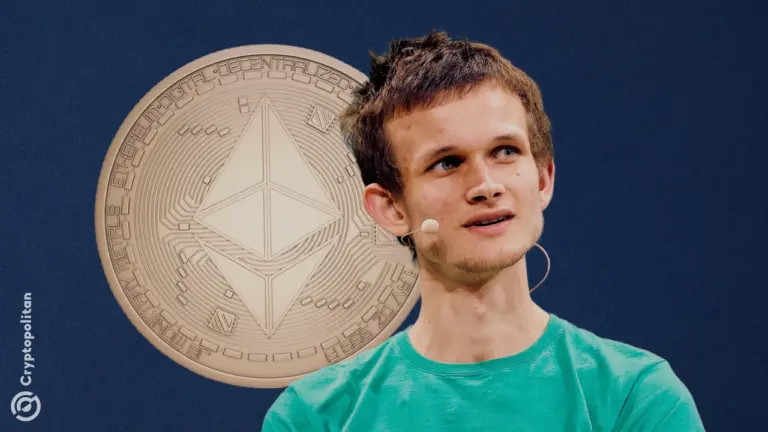
- The Ethereum Foundation is facing internal pressure amid several senior contributors’ departures in 2026 and community frustration over ETH’s market performance.
- Vitalik Buterin said the foundation should remain focused on research, privacy, and decentralization rather than acting as an ETH price support mechanism.
- Buterin’s position contrasts with Stani Kulechov and Aave, which are prioritizing revenue generation and institutional growth as the next phase of DeFi.
The Ethereum Foundation (EF) is doubling down on privacy and security tooling even as critics demand the organization do more to support ETH’s price, which has dropped nearly 60% against Bitcoin over five years.
Ethereum co-founder Vitalik Buterin, on May 26, promoted Kohaku, a privacy-focused initiative housed inside the EF, calling for security and privacy to become “normal” on Ethereum’s access layer.
The endorsement comes days after Buterin published a lengthy defense of the foundation’s strategy, stating that it should remain a research body and not an ETH price support mechanism.
Buterin’s position is in sharp contrast with Aave founder Stani Kulechov, who on May 23 publicly committed to a 12-month “revenue-led protocol strategy.”
What did Vitalik say about Kohaku?
Buterin’s post on X highlighted work by EF contributors, who have spent close to a year building Kohaku. The project targets two properties at Ethereum’s access layer, which are security (including trustlessness) and privacy, which covers both read and write operations, according to Buterin’s post.
Kassandraeth, who identifies as part of the Kohaku Initiative inside the EF, wrote on May 25 that she wanted to “get a bit more public” about the work and address confusion around the project. “Best way to clarify things is to speak candidly and openly about what I’m working on day-to-day,” she wrote on X.
The Kohaku GitHub repository describes the project as “privacy-first tooling for the Ethereum ecosystem.” It includes libraries for the Railgun privacy protocol, privacy pools, a provider abstraction layer, and a post-quantum 4337 account implementation, according to the repository’s README. Several components are marked as works in progress.
Kohaku fits into a broader privacy roadmap Buterin has been building throughout 2026. Cryptopolitan has previously reported that Buterin named three active technical efforts in May: account abstraction paired with FOCIL (a forced inclusion list mechanism), a keyed nonces proposal (EIP-8250), and access-layer work including Kohaku.
EIP-8250 would replace Ethereum’s single sender nonce with a two-part system designed to prevent observers from linking transactions originating from the same account.
Why is the Ethereum Foundation under fire?
While the privacy push is being discussed, at least eight senior contributors have left EF or announced departures in 2026, with five of these exits coming in May alone.
Among the most recent are Carl Beek, who spent seven years at the foundation and played a role in the Beacon Chain launch, and Julian Ma, a cryptoeconomics researcher who served for four years, both of whom announced their departures on May 18, as Cryptopolitan reported.
Buterin responded on May 25 with a public statement calling the EF “one node, with a defined purpose, alongside other nodes” rather than Ethereum’s central authority. He disclosed that the foundation holds roughly 0.16% of circulating ETH and said it plans to reduce token sales while narrowing its mission to what he called CROPS: censorship resistance, capture resistance, openness, privacy, and security.
The foundation has faced repeated pressure from ETH holders who have been frustrated by the token’s performance. ETH trades around $2,136, which is less than half its level last August and down sharply against Bitcoin over a multi-year window.
However, for Buterin, EF should not orient itself around price support, a position he reiterated in his May 25 post by stating that chasing throughput and speed would be “a route to mediocrity.”
Aave takes the opposite tack
Where Buterin distances the EF from revenue concerns, Kulechov is leaning into them. The Aave founder announced on May 23 that the lending protocol would pursue a revenue-led strategy over the next 12 months.
“Sustainable, consistent revenue is what proves that DeFi can evolve beyond pure token speculation into durable businesses backed by balance sheets,” Kulechov wrote on X, as reported by Cryptopolitan.
Aave generated $7.96 million in fees over the past seven days and holds over $14 billion in total value locked, according to DeFiLlama data. Its V4 crossed $100 million in combined deposits and loans on May 22, with institutional lending ambitions expanding alongside plans to grow GHO, the protocol’s overcollateralized stablecoin.
The divergence between the two camps captures a live debate inside Ethereum’s community, with some leaning towards prioritizing philosophical commitments to privacy, decentralization, and censorship resistance, while others believe protocol-level revenue generation is what will sustain long-term adoption.
Buterin is betting on the former, while Kulechov is building for the latter.
Don’t just read crypto news. Understand it. Subscribe to our newsletter. It's free.
FAQs
What is Kohaku?
Kohaku is a privacy-focused initiative inside the Ethereum Foundation that builds tooling for security, trustlessness, and read/write privacy on Ethereum's access layer, with libraries covering the Railgun protocol, privacy pools, and a post-quantum account implementation.
Why are people leaving the Ethereum Foundation?
At least eight senior contributors departed in 2026, five in May alone, sparking debate over the foundation's direction. Buterin responded by saying the EF will shrink intentionally, reduce ETH sales, and narrow its focus to censorship resistance, capture resistance, openness, privacy, and security.
What is Aave's revenue-led strategy?
Aave founder Stani Kulechov announced on May 23, 2026, that the protocol will prioritize sustainable revenue over the next 12 months, backed by $7.96 million in weekly fees, over $14 billion in TVL, and the growing adoption of Aave V4 and its GHO stablecoin.
Disclaimer. The information provided is not trading advice. Cryptopolitan.com holds no liability for any investments made based on the information provided on this page. We strongly recommend independent research and/or consultation with a qualified professional before making any investment decisions.

Hannah Collymore
Hannah is a writer and editor with nearly a decade of blog writing and event reporting experience in the crypto space. At Cryptopolitan, Hannah contributes to the news page, reporting and analyzing the latest developments in DeFi, RWA, crypto regulation, AI and frontier tech industries. She graduated from Arcadia university with a degree in Business Administration.









