






Curiosity drives digital ruble adoption in Russia amid lack of incentives and limited use cases

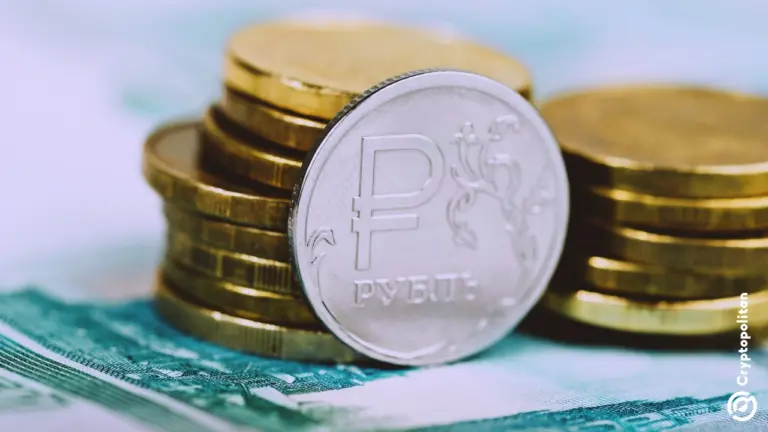
- Digital ruble usage is driven more by curiosity than by utility.
- Russians hope Moscow will offer discounts to promote the CBDC.
- Polled users say broader merchant acceptance will also help adoption.
Mere curiosity is the main driver for opening a digital ruble account in Russia, shows a survey conducted less than a couple of months after the launch of the CBDC.
The results also indicate holders would like to see more incentives and opportunities to spend the state-issued coin while Moscow is preparing to restrict its international use.
Russians want to try the digital ruble but see few reasons to do more
The desire to try something new has been the leading motive for those setting up a wallet for the Bank of Russia’s central bank digital currency (CBDC).
That’s according to a recent poll carried out by VTB, the majority state-owned banking giant, and published this week. The study was quoted by Russian media. RBC revealed Tuesday:
“Curiosity and a desire to gain new experience were the primary reasons for opening an account and experimenting with digital ruble transactions.”
Some 42% of the respondents gave that answer, the business news outlet wrote in a post, noting that the majority identified transfers as the most common type of transaction.
The convenience of opening a digital ruble account via banks’ mobile apps (36%) and the option for free transfers also played a role (33%), the business news outlet detailed further.
A little over a fifth of the participants in the survey (21%) admitted they decided to acquire the new version of the national fiat based on a recommendation from an acquaintance.
The most popular digital ruble transactions, besides transfers (28%), included various payments to the government, like utility bills and taxes (24%).
Online purchases were made by 23%, while 17% used the third incarnation of the Russian ruble, after cash and electronic bank money, to pay in physical stores.
However, a significant portion of the people questioned, approximately 35%, chose to limit their initial exposure to the CBDC to simply opening a digital ruble account.
At the same time, only one in five respondents said they received a digital-ruble transfer or loaded their digital wallets with coins they had obtained themselves through other means.
No incentives amid limited acceptance and upcoming restrictions
The majority of Russian citizens feel some incentives would be helpful to stimulate the regular use of the digital currency issued by the Central Bank of Russia (CBR).
These may come in the form of cashback or different discounts, according to 54% of those polled, and for 42% – a much larger number of merchants that accept the digital ruble.
Having the ability to conduct transactions without access to the internet has been pointed out as another important factor for adoption by 38%, Bits.media highlighted in a report.
The crypto news outlet recalled a statement from CBR Deputy Governor Vladimir Chistyukhin, who acknowledged that offline payments would allow the CBDC to compete with cash.
While cash transactions continue to play a key role in Russia’s economy, Moscow took a major step this year to regulate digital currencies like Bitcoin and Tether.
A comprehensive legal framework for cryptocurrencies and stablecoins was adopted this past summer and entered into force on September 1. The digital ruble rollout began on the same date.
While legalizing cryptocurrency, the use of which has grown under Ukraine war-related fiat restrictions, especially in foreign trade, the Russian Federation is actively pushing its own digital currency, which is already sanctioned, too.
Law allows Bank of Russia to control digital ruble settlements
Meanwhile, a new bill passed on first reading in the State Duma this week empowers the Bank of Russia to take control over and restrict international transactions involving its coin.
Per the draft law, the monetary authority will be determining who may use the CBDC for cross-border payments. Its explanatory note suggests these will be primarily export-oriented entities.
As for ordinary Russians, an earlier analysis by the VTB described the typical digital ruble user as most often a man aged 36 to 45 who lives in a big city.
Residents of the capital Moscow, Russia’s second-largest city, Saint Petersburg, and three other major urban centers accounted for 14% of wallet holders.
At the same time, the number of employees who receive their remuneration in digital rubles remains limited and concentrated mainly in the public sector.
In early October, the Ministry of Finance in Moscow announced that some of its employees had been paid their salaries in the new form of Russian currency.
The smartest crypto minds already read our newsletter. Want in? Join them.
Disclaimer. The information provided is not trading advice. Cryptopolitan.com holds no liability for any investments made based on the information provided on this page. We strongly recommend independent research and/or consultation with a qualified professional before making any investment decisions.










