



Chinese authorities risk Trump admin action with Meta-Manus deal withdrawal

- The NDRC is prohibiting Meta’s acquisition of the AI startup Manus despite the deal having already closed in December 2025.
- Manus CEO Xiao Hong and chief scientist Ji Yichao were summoned to Beijing in March and banned from leaving the country.
- Chinese regulators are now instructing multiple tech firms, including Moonshot AI, StepFun, and ByteDance, to reject U.S. investment.
China’s National Development and Reform Commission (NDRC) is insisting that Meta’s acquisition of the AI startup Manus is dead in the water despite the fact that the deal closed in December of 2025.
For decades, U.S. capital has played a significant role in China’s technology sector, but now the country is prohibiting foreign investment to prevent U.S. investors from gaining stakes in sensitive technologies linked to China’s national security.
What happened with the Meta-MANUS deal?
China’s National Development and Reform Commission (NDRC) has ordered Meta to unwind its $2 billion acquisition of AI startup Manus. The commission now prohibits foreign investment in the Manus project and requires all parties to withdraw the completed transaction.
Meta finalized its acquisition of the China-founded, Singapore-based AI agent startup in December 2025, but then Manus, created by Butterfly Effect, developed AI agents capable of executing complex tasks such as resume screening and creating stock analysis websites with minimal human intervention.
The deal has already closed, and Manus investors exited the company following Meta’s takeover.
The NDRC’s statement did not explicitly name Meta but stated it would “prohibit the foreign investment in the acquisition of the Manus project” and “require the parties involved to withdraw the acquisition transaction.”
Manus restructured internationally prior to the acquisition, following a $75 million fundraising round led by U.S. venture firm Benchmark in May 2025. The startup shut down its China offices, laid off dozens of employees, and moved its operations to Singapore without seeking Chinese regulatory approval.
Manus’ parent company, Butterfly Effect, reincorporated in Singapore, potentially bypassing both U.S. investment restrictions on Chinese AI firms and Chinese regulatory constraints on domestic AI companies transferring IP and capital overseas.
But despite these international restructuring efforts, the NDRC’s office for reviewing the security of foreign investments launched an investigation into the sale in January 2026, just days after Meta completed the acquisition.
Executives are restricted from leaving China
Manus’ two co-founders, CEO Xiao Hong and chief scientist Ji Yichao, were summoned to Beijing for meetings with regulators in March. However, following these meetings, both executives, who are typically based in Singapore, were barred from leaving the country.
Sources familiar with the matter say that despite the exit bans on the two executives, Manus staff have already moved into Meta’s Singapore offices, with projects continuing.
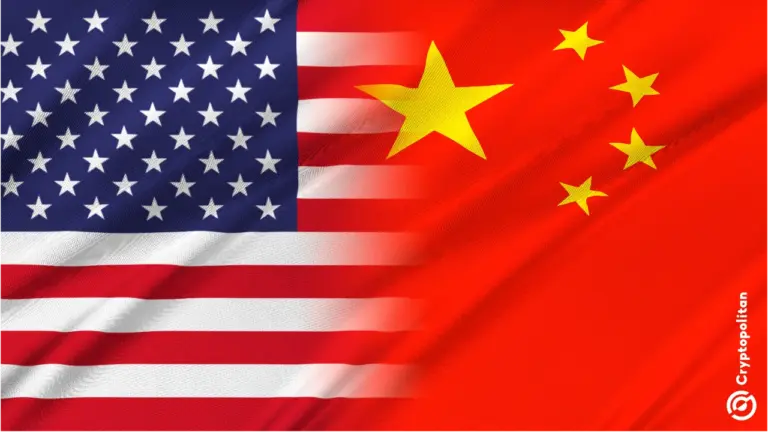
As China continues to show its determination to prevent U.S. firms from acquiring AI talent and intellectual property from Chinese entities, Washington is simultaneously trying to cut off Chinese tech firms’ access to advanced U.S. chips.
Since a trade truce was forged between Presidents Trump and Xi following their October 2025 meeting in Busan, South Korea, Beijing rapidly enacted laws to punish foreign entities that shift supply chains away from China.
The country also tightened its rare-earth licensing regime, banned foreign AI chips from state-funded data centers, and restricted U.S. and Israeli cybersecurity software in Chinese companies.
China’s Premier Li Qiang signed two regulations in April 2026 that allow authorities to deny entry, expel, and seize the assets of foreign entities found in violation of Chinese economic policies.
Cryptopolitan recently reported that Chinese regulators, including the NDRC, have instructed several private technology firms to reject U.S. investment in funding rounds unless explicitly approved by the government.
AI startups Moonshot AI and StepFun have reportedly received such instructions, and even TikTok owner ByteDance requires government approval for secondary share sales to U.S. investors.
The Trump administration imposed its own restrictions earlier this year, limiting American investment in certain Chinese AI, semiconductor, and quantum firms, citing security concerns.
If you're reading this, you’re already ahead. Stay there with our newsletter.
Disclaimer. The information provided is not trading advice. Cryptopolitan.com holds no liability for any investments made based on the information provided on this page. We strongly recommend independent research and/or consultation with a qualified professional before making any investment decisions.

Hannah Collymore
Hannah is a writer and editor with nearly a decade of blog writing and event reporting experience in the crypto space. At Cryptopolitan, Hannah contributes to the news page, reporting and analyzing the latest developments in DeFi, RWA, crypto regulation, AI and frontier tech industries. She graduated from Arcadia university with a degree in Business Administration.









