





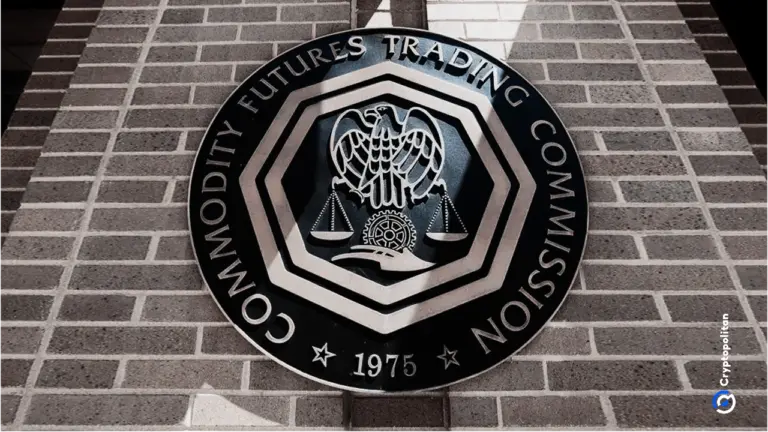
- The CFTC changed Parts 15, 16, and 17 of its regulations.
- The prediction markets will have 60 days from the rule’s finalization to comply.
- Previously, the agency also sunsetted Part 20.
Federal regulators at the Commodity Futures Trading Commission have finalized new data-reporting mandates for event contracts. The Commission just revised Parts 15, 16, and 17 of its regulations.
The changes establish an alternative data-reporting framework for certain fully collateralized event contracts. Before the amendments, the contracts had been subject to CFTC staff no-action relief since 2017.
“The CFTC will no longer regulate market participants through a patchwork of no-action letters, which serve as band-aids for unworkable regulations. This final rule is an important step in future-proofing the regulatory framework for event contracts.”
CFTC Chairman Michael S. Seli
The rule applies to DCMs and DCOs
Under the updated rule, reporting markets, futures commission merchants, clearing members, and foreign brokers will file data in accordance with CFTC Parts 15–18 rather than under separate provisions in Parts 38, 39, 43, and 45.
It extends to designated contract markets (DCMs), or exchanges registered with the CFTC, and derivatives clearing organizations (DCOs), which act as intermediaries between buyers and sellers to ensure trades are settled. The entities will have 60 days from the rule’s finalization to begin complying.
Beyond changing the reporting channels, the final rule establishes requirements for market data, transaction information, and large-trader reporting. Designated contract markets must report information about covered contracts, including trading activity and settlement outcomes.
They must also publish certain trade information, including transaction timestamps, contract identifiers, quantities, and execution prices.
The Commission also has a large-trader reporting threshold of 125,000 contracts for event contracts ($1 contract size) and, for contracts of different sizes, an equivalent notional value of $125,000. A separate threshold of 125,000 transactions in a single trading day is used for trading volume reporting.
In addition, exchanges must collect identifying information about traders (names, physical addresses, email addresses, phone numbers, occupations and employers).
They must store this information throughout the life of a covered contract and for at least five years after termination. The framework also requires exchanges and clearing organizations to maintain records for inspection by regulators.
The thresholds and scope set out in the rule will also determine which contracts are covered by the framework; products outside those parameters could remain subject to the more onerous swap regime.
The CFTC’s rule arrives as prediction markets face heightened regulatory scrutiny in the US over market integrity and federal oversight. In the US House of Representatives, a lawmaker noted that he is developing legislation to prohibit sitting members of Congress from wagering on elections and politics, as well as broader restrictions.
While the Senate has already amended its internal rules to bar senators and staff from participating in prediction markets, the House is seeking to enact a more targeted statutory ban.
The final rule was a result of months’ work
The final rule marks the culmination of a months-long push by the CFTC—moving from stopgap relief to a formal proposal, and finally locking in a permanent framework. In May, CFTC staff provided uniform no-action relief to qualifying “Covered Event Contracts,” which would be exempt from swap reporting and recordkeeping requirements, via Staff Letter No. 26-14.
The next month, the CFTC proposed a rule on RIN 3038-AF73 seeking public input on alternative reporting criteria and thresholds. In October, the agency separately proposed classifying certain event contracts, such as sports, political, and cultural events, as swaps.
Prior to this, CFTC had also issued an order terminating routine reporting requirements under Part 20. This translated into one fewer reporting channel for buy-side firms, sell-side broker-dealers, and clearing organizations.
At the time, Selig noted, “American financial market participants should not be saddled with costly and duplicative reporting requirements that do not improve the quality of our regulation.”
Established in 2011 through Dodd-Frank in response to the financial crisis as an interim measure to improve transparency in physical commodity swaps, Part 20 Large Trader Reporting was inherently temporary, with a sunset provision in Section 20.9 that will terminate reporting once more permanent systems are developed.
The smartest crypto minds already read our newsletter. Want in? Join them.
FAQs
What are event contracts in prediction markets?
Event contracts are financial products that allow traders to speculate on the outcome of future events, including elections, economic developments, sports, and cryptocurrency price movements.
What changes has the CFTC introduced for event contracts?
The CFTC has established an alternative data-reporting framework for certain fully collateralized event contracts. The rules change how exchanges, clearing organizations, and other market participants report trading activity and trader information.
When will the new CFTC reporting rules take effect?
Most requirements will take effect 60 days after publication in the Federal Register. However, certain large-trader reporting and trader-identification requirements have different compliance deadlines.
Disclaimer. The information provided is not trading advice. Cryptopolitan.com holds no liability for any investments made based on the information provided on this page. We strongly recommend independent research and/or consultation with a qualified professional before making any investment decisions.

Nellius Irene
Nellius is a Business Management and IT graduate with five years of experience in the cryptocurrency industry. She is also a graduate of Bitcoin Dada. Nellius has contributed to leading media publications, including BanklessTimes, Cryptobasic, and Riseup Media.