Your bank is using your money. You’re getting the scraps.WATCH FREE

LIVE

Why is Bitcoin suddenly rallying?

  • Bitcoin jumped toward $73,000 after a sharp rebound from about $63,000, which it hit after the weekend US and Israeli strikes on Iran.

  • ETF money is helping drive the rally, with US spot Bitcoin ETFs taking in more than $680 million over the past two days.

  • Risk mood improved as stocks climbed and oil stayed steady on signs the Iran conflict could be shorter than people feared, which helped crypto catch a bid.

See also  Gold hits yet another new all-time high of $4,800 as Bitcoin crashes to $88,000

Live Reporting

23:18Iran says it targeted Amazon-linked data centers as AWS outages spread in the Gulf

Iran’s Islamic Revolutionary Guard Corps targeted Amazon’s data center in Bahrain, according to Iranian state media, framing it as retaliation for the company’s support of the U.S. military.

Amazon Web Services said Monday that one of its Bahrain facilities was damaged after a nearby drone strike on Sunday. AWS also said two data centers in the United Arab Emirates were damaged after they were directly hit by drones.

The outages are still ongoing. AWS’s public health dashboard shows the Bahrain and UAE facilities remain offline.

Iranian outlet Fars News Agency said on Telegram the Bahrain strike was meant to “identify the role of these centers in supporting the enemy’s military and intelligence activities.”

AWS said the incidents caused more than just physical damage. The sites also had power disruptions, plus water damage tied to firefighting efforts after responders dealt with sparks and fire.

The knock-on effects hit users too. AWS said some widely used applications saw elevated error rates and degraded availability following the incident.

AWS told customers to take precautions now: back up data, think about moving workloads to other regions, and route traffic away from Bahrain and the UAE.

19:23Futures point to an Asia bounce as US data cools inflation nerves

Early trading signals across Asia were positive. Equity index futures for Japan, Australia, and Hong Kong were higher, and South Korea’s Kospi futures were trading around 8% up, pointing to a rebound after Wednesday’s crash.

In the U.S., stocks finished stronger on Wednesday. The S&P 500 added 0.8% and the Nasdaq 100 climbed 1.5%, with the lift coming from a run in tech megacaps.

The backdrop was helped by fresh data on the U.S. services economy. Services growth was the fastest since mid-2022, while a price index cooled to an almost one-year low, which took a bit of heat out of inflation worries.

Markets also shifted in the usual cross-asset spots. The dollar slipped 0.3%, the 10-year Treasury yield rose 4 basis points to 4.10%, and crude settled near $75 a barrel.

On the policy side, the Federal Reserve cut rates three times in 2025, then switched to holding rates steady in January, pointing to inflation that was still above target and a labor market that had recently steadied.

Some officials have also raised the possibility that rates could even go up if inflation stays high.

Next up on the calendar, the Labor Department releases the February jobs report on Friday, and policymakers get new inflation data next week. The next Fed meeting is March 17 to 18 in Washington.

In Asia’s currency moves, the softer dollar helped push the yen up to around 157 per dollar on Wednesday, and the Australian and New Zealand currencies also strengthened against the greenback.

17:02War hits day five as Washington talks oil, weapons, and what comes next

The U.S.-Iran war is now in its fifth day, and it is spilling deeper across the region. Iran kept up drone and missile attacks on neighboring countries for a fifth straight day, while Gulf governments tried to calm nerves by saying their weapon stockpiles are still sufficient.

On the U.S. side, Treasury Secretary Scott Bessent said Washington will roll out steps to help stabilize oil shipments in the Gulf.

Speaking on CNBC’s “Squawk Box” on Wednesday, Scott said the administration plans a series of announcements focused on energy transport in the region.

At the Pentagon, Defense Secretary Pete Hegseth told reporters Wednesday that “America is winning decisively” and that “more forces are arriving.” Joint Chiefs of Staff Chairman Gen. Dan Caine was alongside Pete during the briefing.

Inside Iran, officials are preparing a three-day funeral ceremony for Supreme Leader Ayatollah Ali Khamenei, who was killed in the opening strikes of the U.S.-Israeli war on Iran.

Behind the scenes, more military supply talks are coming. Executives from Lockheed Martin and RTX, the parent company of Raytheon, are expected to meet White House officials on Friday to discuss speeding up weapons production.

That meeting lands right after President Donald Trump said Tuesday the U.S. has a “virtually unlimited supply” of “medium and upper medium grade” weapons, pushing back on reports that anti-drone defenses could be running tight after heavy use.

The United Arab Emirates and Qatar also rejected reports that their Patriot interceptor missile inventories were getting low.

The White House also laid out the logic behind the strike decision. White House Press Secretary Karoline Leavitt said Donald moved after having “a good feeling” Iran was about to hit U.S. assets and U.S. personnel in the region.

Karoline framed it as a choice between striking first to remove a threat she said has hung over the U.S. for 47 years, or waiting while Iran targets Americans in the region.

16:45UAE stocks sink on conflict fallout as Europe trades higher

Dubai’s main index finished down 4.7%, its worst single session since May 2022. Abu Dhabi’s main index closed 1.9% lower after trimming earlier losses, but it still logged its worst day since last April. The Nasdaq UAE 20 ended trading down 4.4%.

Before markets opened, both exchanges said they would temporarily tighten the lower price limit for securities to -5%. That set the tone early, with sellers leaning hard into anything tied to local risk.

In Dubai, state-owned lender Emirates NBD dropped 5.2% and was a key drag on the index. In Abu Dhabi, Al Buhaira National Insurance Company sank 9.6% and Umm Al Qaiwain General Investments fell 8.7%, leading losses there.

Travel names also took a hit after airspace closures around the UAE triggered thousands of flight cancellations following the strikes. Budget carrier Air Arabia was last seen down 5%.

In a Tuesday note, Citi analysts said the escalation in the Middle East conflict could have “a profound and potentially long-lasting impact on the MENA region.”

They flagged Emaar in Dubai and Abu Dhabi developer Aldar as among the most exposed on potential pressure to earnings-per-share growth. In banks, they said NBK and ENBD carried the biggest downside risk.

While Gulf markets were sliding, Europe was in the green. The regional Stoxx 600 was up 1.2% at 10:45 a.m. London time. London’s FTSE 100 gained 0.4%, Germany’s DAX rose 1.5%, and France’s CAC 40 was nearly 1% higher.

Here’s where those major European benchmarks were trading:

  • CAC 40: 8,197.62, up 93.78 (+1.16%)

  • FTSE MIB: 45,398.55, up 930.09 (+2.09%)

  • FTSE 100: 10,567.87, up 83.74 (+0.80%)

  • DAX: 24,212.68, up 422.03 (+1.77%)

  • IBEX 35: 17,511.10, up 448.70 (+2.63%)

  • STOXX Europe 600: 613.70, up 9.26 (+1.53%)

16:13Asia gets slammed as South Korea trips circuit breakers and oil jumps on Hormuz fears

South Korea’s Kospi got hammered on Wednesday, clocking its worst one day drop on record as the widening Middle East war spooked traders across Asia.

The Korea Exchange briefly halted trading in the Kospi, while a circuit breaker also kicked in on the Kosdaq, which finished 14% lower at 978.44. The Kospi closed down 12.1% at 5,093.54, with SK Hynix off about 10% and Samsung Electronics down nearly 12%.

That slide comes after a huge run. South Korean stocks had surged more than 75% last year and kept climbing into the new year, pushing the Kospi to fresh highs as chip giants rode strong memory demand.

Morningstar data shows Samsung and SK Hynix together make up almost 50% of the index, so when those two swing, the whole market feels it.

Oil risk is a big pressure point for South Korea too. Net oil imports equal 2.7% of GDP, and Nomura flagged the country as one of the most exposed to current account strain if energy prices keep rising.

Elsewhere in the region, Japan’s Nikkei 225 dropped 3.61% to 54,245.54 and the Topix fell 3.67 to 3,633.67. Australia’s S&P/ASX 200 slid 1.94% to 8,901.2. Hong Kong’s Hang Seng lost more than 2.28%, and China’s CSI 300 fell 1.14% to 4,602.62.

Oil kept climbing as the conflict widened, with Iran trying to close the Strait of Hormuz. U.S. crude was up 2.8% at $76.65, while Brent rose 3.03% to $83.86 a barrel.

In the U.S., the selloff hit late in the session. The Dow fell 403.51 points or 0.83% to 48,501.27, the S&P 500 dropped 0.94% to 6,816.63, and the Nasdaq Composite lost 1.02% to 22,516.69.

At the day’s low, the S&P was down 2.5%, the Nasdaq was off about 2.7%, and the Dow was lower by more than 1,200 points, roughly 2.6%.

16:00Bitcoin rips higher as ETF cash piles in and risk mood improves

President Donald Trump weighed in on crypto’s fight with U.S. banks, and Bitcoin kept ripping at the same time.

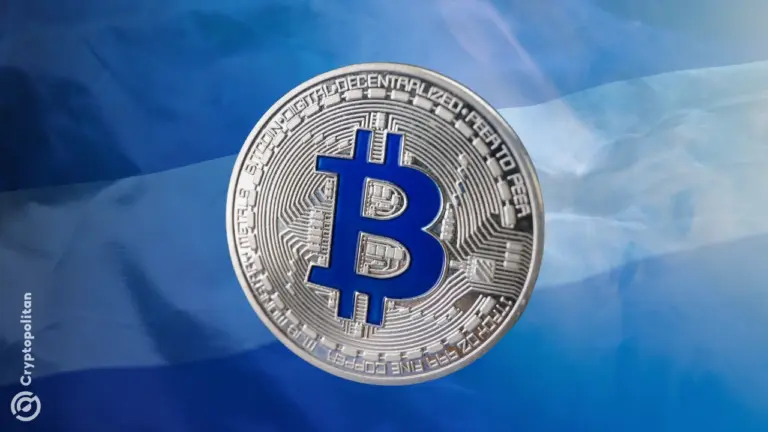
Bitcoin surged toward $73,000 as crypto markets leaned on recent resilience, with ETF inflows and rising open interest adding fuel even while Wall Street tried to stay calm amid an unresolved Middle East conflict.

Bitcoin climbed as much as 6.7%, briefly cleared $72,500, and hit its highest level in nearly a month. Ether jumped too, up as much as 7% to above $2,100.

Stocks rose and oil steadied as traders latched onto signs the conflict in Iran may be shorter-lived than feared. Bitcoin had dipped to around $63,000 after Saturday’s U.S. and Israeli strikes on Iran, but it has rebounded, helped by more than $680 million in inflows to U.S. spot Bitcoin ETFs over the past two days.

On equities, Coinbase and other crypto-linked names surged Wednesday after Donald backed the industry’s battle with U.S. banks over yield-bearing stablecoins, adding to momentum that was already building from Bitcoin’s bounce.

Coinbase was last up more than 12%, while Strategy jumped 9% and Circle rose nearly 6%. JPMorgan Chase and Bank of America both fell less than 1%.

What to know

Bitcoin is rallying hard on a mix of big ETF inflows, better risk sentiment around the Middle East, and a fresh boost to crypto shares after Trump jumped into the stablecoin banking fight.                                                                                                                     

Editor's choice

Loading Editor's Choice articles...

- The Crypto newsletter that keeps you ahead -

Markets move fast.

We move faster.

Subscribe to Cryptopolitan Daily and get timely, sharp, and relevant crypto insights straight to your inbox.

Join now and
never miss a move.

Get in. Get the facts.
Get ahead.

Subscribe to CryptoPolitan