


LATEST NEWS


Best crypto insights delivered straight to your inbox.


- SpaceX reported $7.81 billion in second-quarter revenue, up 92% from a year earlier, alongside a $541 million net loss.
- Connectivity brought in $4.29 billion, while AI generated $2.56 billion and the space business added $962 million.
- Quarterly capital spending reached $18.37 billion, with $15.83 billion directed into AI infrastructure.
- SpaceX ended June with $93.52 billion in cash, $192.77 billion in assets and $1.10 billion in Bitcoin, while shares fell 4% after hours.
Live Reporting
U.S. stock futures barely moved Tuesday night after major indexes posted a second straight strong session and the S&P 500 finished at a record. Futures tied to the Dow Jones Industrial Average gained 90 points, or 0.2%, while S&P 500 futures rose 0.1%. Contracts linked to the Nasdaq 100 slipped 0.2%.
Asian markets were mostly higher. South Korea’s Kospi jumped more than 4%, leading the region, while the Kosdaq gained 2%. Japan’s Nikkei 225 climbed 3.1%, and the Topix rose 1.57%.
Australia’s S&P/ASX 200 added 0.13%. Hong Kong’s Hang Seng fell 0.4%, while China’s CSI 300 traded nearly flat.
In U.S. after-hours trading, SpaceX shares dropped almost 7% after the company disclosed that second-quarter capital spending had risen to $18.4 billion. AMD fell 8% after its adjusted earnings came in only slightly above Wall Street’s forecast.
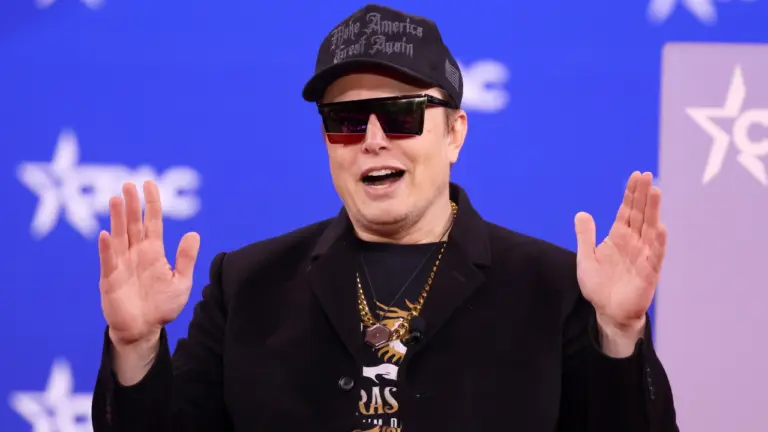
Nvidia shares gained about 2% after Elon Musk said the chipmaker makes the “best AI computer.” Elon also said SpaceX plans to rely only on Nvidia’s Vera Rubin processors.
Near the end of the call, Elon was asked about SpaceX’s planned $60 billion purchase of Cursor. He avoided discussing the deal in detail but said the company was working to finish it quickly.
“We’re trying to get the acquisition closed as quickly as possible,” Elon said. “I think we’re pretty close to that. But we’re wary of sort of jumping the gun on regulatory closures.”
The transaction is expected to be completed during the third quarter. Elon has previously faced disputes with regulators over public comments involving major corporate transactions, including his leveraged takeover of Twitter and an announced plan to take Tesla private that never happened.
Elon Musk said Starship’s 13th test could happen near the end of this month, though the date still depends on regulatory clearance.
Elon also addressed the newly launched Starlink V3 satellites. He said customers will not see the full upgrade until SpaceX has enough of them in orbit because each V3 unit offers more capacity and faster internet service than earlier versions.
SpaceX may need roughly 1,000 V3 satellites before the network reaches that point. Elon expects the company to get there around the second quarter of next year.
On the financial side, SpaceX Chief Financial Officer Bret Johnsen said spending during the next two quarters should stay close to the level recorded in the second quarter.
Bret said money put into AI computing equipment can now be recovered in under 12 months. In other words, the revenue produced by newly installed computing capacity is expected to cover its cost within a year.
SpaceX is aiming to finish 2026 at an annualized revenue pace of $100 billion, Bret said. Elon indicated that the figure could ultimately come in even higher.
The projection includes expected sales from SpaceX’s planned purchase of AI coding company Cursor.
That $100 billion figure does not mean SpaceX expects to record that amount across the full calendar year. It describes the yearly revenue the company would produce if its business at the end of 2026 continued at the same level for the next 12 months.
SpaceX President Gwynne Shotwell said the company secured more than $6 billion in U.S. government business during the second quarter. Gwynne added, “We see even more room for growth in this sector in this coming year.”
Part of that work came from the U.S. Space Force. In July, the agency placed $1.6 billion in orders for 18 Falcon 9 launches scheduled through 2027. Those missions will carry Pentagon satellites built to track and target objects in the air.
Another award came in May, when SpaceX received a $2.29 billion contract to create a protected, high-speed satellite network linking military sensors with weapons systems around the world.
Elon Musk began the call by describing the quarter as “another milestone” for SpaceX.
Elon said the next Starship mission will carry the first V3 Starlink satellites into orbit. Starship is SpaceX’s newer reusable launch system and is being developed for larger missions than Falcon 9 can handle.
He also said Starlink could eventually carry most of the world’s internet traffic.
On the company’s artificial intelligence work, Elon said development of Grok is advancing quickly. He expects version 4.6 to arrive “probably next week.”
The company’s first call since entering the public market will not be judged by the quarterly figures alone.
Investors will be paying close attention to the bigger story management tells about what comes next, especially after years of pouring money into AI infrastructure.
The key question is whether SpaceX can show how that spending eventually turns into a durable business with dependable revenue, instead of remaining a costly expansion that keeps eating cash.
STAY TUNED!
SpaceX borrowed a feature from Elon Musk’s Tesla playbook before its earnings call. The company set up an online page where shareholders could send in questions and vote for the ones they most wanted management to answer. The ranking changed as more votes came in.
Retail traders had an unusually large presence in the offering. SpaceX reserved about 20% of its IPO shares for individual investors, making it one of the biggest retail allocations attached to a major U.S. stock-market debut.
Many of the highest-ranked questions focused on Starship. Shareholders asked for additional video of the Human Landing System, which NASA plans to use to carry astronauts to the lunar surface during the Artemis program next year.
Others wanted timelines for several technical milestones. Those included Starship’s first in-orbit refueling operation, the point at which SpaceX expects to catch both the booster and upper stage, and whether the company could improve the rocket’s appearance.
SpaceX’s newly introduced Shiba Inu mascot, Asteroid, also made the list. Investors asked whether the character, which already has a $35 plush toy, could become more involved in children’s education, charity work and public outreach.
Separately, SpaceX unveiled a deal with Nvidia to build computing equipment that could run artificial intelligence systems from orbit. The hardware would operate aboard satellites and draw energy from solar panels.
The two companies will jointly develop the Starmind AI1 satellite payload. SpaceX said each unit is expected to carry Nvidia Rubin graphics processors and Vera central processors, giving the satellites computing capacity closer to what is found inside large data centers.
Orbital data centers remain unproven at commercial scale. SpaceX has floated plans to place as many as 1 million computing satellites in orbit, while scientists have raised concerns about space junk and wider environmental damage tied to a network that large.
SpaceX closed the second quarter with $192.77 billion in total assets, up from $92.08 billion at the end of December. The biggest change came in cash following the company’s June IPO.
Cash and equivalents jumped to $93.52 billion from $24.75 billion. SpaceX also held $6.49 billion in marketable securities, taking its total current assets to $108.05 billion, compared with $30.95 billion six months earlier.
Other short-term assets included $3.60 billion in customer receivables, $2.72 billion in inventory and $1.72 billion in prepaid costs and other current assets.
Property, equipment and other physical infrastructure rose to $65.74 billion, up from $42.60 billion in December. The company also reported $1.12 billion in finance-lease assets, $1.32 billion in intangible assets and $11.65 billion in goodwill.
SpaceX carried its Bitcoin holdings at $1.10 billion at the end of June, down from $1.64 billion at the close of 2025. Bitcoin is the company’s only digital asset.
Total liabilities increased to $65.55 billion from $50.75 billion. Current liabilities were nearly flat at $21.12 billion, with $8.24 billion in unpaid supplier bills, $7.98 billion in short-term deferred revenue, $2.53 billion in current debt and leases, and $2.38 billion in accrued expenses and other obligations.
Long-term debt and finance leases climbed to $36.84 billion from $21.97 billion. SpaceX also held $6.31 billion in long-term deferred revenue and $1.28 billion in other liabilities.
The company’s redeemable convertible preferred stock, previously valued at $38.75 billion, disappeared from the balance sheet after the public listing. At the same time, additional paid-in capital surged to $167.34 billion from $37.71 billion.
Total shareholder equity reached $127.22 billion, compared with just $2.57 billion in December. SpaceX’s accumulated deficit widened to $41.85 billion from $37.04 billion, while accumulated other comprehensive income stood at $1.72 billion.
SpaceX’s second-quarter revenue reached $7.81 billion, up from $4.07 billion a year earlier and $4.69 billion in the first quarter. Revenue for the first six months of 2026 came to $12.51 billion, compared with $8.14 billion during the same stretch last year.
The connectivity business remained the company’s biggest source of sales. It generated $4.29 billion during the quarter, up from $3.26 billion in the previous three months and $2.59 billion a year ago. Six-month connectivity revenue climbed to $7.55 billion from $5.06 billion.
Revenue from the space division stood at $962 million, versus $619 million in the first quarter and $746 million last year. Its six-month total slipped slightly to $1.58 billion, down from $1.61 billion in 2025.
The AI unit brought in $2.56 billion, more than triple the $818 million reported one quarter earlier and well above the $737 million recorded a year ago. Revenue from that business reached $3.38 billion across the first half, compared with $1.47 billion in the year-earlier period.
SpaceX posted an overall operating loss of $143 million for the quarter. That was much smaller than the $1.94 billion loss in the first quarter and the $970 million loss reported a year earlier. Its operating loss for the first six months widened to $2.09 billion from $943 million.
Connectivity produced $1.66 billion in operating income, while space lost $542 million and AI lost $1.26 billion. Over six months, connectivity earned $2.84 billion, against losses of $1.20 billion for space and $3.73 billion for AI.
Total adjusted EBITDA rose to $3.54 billion, compared with $1.13 billion in the prior quarter and $1.21 billion last year. Connectivity contributed $2.60 billion, AI delivered $1.15 billion, and space recorded a $205 million loss. First-half adjusted EBITDA increased to $4.67 billion from $2.94 billion.
Capital spending reached $18.37 billion during the quarter, up sharply from $10.11 billion in the first quarter and $2.83 billion a year ago. AI accounted for $15.83 billion of that amount, while connectivity used $1.37 billion and space spent $1.17 billion.
For the full six-month period, SpaceX invested $28.48 billion, more than four times the $6.97 billion spent a year earlier. AI spending alone reached $23.55 billion, alongside $2.70 billion for connectivity and $2.23 billion for space.
SpaceX stock initially rose after the results came out Tuesday, but the early gain did not hold. The shares later fell 4% in after-hours trading.
The company generated $7.8 billion in second-quarter revenue, a 92% increase from the same quarter last year. This was SpaceX’s first earnings release since becoming a publicly traded company.
SpaceX also recorded a $541 million net loss for the quarter. Spending remained high, with capital expenditures reaching $18.4 billion.
Elon Musk’s ownership position changed after SpaceX went public in June. The offering reduced his economic stake to about 42% of all outstanding shares, but it did not take away his command of the company.
Elon still controls more than 80% of the shareholder vote because he kept all of SpaceX’s Class B stock. Each of those shares carries 10 votes, while every publicly traded Class A share gets only one.
This arrangement is known as a dual-class structure. It separates financial ownership from voting influence by giving one category of stock much more power than the other. Founders and senior insiders usually hold the stronger class.
Opponents argue that equal ownership should come with equal voting rights. They say giving two investors different levels of influence for holding the same number of shares leaves major corporate decisions in the hands of a small group.
The Council of Institutional Investors, which has opposed these structures for years, says founder-led control can become harder to challenge as time passes. Its concern is that executives may remain protected even when the business needs new leadership or a different strategy.
Research on how these systems affect investors has produced mixed findings. A 2024 study published through the Harvard Law School Forum on Corporate Governance examined companies in the Russell 3000 and found that businesses with two or more share classes delivered stronger average performance than single-class companies over both five-year and 10-year periods.
A separate study from the European Corporate Governance Institute reached a less favorable long-term result. It found that the early valuation advantage often attached to dual-class companies tends to fade, with those firms trading below comparable single-class businesses around seven to nine years after going public.
SpaceX shares finished Tuesday at $125.33, up 9.4% for the session. That was the stock’s strongest daily gain since June 15, when it jumped 20%, though it still closed below its $135 IPO price.
The options market is bracing for a much larger move once the company releases its first earnings report.
Current pricing suggests SpaceX could rise or fall by about 15%, which would translate into roughly $225 billion being added to or wiped from its market value.
The setup leans slightly toward a decline, based on figures from ORATS, an options-analysis platform.
Options are contracts that let traders buy or sell shares at a fixed price within a set period, and their pricing often shows how much volatility investors expect around a major event.
The size of the expected move also matters for Elon Musk’s personal fortune because most of his wealth is tied to SpaceX.
Elon became the first person in the world to reach trillionaire status when SpaceX entered the public market.
After the share offering, Forbes estimated his net worth at about $1.1 trillion, including stock awards scheduled to vest over time.
That put him well ahead of Alphabet co-founder Larry Page, who ranked second at the time.
The milestone was brief. SpaceX’s decline since the IPO has reduced Elon’s estimated fortune to around $725.9 billion, based on Forbes’ latest calculation.
Trading in SpaceX options exploded almost as soon as the company went public in June, with investors repeatedly chasing call contracts tied to prices far above where the stock was actually trading.
That activity intensified on Monday. A call option expiring Friday with a $330 strike price changed hands about 90,000 times across hundreds of separate trades, based on SpotGamma figures. The total amount spent was roughly $2.2 million.
Most of those contracts cost close to 30 cents each, which works out to about $30 per contract. The open interest attached to that single option is now approaching $20 million.
The strike price sits at almost three times SpaceX’s current share price. That kind of trade would look highly unusual for most public companies, but SpaceX has been moving far more violently than the typical large stock.
Its implied volatility stands at 133, making it more volatile than every company in the S&P 500 except Sandisk, based on ThinkOrSwim data. The swings have become even more extreme this week as traders position around the company’s first earnings release.
Some investors are using those low-probability contracts as protection against the possibility of a sudden rebound. After the sharp decline that followed the IPO, the options would rise quickly in value if SpaceX unexpectedly returned toward its previous highs.
Another issue hanging over the company is whether Elon Musk could eventually combine SpaceX with Tesla. Elon has discussed the possibility before, and he has repeatedly folded separate businesses into one another.
Tesla bought SolarCity in 2016 for $2.6 billion. Elon was SolarCity’s chairman and one of its major investors at the time, making the transaction highly controversial.
He followed a similar playbook this year. In February, Elon merged SpaceX and xAI through a deal that valued the combined business at $1.25 trillion. Before that, he joined xAI with X, the social media platform previously known as Twitter.
Tesla also disclosed earlier this year that it had invested around $2 billion in xAI. That stake was expected to convert into SpaceX shares after the businesses were combined.
The companies already work closely together. They share engineers, technology and other resources, leaving investors watching for any sign that Elon may eventually tighten the connection between Tesla and SpaceX even further.
SpaceX heads into its first earnings report as a public company with its stock already under serious pressure.
Since trading began on June 12, the company has lost more than $500 billion in market value, leaving many retail investors nursing heavy losses after buying into Elon Musk’s rocket company at the first opportunity. The shares have now fallen for four straight weeks and sit more than 50% below their intraday high.
The early disappointment is drawing comparisons with Facebook’s 2012 IPO. Facebook also struggled after listing and kept falling for months before bottoming at less than half its offering price.
The only difference is the magnitude. The first day on the stock market resulted in a valuation of about $100 billion for Facebook, which is just one-fifth of what SpaceX has wiped out so far.
SpaceX will report after the closing bell on Tuesday, two weeks after Tesla’s results received a poor response from Wall Street. Investors were concerned about rising costs, negative free cash flow and Elon’s cautious comments about how quickly Tesla could expand its Robotaxi service.
The report also follows quarterly updates from major technology companies, where spending on artificial intelligence became one of the biggest issues for investors.
A lot is on the line for the company that is still worth more than $1 trillion. SpaceX went public through the biggest IPO ever and immediately began rising, only to quickly run out of steam. Its share price ended the day Monday around $115, about half its all-time high.
Wall Street remains broadly optimistic despite the selloff. The average analyst price target suggests the shares could more than double and eventually move beyond their previous peak. Targets tracked by Visible Alpha range from $170 to $800, although some forecasts outside the service are more bearish.
SpaceX’s valuation is based primarily on its AI business and not on its rockets and well-known launches. In its presentation prior to its initial public offering, the company stated that AI constituted 93% of its total market potential worth $28.5 trillion.
Analysts expect second-quarter revenue to rise 68% to $6.85 billion. The company’s loss is projected to widen to 19 cents per share, compared with 10 cents per share a year earlier.
It is estimated that such growth will come mainly from the earnings of its AI business unit, which is expected to grow by 175% to above $2 billion.
The company has started renting out space from its data centers to Alphabet, Anthropic, and Reflection AI companies. These contracts will generate a total of $28 billion annually, representing more than 60% of the AI business’ projected 2027 revenues.
What to Know
SpaceX delivered rapid revenue growth and a much stronger balance sheet, but heavy AI spending and continued losses kept the stock under pressure.
TABLE OF CONTENT
Share this article

MORE … NEWS










DEEP CRYPTO
CRASH COURSE
- Which cryptocurrencies can make you money
- How to boost your security with a wallet (and which ones are actually worth using)
- Little-known investment strategies that the pros use
- How to get started investing in crypto (which exchanges to use, the best crypto to buy etc)