


LATEST NEWS
SELECTED FOR YOU



Best crypto insights delivered straight to your inbox.
Trump says he will make Denmark’s Greenland part of the US ‘whether they like it or not’


-
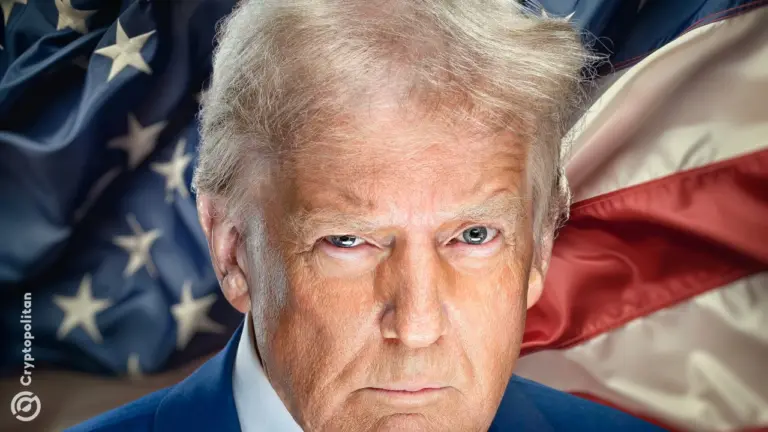
Trump says the U.S. will take Greenland “whether they like it or not”, warning Russia and China are already circling the island with warships and submarines.
-
He says ownership is non-negotiable, claiming America can’t defend leased land the same way and that “you defend ownership.”
-
Trump also says he’s open to a deal with Denmark, but if it doesn’t happen the “easy way,” the U.S. will do it “the hard way.”
Live Reporting
While the U.S. scrambles to secure access to Greenland’s rare earth reserves, China’s been in the game for years.
In 2018, it launched its Arctic strategy, calling itself a “Near-Arctic State” and pushing its “Polar Silk Road” initiative to expand influence through science missions, infrastructure bids, and mining deals.
Most of that hasn’t worked as projects keep getting blocked over security concerns, but Beijing hasn’t backed off.
The Kvanefjeld mine is the key flashpoint. Located near the southern town of Narsaq, it holds over 11 million metric tons of rare earths, including 370,000 metric tons of heavy rare earths, which are essential for advanced electronics and military systems.
And Chinese firm Shenghe Resources already owns 12.5% of it. Shenghe signed a deal in 2018 to lead the processing and marketing of materials from Kvanefjeld.
Greenland’s minister for business and mineral resources has been blunt: Western partners are preferred, but if no serious money comes in, China’s still on the table.
That’s the threat Washington is watching, because even with China’s projects getting stalled, its global dominance in rare earth processing means it doesn’t need to control the mine to control the market.
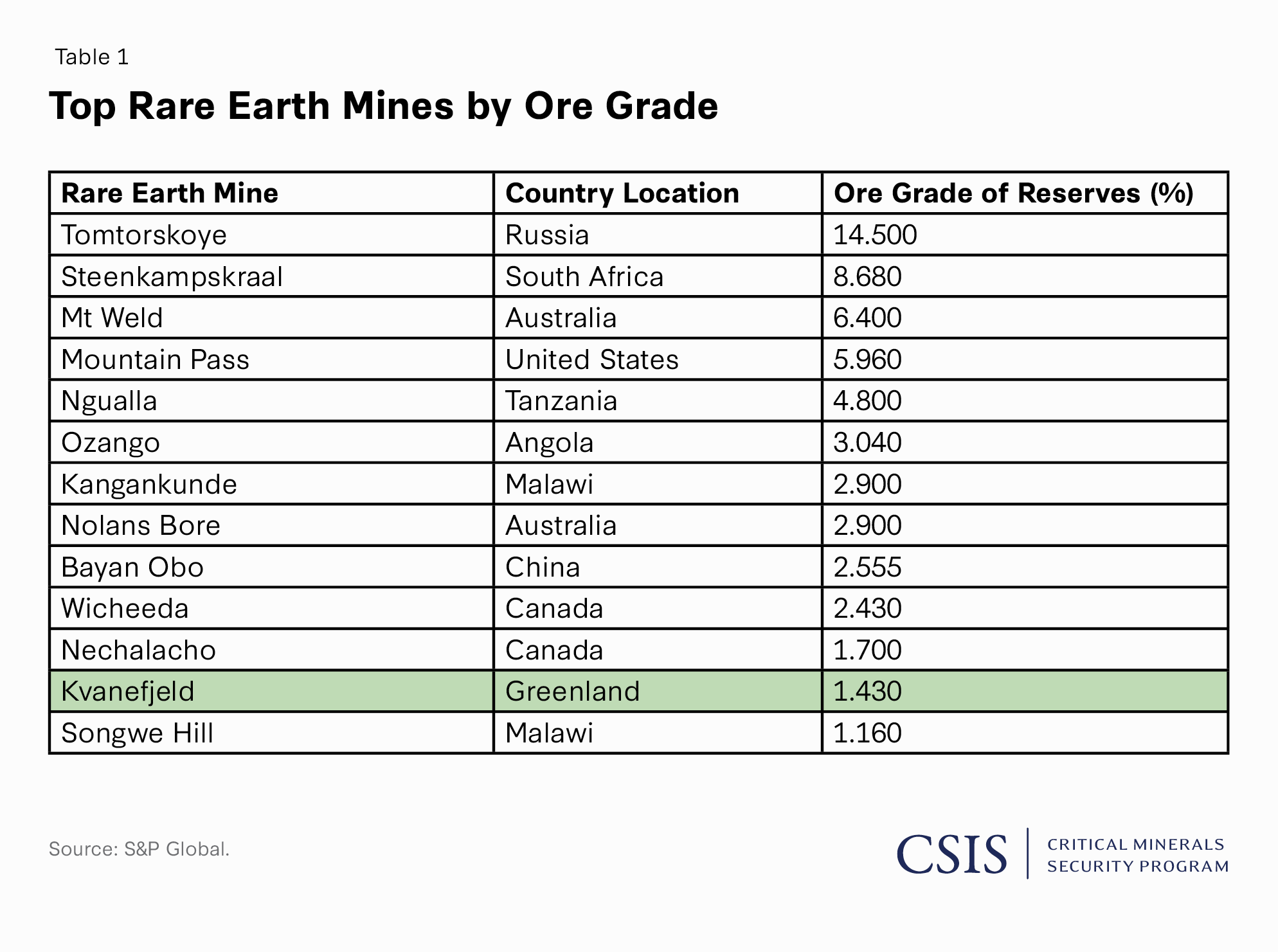
The U.S. knows the stakes. Kvanefjeld’s ore grade is 1.43%, far higher than Brazil’s Serra Verde (0.15%) and Texas’s Round Top (0.033%), but still trails Australia’s Mt Weld (6.40%), MP Materials’ Mountain Pass (5.96%), and China’s own Bayan Obo (2.55%). That makes Greenland a strong mid-tier prospect, but one that’s still untapped and hard to reach.
Alongside Kvanefjeld, the Tanbreez deposit is also drawing interest, because both sit on Greenland’s southern edge, with no active mining yet. The biggest hurdles remain energy, infrastructure, regulations, and community approval. But for Beijing, just keeping a foothold, like Shenghe’s, is enough to stay in the race.
While Donald Trump keeps framing Greenland as a national security issue, the real reasons behind the U.S. push run deeper, and a lot richer.
For years, American billionaires including Bill Gates, Peter Thiel, Sam Altman, Leonard Lauder, and Jeff Bezos have been quietly investing in AI-powered rare earth exploration on the island. Plans for a so-called “freedom city” have also been floated since Trump’s first term.
What makes Greenland so attractive? AI data centers are power-hungry and heat up fast, but Greenland’s year-round Arctic chill offers natural “free cooling,” cutting energy costs by up to 40%.
Combine that with 70% renewable hydropower, and the island becomes the perfect place for clean, scalable AI infrastructure.
Then there are the minerals. Greenland holds 1.5 million tons of rare earth elements, ranking eighth globally. Two sites (Kvanefjeld and Tanbreez) are among the world’s largest deposits, but no mining has started yet.
The terrain is brutal. Only 20% of the land is ice-free, and temperatures can drop below -40°F. Still, melting ice caps are unlocking more access, creating new routes and opportunities.
The U.S. sees this as a critical supply chain play. In 2025, China’s export controls on heavy REEs wrecked Western automakers and defense contractors.
Since then, Trump has ramped up public-private rare earth partnerships, like the one with MP Materials, and inked deals with Saudi Arabia, Japan, and Australia to reduce reliance on China.
Greenland is next. Back in 2019, the U.S. signed a memorandum of understanding (MOU) to develop mineral resources with Greenland, but efforts to renew it under Biden failed.
Now, Trump is moving fast. In June 2025, the U.S. Export-Import Bank offered $120 million to fund the Tanbreez mine, which would mark Trump’s first overseas mining investment if approved.
Swedish Prime Minister Ulf Kristersson just called out Donald Trump directly, saying the U.S. should be thanking Denmark, not threatening it.
Speaking at a defense conference in Salen on Sunday, Kristersson blasted Trump’s Greenland ambitions, calling the rhetoric “threatening” and saying it’s being met with “very sharp criticism” across the region.
Kristersson reminded Washington that more than 50 Danish soldiers died fighting alongside U.S. troops in Iraq and Afghanistan, and called Denmark “a very loyal ally.”
He also warned that “the world order is more threatened than it has been in many decades”, saying small nations like Greenland risk being sacrificed in global power games.
Meanwhile, Trump is still escalating. On Sunday, he announced that no more oil or money will be going from Venezuela to Cuba, and called on the Cuban government to strike a deal with the U.S. or face consequences.
On Truth Social, he wrote, “There will be no more oil or money going to Cuba — ZERO!”, and said most of Cuba’s “security services” in Venezuela were “dead from last week’s U.S.A. attack.”
Trump also confirmed that no Venezuelan cargoes have left for Cuba since early January, following the capture of President Nicolas Maduro by U.S. forces.
Instead, the U.S. is finalizing a $2 billion oil deal with interim President Delcy Rodriguez, involving up to 50 million barrels sent directly to the U.S. with proceeds locked in Treasury-supervised accounts.
Donald Trump has reportedly ordered U.S. special forces to draft plans for an invasion of Greenland, according to a Daily Mail report citing unnamed sources.
The report says Joint Special Operations Command (JSOC) has been tasked with drawing up options, though the Joint Chiefs of Staff oppose the plan, warning it’s illegal and lacks support from Congress.
The pressure for action is building fast. According to the report, Trump’s inner circle of hawks sees momentum after the January 3 operation in Venezuela, when President Nicolas Maduro and his wife were abducted in a U.S. raid. They now want to strike quickly before Russia or China has the chance to move on Greenland.
Meanwhile, prediction platform Kalshi now puts the odds of Trump being impeached again at 57%, the highest level ever recorded.
On the ground, Greenland’s leaders pushed back, releasing a joint statement Friday: “We do not want to be Americans, we do not want to be Danes, we want to be Greenlanders.”
But while tensions explode, NATO has stayed completely silent. The alliance has not issued any public statement defending Denmark or Greenland’s sovereignty, which has set off alarms in European capitals.
Mark Rutte, NATO’s secretary-general, has said nothing, despite pressure from Paris and others to ramp up Arctic activity.
Giorgia Meloni, Italy’s prime minister, is calling for NATO to step in. “This debate must involve NATO,” she said. Behind the scenes, European leaders are furious, fearing Trump is testing just how far Washington can go without consequence.
Donald Trump is calling the Greenland takeover a “national security” move, saying the U.S. can’t afford to let Russia or China gain a foothold in the Arctic. But across Europe (and of course inside Greenland) the backlash is growing fast, even if most agree they can’t actually stop it.
Aaja Chemnitz, one of Greenland’s two lawmakers in the Danish parliament, said the threat is “completely appalling” and hit back hard: “You can’t just buy another country, a people, the soul of Greenland.” She said everyone in Greenland is talking about it, and people are worried and angry.
Even so, no one seems ready to actually challenge Washington. A joint statement from Britain, France, and Germany said they “will not stop defending” territorial integrity, but behind closed doors, officials admit they have few options.
As Stephen Miller, the White House deputy chief of staff, puts it: “Nobody’s going to fight the U.S. over the future of Greenland.”
JD Vance, now vice president, also joined the defense narrative. On Fox News, he said Europe and Denmark have neglected the region, leaving missile defense infrastructure exposed. “They haven’t done a good job of securing that area, that land mass,” Vance said.
Trump, for his part, insists it’s not about minerals, even though members of his circle clearly want access to Greenland’s rare-earth reserves.
He’s framing the whole thing as purely about Arctic security, even as U.S. allies scramble to figure out how to respond without provoking a fight they can’t win.
While Donald Trump keeps talking about taking Greenland, the Arctic island’s economy is quietly grinding to a halt.
According to Søren Bjerregaard, head of securities and balance of payments at Danmarks Nationalbank, Greenland is facing a perfect storm of fiscal and demographic trouble.
In a new report, Bjerregaard warned that economic growth dropped to 0.8% in 2025 and is expected to stay there in 2026, a far cry from the 2% growth it saw in 2022.
He said the slowdown was due to infrastructure projects like airports wrapping up, while planned investments in energy and other sectors haven’t started yet.
Meanwhile, Greenland’s key shrimp stocks are falling, and dividends from state-owned companies have dried up. The result? The Greenland Treasury hit a critically low liquidity level in the second half of 2025, and Bjerregaard says fiscal tightening is now urgent.
He also warned that the worst isn’t over. Greenland’s population of 56,699 is shrinking fast, and it’s expected to drop by 20% by 2050. The island’s ageing population + ongoing emigration crisis are now putting massive pressure on its already fragile public finances.
Donald Trump just told reporters that the U.S. will take Greenland “whether they like it or not.”
When asked if he plans to offer money to Greenlanders, Trump said “not yet” but left the door open.
Right now, he alleges (with no evidence, of course) that Russia and China are circling Greenland with destroyers and submarines, and the U.S. needs to act first.
Trump said he’d prefer to make a deal “the easy way”, but if that doesn’t work, “we’re going to do it the hard way.” He added that Denmark’s historical claims don’t matter, saying “a boat landing 500 years ago doesn’t mean you own it.”
Trump argued that leasing land isn’t enough, even though the U.S. already has rights to deploy unlimited troops there under the current agreement. He told reporters, “You don’t defend leases the same way. You have to own it.” That, he said, is why short-term deals like Obama’s Iran deal don’t work; countries need permanent ownership.
Trump then repeated that he likes Russia and China, but said he won’t allow them as neighbors in Greenland. “I love the people of Russia. I love the people of China. I get along great with Xi and Putin,” Trump said. “But they’re not going to occupy Greenland. Not on my watch.”
Meanwhile, Greenland’s foreign minister, Vivian Motzfeldt, is publicly hinting at going behind Denmark’s back. She told Danish media that Greenland should consider holding one-on-one talks with the U.S. without Copenhagen.
“What would be wrong with that?” she said. U.S. Secretary of State Marco Rubio is scheduled to meet with Motzfeldt and Denmark’s Lars Løkke Rasmussen next week.
Trump isn’t interested in any legal debates either. According to him, “I don’t need international law. My own morality. My own mind. It’s the only thing that can stop me.”
What to know
Trump says the U.S. will seize Greenland if necessary, dismissing Denmark, NATO, and international law as obstacles.
TABLE OF CONTENT
Share this article

MORE … NEWS










DEEP CRYPTO
CRASH COURSE
- Which cryptocurrencies can make you money
- How to boost your security with a wallet (and which ones are actually worth using)
- Little-known investment strategies that the pros use
- How to get started investing in crypto (which exchanges to use, the best crypto to buy etc)