


LATEST NEWS



Best crypto insights delivered straight to your inbox.

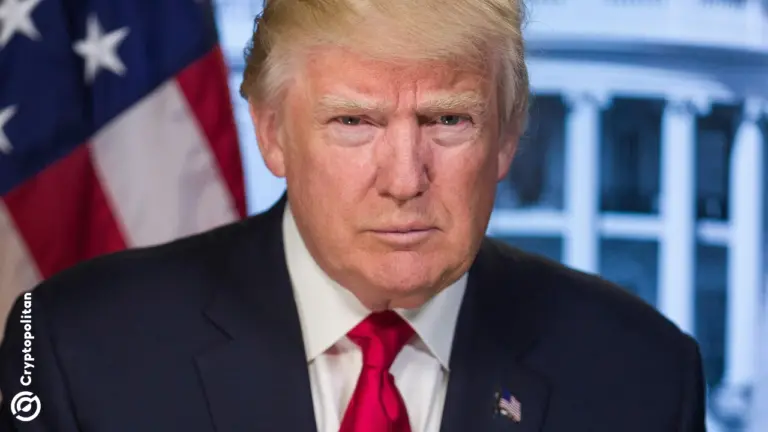

- Trump paused plans for a larger attack on Iran over missile supply concerns.
- Pentagon leaders warned that more fighting could drain Patriot interceptor stocks.
- Three U.S. soldiers died after an Iranian missile broke through defenses in Jordan.
- Trump paused plans for a larger attack on Iran over missile supply concerns.
- Pentagon leaders warned that more fighting could drain Patriot interceptor stocks.
- Three U.S. soldiers died after an Iranian missile broke through defenses in Jordan.
Live Reporting
Money moved deeper into smaller tokens as the wider crypto market climbed 0.96% to $2.30 trillion.
Bitcoin (BTC) added 0.87% and traded around $64,800. Ethereum (ETH) did better, rising 2.13% to $1,910. BNB gained 1.23% and reached $573.
Most areas of the market finished between flat and 3% higher. Meme coins stood out with a 5% jump, while the category called “Others” barely changed.
The stronger action came from altcoins. The Altcoin Season Index reached 56, while Bitcoin’s share of the market eased to 58.67%. Traders were putting more cash into coins that can rise faster, but also carry more risk.
Shiba Inu (SHIB) became one of the biggest names of the day after climbing more than 36%. A large token burn helped fuel the rally and brought new attention to meme coins.
Trading volume in SHIB and other top performers will show whether that trend still has room to run. A fall in the Altcoin Season Index would point to money heading back into Bitcoin.
The derivatives market also looked less crowded. Bitcoin liquidations dropped 52%, while short sellers accounted for $3.15 million of the positions wiped out. That left fewer bearish trades hanging over the market.
Funding rates stayed positive, but they continued to cool. A drop below zero would suggest traders are starting to build fresh bets against the market.
Bitcoin now needs to stay above $64,500. Traders are also waiting for the Federal Reserve meeting on July 28 and 29, which could quickly change risk appetite across crypto.
The total market value is sitting near its seven-day average of $2.22 trillion. A solid push through that area could send it toward $2.26 trillion.
The downside level to watch is $2.21 trillion. Losing that support could drag the market back toward its 30-day average near $2.17 trillion.
Tesla (NASDAQ: TSLA) has kept falling, making Michael Burry’s bet against the electric vehicle company more profitable without him doing anything else. Michael said Friday that he still had not closed the position.
“I have not covered my Tesla short. It gets smaller all on its own,” Michael wrote on Substack.
Tesla sank 15% on Thursday after its quarterly results disappointed investors. The stock lost another 3% on Friday, taking its July decline to roughly 26%. Shares were trading near $308. Michael first disclosed the position in late June, when Tesla stood at $416.22.
Michael is also putting more money behind his negative calls on the wider technology sector. He increased his bearish exposure to Nvidia (NASDAQ: NVDA) and the VanEck Semiconductor ETF (NASDAQ: SMH).
His Nvidia trade includes a large holding of put options, which rise in value when the stock falls. Michael also still owns puts against the Invesco QQQ Trust (NASDAQ: QQQ) and remains positioned against Palantir Technologies (NASDAQ: PLTR).
Michael said his Nvidia view is tied to how artificial intelligence projects are being funded. He argued that purchases of AI chips and computing systems are not being driven mainly by customers paying directly for useful products.
Instead, he believes a large share of present and planned spending is supported through financing deals kept outside company balance sheets.
Michael described the setup as circular, with money passing through connected businesses and funding arrangements that create demand for more AI equipment.
The latest earnings season is running well ahead of Wall Street’s earlier calls. So far, 27% of S&P 500 companies have released their second-quarter figures, and most have cleared the numbers analysts had penciled in.
Data from FactSet (NYSE: FDS) shows that 86% of those companies reported profit per share above forecasts. Revenue has also held up, with 80% bringing in more sales than expected.
Combined profit growth for the quarter has now reached 37.9% compared with the same period last year. At the end of June, analysts were only looking for 23.2% growth. If the current rate survives the rest of reporting season, it would be the strongest annual profit increase since the third quarter of 2021.
The higher number comes from two areas. Several companies posted much better results than analysts expected, while Wall Street also raised estimates for businesses that have not reported yet.
Profit forecasts have improved across most of the market. Since June 30, analysts have lifted their earnings calls for nine of the S&P 500’s 11 sectors.
Companies have also given a fairly even picture of the third quarter. Eleven S&P 500 firms have raised their profit guidance, while nine have warned that earnings could come in below current estimates.
Wall Street is heading into a packed week, with several major events landing within days of each other. Amazon (NASDAQ: AMZN), Meta Platforms (NASDAQ: META), and Microsoft (NASDAQ: MSFT) will release their numbers after the closing bell on Wednesday and Thursday.
Their reports will arrive after investors punished Alphabet (NASDAQ: GOOGL) this week. The company posted strong headline figures, but its heavy spending plans and negative free cash flow rattled traders. The selloff also pulled down the wider market.
Apple (NASDAQ: AAPL) and Qualcomm (NASDAQ: QCOM) are also due to report. Investors will be watching how much the largest technology companies plan to spend on artificial intelligence, data centers, chips, and cloud systems.
The market has recently treated the companies paying for AI expansion much worse than the businesses selling the hardware. Big cloud operators have dropped as their costs climbed, while semiconductor stocks have continued to gain.
That split may not last forever. Chipmakers depend on continued orders from the same technology giants now facing pressure over their budgets. Any sign that Amazon, Meta, Microsoft, or Apple plans to slow AI spending could hit semiconductor companies as well.
The Roundhill Magnificent Seven ETF (NYSEARCA: MAGS) has lost more than 5% this week, while major semiconductor funds have remained in positive territory. Investors still expect chip demand to stay strong, but the fall in large technology stocks has added more risk to that trade.
Markets will also turn to the Federal Reserve on Wednesday. Officials will announce their latest interest-rate decision while policymakers and Wall Street analysts remain divided over what comes next.
Most forecasts still point to a rate increase in September. Futures markets, however, are showing a 35% chance that the Fed could raise its main borrowing rate by 0.25 percentage points next week, based on the CME FedWatch Tool operated by CME Group (NASDAQ: CME).
The earnings reports and the Fed decision will land while confidence in large technology stocks is already weakening. Strong results could calm the selling, while higher spending, weaker cash flow, or an earlier rate increase could add more pressure.
Iran says it will keep its weapons quiet as long as the United States does the same. A senior Iranian official allegedly told Reuters on Sunday that Tehran would not launch fresh attacks while Trump continues the current break in American airstrikes.
The Pentagon stopped its bombing campaign late Friday after hitting Iran for 13 straight nights. No American strikes were reported on Saturday or Sunday. Iran also avoided launching attacks during those two days. Before the pause, Tehran had answered each night of U.S. bombing by targeting nearby countries that host American military bases.
U.S. Ambassador to the United Nations Mike Waltz told Fox News that Trump wanted to give negotiations more time. Mike said the pause was meant to create some breathing room for talks, though he did not share any details about possible meetings or new proposals.
The Iranian official said Tehran was still following a simple rule: if Washington attacks, Iran will respond. If Washington stops, Iran will also stop. He added that this position had already been passed to the United States.
A senior Trump administration official gave a similar message on Saturday. The official said Trump still preferred diplomacy but had already shown Iran the cost of refusing serious talks.
Tehran remains deeply doubtful about Washington’s intentions. The Iranian official said there was more distrust than hope inside the government. Iranian leaders do not believe the halt means the United States has changed its demands or softened its position.
The official said Tehran views the pause as a short-term battlefield decision rather than a real diplomatic opening. Iranian officials believe Washington may restart the strikes if talks fail or if Trump decides the break has served its purpose.
That suspicion comes from years of failed negotiations, sanctions, military threats, and broken agreements between both countries. Tehran believes it has been misled by previous U.S. governments and is treating the latest pause with extreme caution.
The pause in American strikes did not stop the conflict from spreading over the weekend. Yemen’s Iran-aligned Houthis attacked Saudi energy sites along the Red Sea coast. Iran also accused Ukraine of targeting an Iranian vessel in the Caspian Sea, adding another dispute while U.S. aircraft remained quiet.
The U.S. military said Saturday that its naval blockade against Iran “remains in full effect.” It did not explain why American forces stopped after 13 straight nights of increasingly heavy strikes. According to one senior Trump administration official, the president remains a fan of diplomacy, but he noted that Iran has already seen what would happen if it rejects serious talks.
The Houthis launched an attack on facilities owned by Saudi Aramco (TADAWUL: 2222) in Jizan and Yanbu, the group’s military spokesman Yahya Saree said. Reuters footage showed a big cloud of smoke rising from the direction of Aramco’s refinery in Jizan.
Greek security officials said two ballistic missiles aimed at oil facilities in Yanbu were intercepted by a U.S.-made Patriot battery. Greek forces operate the system inside Saudi Arabia under an agreement with Riyadh.
Yanbu is Saudi Arabia’s main oil port on the Red Sea. It has become even more important because tankers can use that route to avoid the blocked Strait of Hormuz. The refinery in Jizan, a Red Sea city near Yemen, can process up to 400,000 barrels each day.
Trump has put off a larger U.S. strike against Iran after military leaders cautioned that another major round of combat could severely deplete America’s stockpile of Patriot interceptors and other air defense weapons, according to the New York Times.
The Pentagon is already dealing with fewer defensive missiles across the Middle East. Trump is still keeping force on the table, but the White House has paused plans for a sharp increase in attacks while officials review the military risks.
The decision came after Trump met senior advisers and Cabinet members on Friday. The discussion covered the chance of a wider Middle East war, the safety of Gulf partners that could face Iranian retaliation, rising fuel costs, pressure on the global economy, and refugee flows.
Officials also considered whether heavier attacks would push Tehran toward talks. Two officials briefed on the meeting said very few people around Trump supported the escalation plan.
The warning came from Gen. Dan Caine, chairman of the Joint Chiefs of Staff. Dan told officials that the United States could resume large combat operations against Iran, but doing so would sharply reduce the interceptors held by U.S. Central Command, which manages American missions across the region.
Those weapons are needed to protect U.S. bases, troops, and partners from missiles and drones. Central Command must keep enough interceptors ready for further Iranian attacks on bases and allies.
Last Friday, three American service members were killed in Jordan after a ballistic missile passed through U.S. defenses during an Iranian barrage of missiles and drones.
One senior U.S. official doubted that another intense bombing campaign would bring Iran back to the negotiating table. Diplomatic contacts have already broken down, and the latest U.S. attacks have not stopped Tehran’s military operations.
Trump has spent nearly five months deciding how far to take the conflict while also trying to reopen the Strait of Hormuz.
Iran’s closure of the strait has blocked a key route for the world’s energy shipments. The past few weeks have seen a renewal of fighting, and concerns regarding supply shortages are again pushing up gasoline prices.
The Trump administration also has concerns that a drawn-out war could strain relations with Gulf governments whose cities, bases, ports and energy sites are always easily within reach of Iranian missiles.
White House Communications Director Steven Cheung said Trump “prefers a diplomatic solution” but still has every option if Iran continues attacking in the Strait of Hormuz or attacks U.S. allies.
Steven also said that Tehran should seek a deal after facing serious sanctions and repeated military attacks. He cautioned that the Iranian leaders are aware of what could happen if talks collapse.
What to Know
US PresidentTrump has paused plans for a larger attack on Iran over missile shortages.
Disclaimer. The information provided is not trading advice. Cryptopolitan.com holds no liability for any investments made based on the information provided on this page. We strongly recommend independent research and/or consultation with a qualified professional before making any investment decisions.
TABLE OF CONTENT
Share this article

MORE … NEWS










DEEP CRYPTO
CRASH COURSE
- Which cryptocurrencies can make you money
- How to boost your security with a wallet (and which ones are actually worth using)
- Little-known investment strategies that the pros use
- How to get started investing in crypto (which exchanges to use, the best crypto to buy etc)