


LATEST NEWS
SELECTED FOR YOU



Best crypto insights delivered straight to your inbox.


Live Reporting
The financial fallout from the ruling could be massive.
A new estimate says the U.S. government could owe more than $175 billion in refunds to importers after the Supreme Court’s decision.
That estimate comes from the Penn Wharton Budget Model, a nonpartisan fiscal research group at the University of Pennsylvania, and was produced at the request of Reuters.
The potential refunds would cover tariffs already collected since Donald imposed the duties without authorization from Congress. That means companies that paid those import taxes could now demand their money back.
Several importers already have lawsuits pending that seek refunds, pointing to earlier lower-court rulings that found the tariffs unlawful. Those cases now gain new weight after the high court’s decision.
Back in December, U.S. Customs and Border Protection said $133.5 billion in collected tariffs was at risk of needing to be refunded. That figure would be higher today because duties have continued to be collected since then.
In a second post, Trump called the ruling “deeply disappointing” and said he was ashamed of certain members of the Court. He thanked Clarence Thomas, Samuel Alito, and Brett Kavanaugh for their dissents and said foreign countries were celebrating the decision.
Trump accused what he called “Democrats on the Court” of opposing measures that make the country stronger and suggested the Court had been influenced by foreign interests and political pressure.
Donald also framed the case as symbolic for economic and national security. He said there are other statutes and authorities, recognized by the Court and Congress, that are stronger than IEEPA tariffs and available to him as president.
Trump pointed to recent market milestones, saying the Dow had broken 50,000 and the S&P had crossed 7,000, levels he claimed were not expected until the end of his term after his election victory.
Trump added that tariffs helped end five of eight wars he settled, strengthened national security, and, alongside border enforcement, reduced fentanyl inflows by 30% when used as penalties against countries sending the drug into the United States.
President Donald Trump responded on Truth Social within hours of the ruling, calling the opinion “ridiculous” and arguing the Court said he cannot charge even $1 under IEEPA, while still allowing him to cut off trade entirely, impose embargoes, license activity, and block imports.
Trump said the decision makes no sense because, in his view, if a president can license trade, he should be able to charge a license fee.
He argued the Court effectively confirmed his power to block, embargo, restrict, or license trade under IEEPA, which he says is even stronger than tariffs.
Trump pointed directly to Brett Kavanaugh’s dissent, quoting Brett’s view that the ruling might not substantially constrain a president’s ability to impose tariffs going forward because other federal statutes remain available.
Trump cited Section 232 of the Trade Expansion Act of 1962, Sections 122, 201, and 301 of the Trade Act of 1974, and Section 338 of the Tariff Act of 1930 as alternative paths.
Trump then announced immediate action. He said all existing Section 232 national security tariffs and current Section 301 tariffs remain in full force. He also said:-
“Today I will sign an Order to impose a 10% GLOBAL TARIFF, under Section 122, over and above our normal TARIFFS already being charged, and we are also initiating several Section 301 and other Investigations to protect our Country from unfair Trading practices.”
The majority says the government threw a lot at the wall, but none of it sticks.
First, the argument that tariffs fall under the Commerce Clause misses the point. The Court says the issue is not whether tariffs can regulate commerce in theory.
The real question is whether Congress, by giving the president power to “regulate importation” in IEEPA, clearly handed over the power to impose tariffs at his own discretion. The majority says when Congress wants to grant tariff authority, it does so clearly and with limits. It did not do that here.
Second, the government argued that because “regulate” sits between “compel” and “prohibit” in the statute, tariffs should fit somewhere along that spectrum. The Court says no. Tariffs are not just a lighter version of compulsion or prohibition.
They are different in kind. They operate on domestic importers to raise money for the Treasury and are plainly a branch of the taxing power, citing Gibbons, 9 Wheat. 201. That puts them outside the spectrum entirely.
Third, the reliance on Trading with the Enemy Act and the case United States v. Yoshida Int’l, Inc., 526 F.2d 560, does not carry much weight.
The Court says a single, expressly limited decision from a specialized appellate court does not establish a settled meaning that Congress silently carried over into IEEPA.
Fourth, the wartime precedents do not help either. Everyone agrees the president has no inherent peacetime authority to impose tariffs.
The Court says you cannot string together wartime cases, old versions of TWEA, and then leap to modern IEEPA and claim that equals clear authorization for sweeping tariffs.
The majority also dismisses reliance on Federal Energy Administration v. Algonquin SNG, Inc., 426 U.S. 548, saying that case dealt with a different statute, Section 232 of the Trade Expansion Act of 1962, which explicitly referenced duties. IEEPA does not.
The Court says Dames & Moore v. Regan, 453 U.S. 654, does not help either because it was narrow, did not interpret the word “regulate,” and did not involve tariffs at all.
Justice Elena Kagan, joined by Sonia Sotomayor and Ketanji Brown Jackson, agrees that IEEPA does not authorize tariffs. Elena says the Court did not even need the major questions doctrine because ordinary statutory interpretation gets you to the same result.
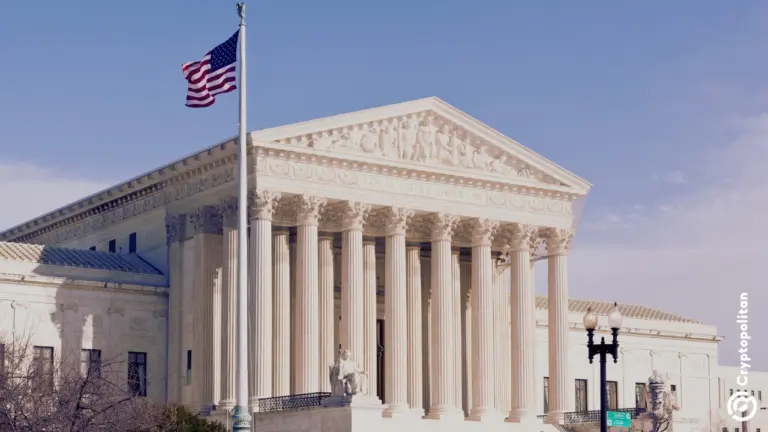
The Supreme Court on Friday struck down a major part of President Donald Trump’s tariff agenda, ruling 6–3 that the International Emergency Economic Powers Act, or IEEPA, does not authorize the president to impose tariffs.
Chief Justice John Roberts wrote the majority opinion, and from here on, John makes clear the Court sees this as a straight statutory question. Justices Clarence Thomas, Samuel Alito, and Brett Kavanaugh dissented.
The Court framed the issue plainly: whether IEEPA, passed as 91 Stat. 1626, allows a president to impose tariffs after declaring a national emergency.
After taking office, Donald Trump declared emergencies over what he described as an influx of illegal drugs from Canada, Mexico, and China, citing Presidential Proclamation No. 10886 and Executive Orders 14193, 14194, and 14195, all published in the Federal Register at 90 Fed. Reg. 8327 and 9113-9121.
He also declared an emergency over “large and persistent” trade deficits under Executive Order 14257, 90 Fed. Reg. 15041.
Trump had said the drug influx had “created a public health crisis” and that trade deficits had hollowed out U.S. manufacturing and undermined supply chains.
Using IEEPA, he imposed a 25% duty on most Canadian and Mexican imports, a 10% duty on most Chinese imports, and at least a 10% baseline tariff on all imports from all trading partners, with dozens of countries facing higher rates. He later increased, reduced, and modified those tariffs several times.
What to know
The Supreme Court ruled 6-3 that Trump’s global tariffs were illegal under the International Emergency Economic Powers Act.
TABLE OF CONTENT
Share this article

MORE … NEWS










DEEP CRYPTO
CRASH COURSE
- Which cryptocurrencies can make you money
- How to boost your security with a wallet (and which ones are actually worth using)
- Little-known investment strategies that the pros use
- How to get started investing in crypto (which exchanges to use, the best crypto to buy etc)