







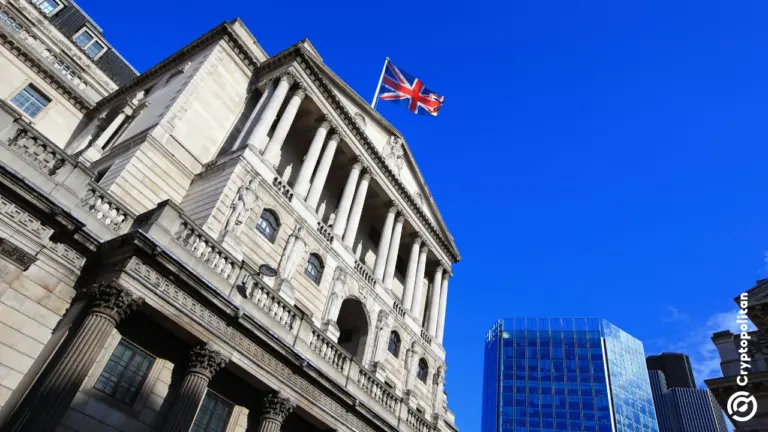
- The Bank of England has named Polygon Labs, NOBO Finance, and Dun & Bradstreet to Phase 2 of its Digital Pound Lab.
- The bank is testing whether stablecoins and a digital pound can settle separate legs of the same cross-border trade deal.
- No real money or customers are involved, and the bank stresses it has not decided to issue a digital pound.
The Bank of England has selected Polygon Labs, NOBO Finance, and business-data provider Dun & Bradstreet to run the next round of its Digital Pound Lab.
These companies are testing how a central bank digital pound and private stablecoins could settle different parts of the same cross-border trade deal.
What problem is the Bank of England trying to solve?
For small businesses that export and import goods, trade finance remains slow and costly due to the fact that verification is split across multiple parties, and settlement can take days. Large companies can afford this delay through treasury operations, but smaller firms face a cash squeeze between shipping goods and receiving payment.
The Bank of England is attempting to fix this with different forms of digital money working together.
A consortium that consists of Polygon Labs, NOBO Finance, and Dun&Bradstreet, all selected by the Bank, is building two connected projects inside the central bank’s experimental program.
The first creates a profile that SMEs can carry between lenders instead of re-submitting the same paperwork each time called the SME Bankable Profile.
Dun & Bradstreet handles risk data for this project while Polygon Labs provides the smart contracts.
Polygon also handles the stablecoin portion of the second project which tests whether businesses can get early payments on invoices by using electronic shipping documents as collateral.
The SME Bankable Profile is created by combining three data sources; wallet transaction signals, open-finance data, and Dun & Bradstreet’s commercial records.
Is the digital pound operational yet?
The Bank of England has been clear about the fact that the Lab uses no real customers and no real money. Taking part in the testing also signals no decision to issue a digital pound.
UK fintech NOBO has moved into Phase 2, following its Phase 1 success with conditional B2B escrow payments. The new phase introduces Dun & Bradstreet’s business data and Polygon’s blockchain to improve the security and efficiency.
Polygon handles stablecoin payments through its Open Money Stack, which manages fiat-to-stablecoin conversion, wallets, and settlement.
Polygon’s network processed 743 million transactions in the second quarter of 2026, a 160% jump from the same period a year earlier, an increase which Cryptopolitan reported was driven largely by stablecoin transfers. Polygon has settled more than $2.6 trillion in stablecoin transactions to date and counts Revolut and Stripe among its users.
The findings from Phase 2 will inform the Bank and HM Treasury’s assessment of the digital pound before their next steps later in 2026.
Don’t just read crypto news. Understand it. Subscribe to our newsletter. It's free.
FAQs
Who did the Bank of England select for Phase 2 of the Digital Pound Lab?
The Bank named NOBO Finance, Dun & Bradstreet, and Polygon Labs to test SME trade-finance flows combining stablecoin payments, digital pound settlement, and reusable business identity.
Does joining the Digital Pound Lab mean the UK will launch a digital pound?
No. The Lab uses no real customers or money, and the Bank of England has said participation does not signal any decision to issue a digital pound; findings feed a Bank and Treasury assessment due later in 2026.
What role is Polygon playing in the trade-finance tests?
Polygon Labs provides smart contracts for the reusable SME credit profile and supplies the stablecoin settlement infrastructure, including fiat-to-stablecoin conversion and wallets, through its Open Money Stack.
Disclaimer. The information provided is not trading advice. Cryptopolitan.com holds no liability for any investments made based on the information provided on this page. We strongly recommend independent research and/or consultation with a qualified professional before making any investment decisions.

Hannah Collymore
Hannah is a writer and editor with nearly a decade of blog writing and event reporting experience in the crypto space. At Cryptopolitan, Hannah contributes to the news page, reporting and analyzing the latest developments in DeFi, RWA, crypto regulation, AI and frontier tech industries. She graduated from Arcadia university with a degree in Business Administration.









