



-
Pentagon renamed its CDAO to the Super Intelligence Office (SIO), with no changes to existing programs or AI laws.
-
The new website lists only two leaders, while the official overseeing the Maven AI system remains unidentified.
-
Seven of 10 positions in the Pentagon’s Responsible AI Division were vacant as of February 2026.
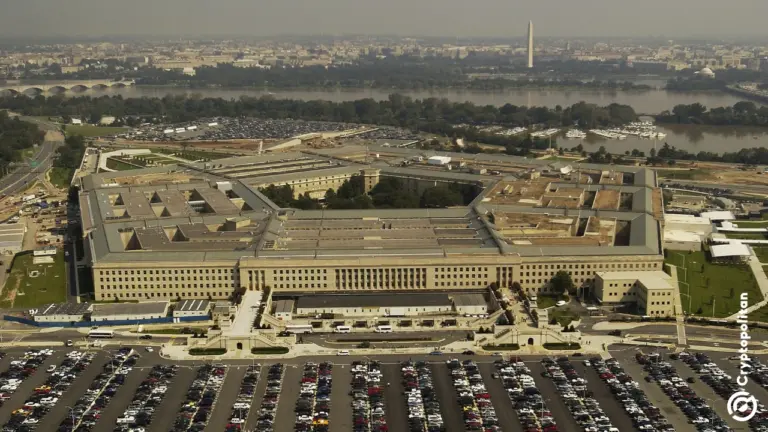
The Pentagon has changed the name of its Chief Digital and AI Office (CDAO) to the Super Intelligence Office (SIO). The office’s existing military programs and AI laws remain unchanged. However, the Pentagon has taken down the majority of leadership details from its website. This raises concerns about accountability right before the November 28 deadline for legislation defining superintelligence.
Super intelligence (SI) is the new term for AI that comes from the Trump administration. It is different from artificial superintelligence, which refers to hypothetical AI systems that is more intelligent than human.
Two names left on the leadership page
DefenseScoop reported on November 24 that the redesigned SI.mil website names just two officials: office head Cameron Stanley and principal deputy Andy Mapes.
Among the information missing on the website is the name of the official managing the Maven Smart System. Maven is an AI-powered military platform developed by Palantir Technologies. It combines intelligence and battlefield data to help military personnel make decisions and identify targets.
Pentagon officials declined to say who currently runs Maven. A source who spoke to DefenseScoop on condition of anonymity said Army Col. Molly Solsbury no longer leads the program and that several senior positions remain unfilled.
Savan Kong, who previously worked as Pentagon chief experience officer, said that knowing who is in charge of Maven is important for accountability. Virginia Burger, a defense analyst at the Project on Government Oversight, noted that Maven is considered “a permanent, billion-dollar program” serving over 100,000 military and defense personnel.
A rebrand that changes words, not the statute
The Pentagon assured that all existing programs, contract solicitations, and partnerships will remain as is when it announced the rebranding on November 13.
The rebranding was a result of Executive Order 14434, which was signed by President Trump on September 29. The order requires federal agencies to implement SI terminology wherever legally possible.
However, the existing legal definition of AI under 15 U.S.C. § 9401(3) still stands. The president’s science and technology adviser has until November 28 to submit proposed legislation that would establish a federal definition of SI.
The proposal is due to the president on that date, but the administration is not required to make it public.
Staffing gaps GAO already flagged
Even before the rebranding, the Pentagon’s AI office was already struggling with a shortage of staff. A report by the Government Accountability Office (GAO) on October 14 revealed that seven out of the ten positions authorized for the Responsible AI Division were vacant as of February 2026.
Staffing was not the only problem. The Responsible AI Working Council, tasked with coordinating responsible AI practices across the Pentagon, went months without meeting. Meetings resumed in August 2025, but the council still had no formal charter defining its responsibilities.
The GAO called for better coordination across the department and urged the Pentagon to address staffing shortages. The Pentagon agreed to both recommendations.
Where policy actually moved: DOJ, Commerce, Treasury
Other federal agencies are taking steps that go beyond changing terminology.
The Justice Department launched its SI Task Force on November 5, consolidating and expanding its AI enforcement efforts. On November 24, BakerHostetler attorneys warned companies to prepare for closer scrutiny of their AI activities and compliance practices.
On November 16, the Commerce Department designated 33 consortia offering priority SI export packages under Executive Order 14320. Another application phase opens November 30.
Meanwhile, the National Institute of Standards and Technology (NIST) continues its agent standards initiative, launched on February 17. Its consultation and registration deadlines fell on March 9, March 20 and April 2.
Treasury’s October 26 proposed rule would implement the Comprehensive Outbound Investment National Security (COINS) Act, expanding restrictions on US investment in sensitive foreign technologies, including AI. Public comments close December 7.

What the money says
Defense technology is attracting capital even as the broader venture capital market struggles. PitchBook reported record defense-tech funding of $37.9 billion in Q3 2026, despite a 23.9% decline in global venture capital funding.
However, growing industry influence carries risks. A November 2026 Stockholm International Peace Research Institute report warned of regulatory capture, where corporate interests can overshadow public interests in policymaking.
Researchers Alexander Blanchard and Laura Bruun recommended structured industry participation and greater independent expertise to reduce that risk.
The November 28 legislative proposal could help determine whether the government’s adoption of SI terminology eventually leads to meaningful changes in AI regulation.
The smartest crypto minds already read our newsletter. Want in? Join them.
FAQs
What is the Super Intelligence Office?
It is the renamed Chief Digital and AI Office, the Department of War's central hub for enterprise AI, redesignated on November 13, 2026, and now hosted at SI.mil. It oversees the Palantir-built Maven Smart System and the War Data Platform.
Why does the November 28 deadline matter?
Executive Order 14434 gives the Assistant to the President for Science and Technology 60 days, ending November 28, to submit proposed legislative language defining "super intelligence" to the president. The submission goes to the president, not the public, and until Congress acts, the existing statutory AI definition still applies.
What oversight concerns did experts raise?
DefenseScoop reported that the redesigned website lists only two leaders and that the Pentagon would not confirm who directs Maven. The GAO separately found that as of February 2026 only three of ten Responsible AI Division positions were filled.
Disclaimer. The information provided is not trading advice. Cryptopolitan.com holds no liability for any investments made based on the information provided on this page. We strongly recommend independent research and/or consultation with a qualified professional before making any investment decisions.

Micah Abiodun
Micah Abiodun makes good use of his Environmental Engineering and Management (MSc) at Tallinn University of Technology (TalTech) to polish content and price prediction news at Cryptopolitan. Now on his 7th year in the crypto media space, he covers major cryptos, altcoins, DeFi, stablecoins, macro trends, and emerging tech.