



New Jersey asks Supreme Court to rule states can police prediction markets

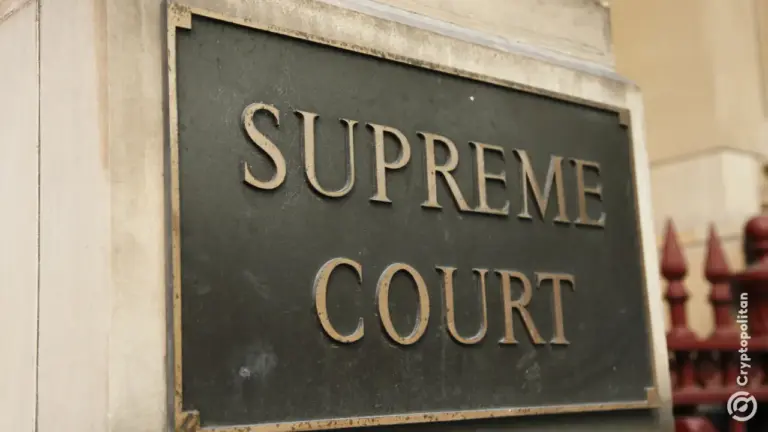
- New Jersey asked the Supreme Court to rule that states can regulate prediction markets like Kalshi as gambling.
- The case is important to a multibillion-dollar industry, its crypto-linked infrastructure, and the CFTC, which insists it gets to oversee these platforms alone.
- A fresh split between two federal appeals courts makes it likely the justices will weigh in, with any decision expected by summer 2027.
New Jersey has petitioned the US Supreme Court to allow states to classify prediction markets like Kalshi and Polymarket as gambling. The fight has been going on for two years now, and it’s getting to the Justices of the Supreme Court for the first time.
The petition came in on Wednesday, and a ruling by the apex court would settle the dispute as to whether this billion-dollar industry will be regulated by state gaming regulators or by a single federal agency.
Davenport wants Congress read narrowly, not the CFTC
The petitioners ask the justices to overturn a Third Circuit court based in Philadelphia, which ruled that the Commodity Futures Trading Commission (CFTC) has exclusive powers to regulate platforms like Kalshi and Polymarket, overriding the gambling laws of the state of New Jersey.
Jennifer Davenport, the State Attorney General, a Democrat, says the case is simply about stopping federal overreach. “We’re calling on the Supreme Court to resolve this issue and recognize that Congress did not silently make the sports-betting industry immune from state law,” she said in a statement.
In the filing, her office makes the argument that the Commodity Exchange Act did not empower the CFTC to act as “the sole regulator of sports gambling in this country,” adding that matters pertaining to health and safety have always rested within the jurisdiction of the states.
A circuit split the justices may not be able to overlook
New Jersey has timed this suit to perfection. Its petition comes barely a week after the Ninth Circuit’s 3-0 ruling, allowing states to regulate prediction markets as sports betting, siding with Nevada.
The opinion of the Ninth Circuit is at odds with that of the Third Circuit, which held that Kalshi’s “event contracts” are legally different from sportsbooks and should be under federal oversight.
The crux of the matter has now divided the two appeals courts, and legal experts believe the split is enough reason for the apex court to step in. The justices are likely to reach a decision this fall as to whether or not they will hear the case, and if they do, a ruling is expected next summer.
Kalshi happens to be the most popular prediction site in the country and is also named in New Jersey’s petition. The company says it expects to win the case.
“Kalshi is an open, nationwide financial exchange. It cannot be regulated by 50 different regulators,” spokeswoman Dani Lever said.
Casinos, tribes and 44 states join forces against the platforms
The opposition is across the spectrum, covering both political parties. A coalition of 44 states has referred to the prediction sites as unlicensed sportsbooks that evade consumer-protection rules and tax obligations that traditional betting carries.
Native American tribes and the OGs of the gaming industry have joined forces with the states. Operators like FanDuel and DraftKings consider the prediction sites as competitors cutting corners.
At the moment, three states, Nevada, Michigan, and Washington, have secured court orders pausing Kalshi’s sports contracts. Sports wagers are the blood of the business and account for over 80% of weekly volume.
Why the stakes keep increasing
The money at stake has increased in time involved has grown fast. Cryptopolitan reported that total prediction-market volume jumped to $38.5 billion from $2 billion in August 2025, a 1,900% increase.
Kalshi allows crypto deposits and withdrawals, and Polymarket focuses on on-chain stablecoin guarantees, so a state-by-state shutdown would affect the crypto markets.
The CFTC Chairman Mike Selig, a Trump appointee, says his agency has exclusive jurisdiction over prediction markets and has pushed for them to grow. That sets a clash between the federal government and dozens of states.
Don’t just read crypto news. Understand it. Subscribe to our newsletter. It's free.
FAQs
What is New Jersey asking the Supreme Court to decide?
Whether states can regulate prediction market platforms like Kalshi as sports betting, or whether the federal CFTC holds exclusive authority over them under the Commodity Exchange Act.
Why is the Supreme Court likely to take the case?
Two federal appeals courts have split: the Third Circuit ruled in April that the CFTC preempts state law, while the Ninth Circuit ruled last week that states can regulate the platforms as sports betting, and legal experts told NPR that split makes review likely.
Which states have already acted against Kalshi?
Regulators in Nevada, Michigan and Washington have secured court orders shutting down at least Kalshi's sports bets.
Disclaimer. The information provided is not trading advice. Cryptopolitan.com holds no liability for any investments made based on the information provided on this page. We strongly recommend independent research and/or consultation with a qualified professional before making any investment decisions.

Hannah Collymore
Hannah is a writer and editor with nearly a decade of blog writing and event reporting experience in the crypto space. At Cryptopolitan, Hannah contributes to the news page, reporting and analyzing the latest developments in DeFi, RWA, crypto regulation, AI and frontier tech industries. She graduated from Arcadia university with a degree in Business Administration.