







-
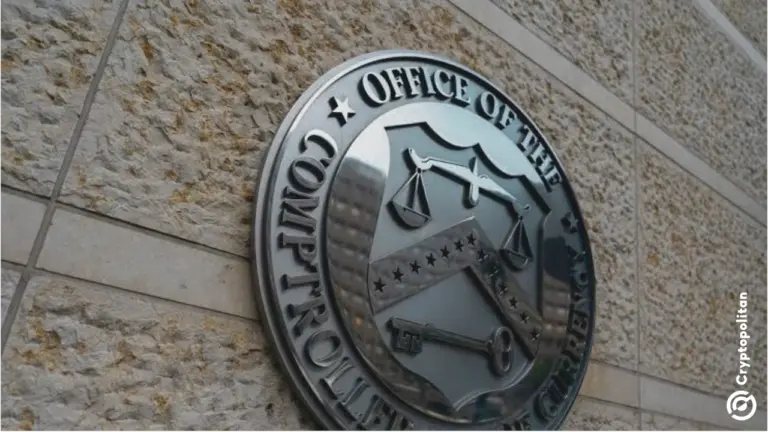
The OCC is urging community banks to apply for payment stablecoin issuer licenses before the January 18, 2027, deadline.
-
New rules establish federal standards for stablecoin reserves, redemptions, custody and risk management.
-
The OCC says community banks can count eligible deposits as stablecoin reserves and receive risk-based supervision.
The Office of the Comptroller of the Currency is trying to persuade small US lenders to join the stablecoin industry by asking them publicly, in a statement released on Monday, to think about becoming a payment stablecoin issuer before the licensing framework takes effect. This is significant for community banks as they try to determine if they should be competing with the crypto companies.
OCC’s pitch to small lenders
As stated in its Monday statement on X, the OCC “encourages the development of payment stablecoin capability in the community banking industry.” In addition, the regulator advised small banks that an institution or its subsidiary may “consider applying for becoming, or a subsidiary for becoming, a permitted payment stablecoin issuer.”
This call came in relation to the regulatory body’s final rulemaking for the Guiding and Establishing National Innovation for US Stablecoins Act. The GENIUS Act was signed into law on July 18, 2025, which created a federal licensing system for payment stablecoins. As per reports, the implementing rules were published by the OCC on October 21. The rules define standards for reserve, redemption, custody, and risk management.
The licensing scheme will be effective from January 18, 2027. From this date onwards, it will become mandatory for any entity to seek prior approval from the OCC before issuing a payment stablecoin. Failure to do so can lead to criminal consequences.
Why the OCC wants banks in the game
Jonathan V. Gould, Comptroller of the Currency, presented the rulemaking process as a way for the agency to return to its roots. “In implementing the GENIUS Act and supervising stablecoin issuers, we are reminded of where we come from and the responsibility we have for facilitating financial innovation,” said Gould in his Monday post on X, PYMNTS reports. In addition, he noted that “this final rule establishes a federal framework that allows stablecoins to fulfill their potential while advancing the dollar’s dominance.”
Further, the agency referred to the drive to its Community Bank Comeback Initiatives that the agency claims are designed to balance the regulation for smaller institutions so they could keep meeting their customers’ needs. In order to reduce concerns of small banks, the regulator released a fact sheet which highlights two key points: community bank deposits can be eligible reserve assets for stablecoins; supervision will be scaled appropriately to the risk profile of each individual issuer.
If the number of small lenders participating in this process is sufficient, they may significantly reduce the market share of stablecoins currently owned by crypto companies and large financial institutions.
$850 billion lending worry
Not all banks will be sold, however. The Independent Community Bankers of America opposed the trend toward stablecoins, estimating that their adoption could limit the lending capacity of community banks by almost $850 billion. The logic behind such a stance is that the deposits, which serve as a source for local loans, would instead go into stablecoins.
The OCC’s implicit response to such objections is that banks can issue stablecoins themselves and use deposits as reserves. There is more at stake than just a question of regulation here. Last month, the ICBA sued the OCC, arguing that crypto companies that got the charter approvals had an advantage since they were not subjected to the same regulatory requirements as community banks.
The clock is now ticking against everyone, however. The existing issuers, which have a substantially complete application submitted by the compliance deadline, can get a temporary waiver for up to 12 months, effectively extending the period until approval by one year instead of stopping immediately. To get such a waiver, banks should submit their applications before January 18, 2027.
If you're reading this, you’re already ahead. Stay there with our newsletter.
FAQs
What is the OCC asking community banks to do?
The OCC is encouraging community banks, or their subsidiaries, to consider applying to become permitted payment stablecoin issuers under the GENIUS Act, which it said in a Monday post on X.
When does the GENIUS Act framework take effect?
The OCC's final rules take effect on January 18, 2027. After that date, issuers need prior OCC approval, and reports suggest that issuing a payment stablecoin without a license can bring criminal penalties.
Why is the Independent Community Bankers of America opposed?
The ICBA estimates stablecoin adoption could reduce community bank lending capacity by nearly $850 billion as deposits migrate into stablecoins, and it has sued the OCC over charter approvals it says favor crypto firms.
Disclaimer. The information provided is not trading advice. Cryptopolitan.com holds no liability for any investments made based on the information provided on this page. We strongly recommend independent research and/or consultation with a qualified professional before making any investment decisions.

Ashish Kumar
Ashish Kumar is a crypto and financial journalist with eight years of newsroom experience. He covers what’s happening with crypto markets, regulation, DeFi, and exchange ecosystems. He has worked with Coingape, Todayq, and Newsroompost. Ashish holds a PGDP in English Journalism from the IIMC. He has also interviewed industry figures including Arthur Hayes, Yat Siu, Austin Federa, and more.









